
Why Your Brain Sabotages Your Grocery Money (And How to Actually Fix It)


You know that Sunday feeling when you plan out five perfect budget meals for the week? Then by Wednesday you’re staring at your phone debating whether to order pizza again? Yeah, me too. Turns out there’s actually a reason why this keeps happening, and it’s not because you suck at adulting.
College students are dropping almost $700 a month on food according to recent education data research, with $410 of that going to eating off-campus alone. That’s rent money! No wonder everyone’s eating ramen and stress-crying in their dorm rooms. But here’s the thing – we’re all fighting against our own brains without even realizing it.

Understanding why your brain works against you when you’re trying to save money becomes even more important when you consider intuitive eating principles, which can actually help you figure out when you’re genuinely hungry versus when you’re just stress-spending on food.
What You’ll Learn (The Real Stuff That Actually Helps)
- Why your brain thinks budget meal planning is a threat to your survival
- How people throughout history made amazing meals with basically nothing
- Simple tricks to set up your kitchen so you don’t sabotage yourself
- How to make one ingredient work for like five different meals
The Quick Version
Your brain wasn’t designed for grocery stores or tight budgets – it just wants you to survive, which means grabbing whatever’s easiest when you’re stressed. Traditional cultures figured out how to make incredible food with scraps, and you can steal their techniques. The secret isn’t willpower (thank god) – it’s setting up your environment so good choices happen automatically. Plus, if you get strategic about using leftovers and timing your shopping with seasons, you can eat way better for way less money.
Why Your Brain Hates Your Budget
Let’s be real – your brain wasn’t designed for modern grocery stores or budget constraints. The same survival mechanisms that kept our ancestors alive are now making you grab that $8 bag of trail mix when you’re tired and hungry. I’ve learned this the hard way, and understanding why it happens is the first step to working around it instead of constantly fighting yourself.

Your Brain Thinks You’re Actually Starving
Here’s what’s really happening: when your brain perceives any kind of scarcity – even just a tight grocery budget – it flips into ancient survival mode. Suddenly you’re craving high-calorie, immediately available foods because some prehistoric part of your brain thinks winter is coming and you need to store up fat to survive.
I used to walk into the grocery store with my carefully planned list, feeling so organized. Then I’d see those rotisserie chickens, smell the bakery section, and suddenly I’m $40 over budget buying stuff that wasn’t even on my list. Sound familiar?
This scarcity mindset often triggers stress eating patterns that can be addressed through digestive wellness strategies, helping you figure out when you’re actually hungry versus when you’re just stressed about money and reaching for comfort food.
Your brain interprets budget constraints as genuine threats. The stressed-out part of your mind doesn’t care about your monthly food budget – it just wants immediate comfort and energy. That’s why you can start Monday with the best intentions and end up ordering takeout by Thursday.
Decision Fatigue Is Killing Your Budget
Decision fatigue is real, people. It’s why you can spend 20 minutes comparing pasta prices like you’re solving world hunger, then grab a $12 bag of fancy crackers because your brain just gave up.
Every time you calculate costs, compare prices, or plan meals, you’re using the same mental energy you need for everything else in your life. By the time you’ve made it through half your grocery list, you’re mentally exhausted and way more likely to make expensive impulse decisions.
Here’s what I learned the hard way: batch all your planning into one focused session instead of making tiny decisions all week long. Create simple rules for yourself so you don’t have to think when you’re tired.
My friend Sarah was spending 15 minutes every grocery trip standing in the meat section doing mental math. So she made herself a cheat sheet: “If chicken thighs are under $2/lb, buy them. If not, beans it is.” Sounds simple, but it saved her 30% on protein costs and a whole lot of grocery store anxiety.
Set up “if-then” rules for your most common scenarios:
- If bananas are over $1.50/pound, then buy apples instead
- If ground beef is more than $4/pound, then choose chicken thighs
- If I’m tired after work, then I eat one of my pre-made emergency meals
These automatic responses prevent you from standing in the grocery store making expensive decisions when your willpower is already shot.
Why Having Fewer Options Actually Makes Life Better
This might sound backwards, but limiting your choices leads to more creative and satisfying meals than having unlimited options. When you stick to 3-4 base proteins and rotate them systematically, you actually get better at cooking and discover flavor combinations you’d never try otherwise.
Too many choices are paralyzing. I’ve wandered grocery aisles completely overwhelmed by options, then grabbed expensive convenience foods just to escape the decision-making hell.
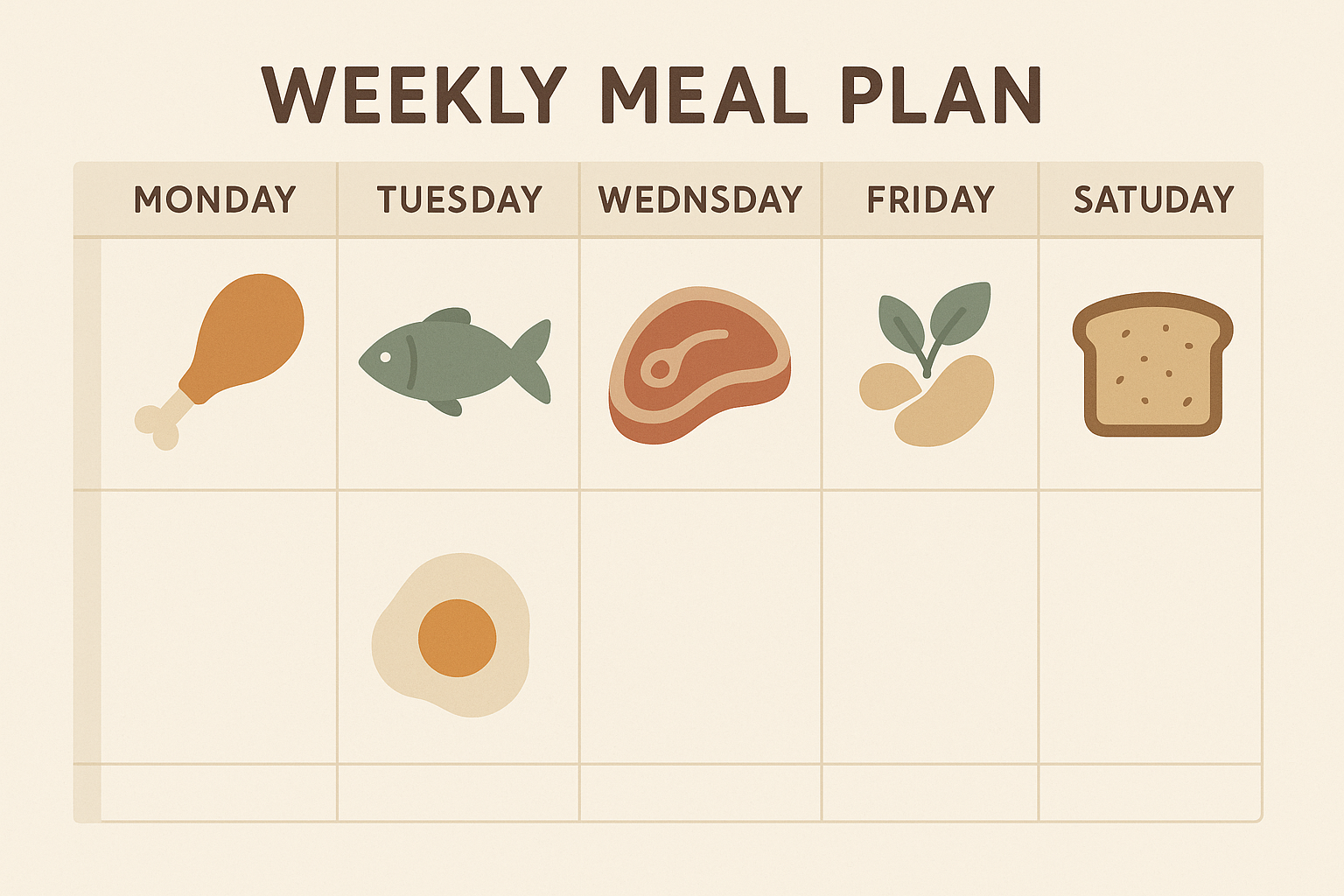
Here’s what works: Choose 3-4 proteins for the month and stick with them. Maybe it’s chicken thighs, ground turkey, dried beans, and eggs. Rotate them weekly. This constraint eliminates decision fatigue while forcing you to get creative with seasonings and cooking methods.
Same thing with grains – pick two types and alternate. Rice and pasta, or quinoa and barley, whatever you actually like eating. You’ll master these ingredients instead of being mediocre with dozens of them.
Working within tight budget constraints actually sparks more creativity than having unlimited options. Some of my favorite meals happened when I was forced to work with just chicken thighs, rice, and whatever vegetables were marked down.
| Week | Main Protein | Backup Protein | Grain | Estimated Cost |
|---|---|---|---|---|
| 1 | Chicken Thighs | Eggs | Rice | $18-22 |
| 2 | Ground Turkey | Canned Tuna | Pasta | $15-19 |
| 3 | Dried Beans | Chicken Thighs | Quinoa | $12-16 |
| 4 | Eggs | Ground Turkey | Rice | $14-18 |
The Truth About Bulk Buying
Bulk buying seems like obvious savings, but your brain rebels against spending $50 on rice even when the per-pound savings are huge. This psychological resistance to large upfront costs prevents most people from accessing real savings.
I’ve made this mistake so many times – buying 25-pound bags of rice because the per-pound price looked amazing, then realizing I don’t have proper storage and half of it goes bad or gets infested with bugs.
When “Savings” Actually Cost You Money
The biggest trap is buying bulk quantities of things you don’t actually eat that much of, or that you can’t store properly. That “deal” on bulk produce isn’t saving you money if half of it rots in your fridge.
Before any bulk purchase, track how much of that item your household actually uses in a month. Don’t guess – measure. If you eat two cups of rice per week, don’t buy a 50-pound bag unless you have a plan for the next two years.
Factor in storage costs too. You need proper containers, adequate space, and sometimes freezer room. Include the cost of storage containers and the value of the space they’re taking up in your home.
American families throw out about 25% of the food they buy according to nutrition planning research, which is roughly $1,800 annually for the average family. Most of this waste comes from bulk purchases that seemed economical but exceeded what people could actually use.
Storage space is a hidden cost that nobody talks about. I learned this after buying a case of canned tomatoes that took up half my pantry for six months. The “savings” weren’t worth having my kitchen look like a doomsday prepper’s bunker.
Measure your available storage space before considering bulk purchases. Make sure you can actually store things properly without creating chaos in your kitchen.
Why Future You Keeps Screwing Over Present You
Your brain naturally values immediate convenience over future savings. This explains why meal prep plans fail and why convenience foods seem irresistible when you’re exhausted after a long day.
Wednesday evening you is a completely different person from Sunday morning you. The motivated person who planned a week of home-cooked meals doesn’t exist when you’re tired, hungry, and facing a sink full of dishes.
Here’s what I learned: plan for both versions of yourself. The motivated planner AND the tired decision-maker who just wants something easy.
Match Your Prep Work to Your Actual Energy Levels
Your energy levels fluctuate predictably throughout the week. I have way more motivation for food prep on Sunday mornings than Wednesday evenings after work. Fighting this pattern instead of working with it is exhausting and usually fails.
Track your energy levels for two weeks without changing anything. Note when you feel like cooking versus when you’d rather order delivery. This data shows you your optimal prep windows.
Schedule prep work during high-energy periods, not when it’s theoretically convenient. If Saturday afternoon works better than Sunday morning, do it then.
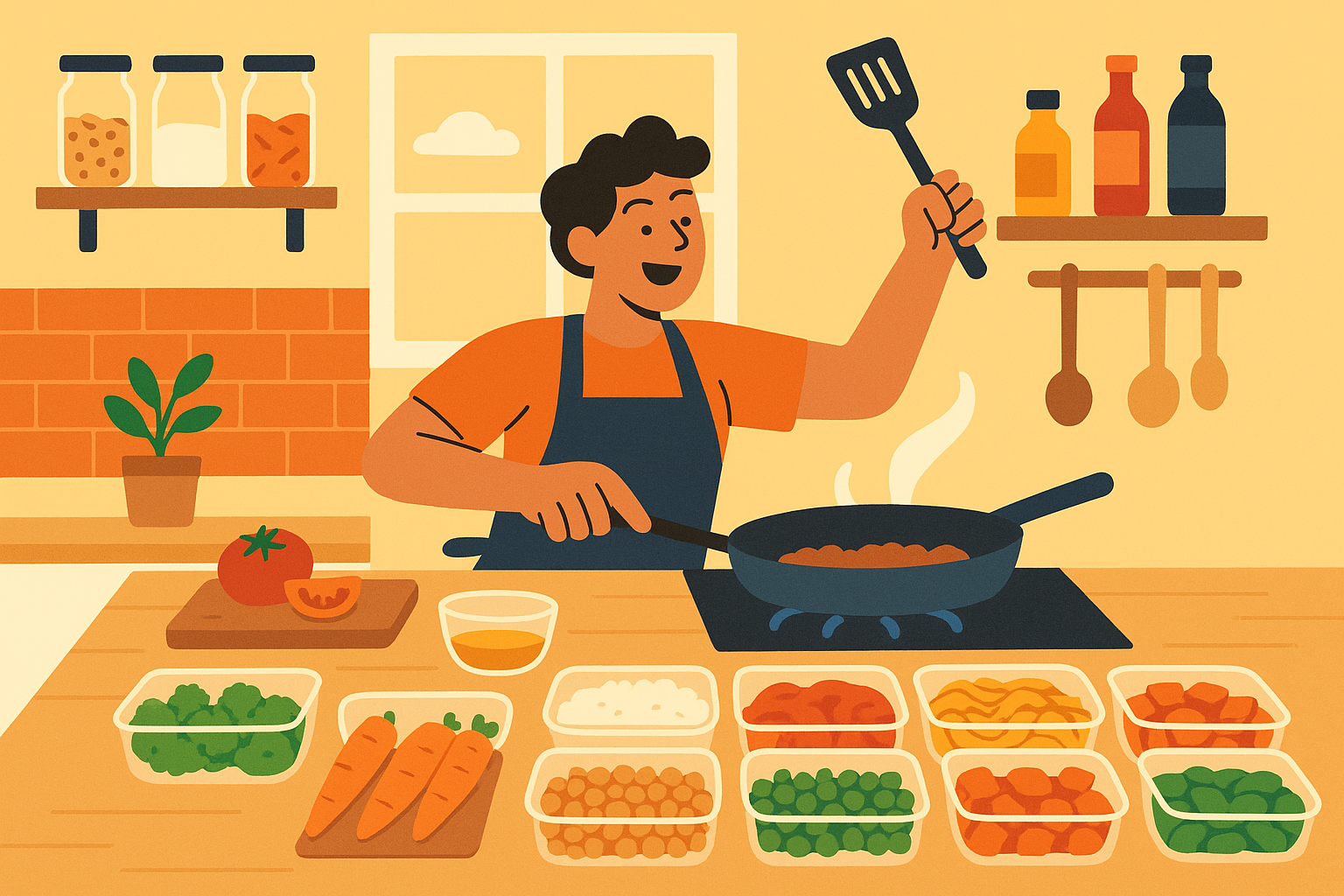
Create “emergency meal kits” during high-energy periods – pre-portioned ingredients that require minimal assembly when you’re exhausted. These prevent expensive convenience food purchases when your willpower is completely depleted.
Simple Energy Tracking:
- Rate your energy 1-10 at breakfast, lunch, and dinner for two weeks
- Note when you feel like cooking vs. ordering takeout
- Find your top 3 high-energy time slots
- Schedule meal prep during these windows
- Create backup plans for low-energy days
How Small Choices Destroy Your Budget
Those tiny daily food decisions add up to massive budget impacts. A $3 coffee habit costs over $1,000 a year, but the real damage is psychological – it gives you permission for other small splurges throughout the day.
Small daily choices feel insignificant until you do the math. That $4 energy drink doesn’t seem expensive until you realize it’s $1,460 per year.
Here’s what works: document every food purchase for one week without judgment. Include everything – coffee, snacks, convenience items. This awareness exercise reveals spending patterns you might not even notice.
Identify your top 3 “budget leak” categories. Maybe it’s afternoon snacks, weekend coffee runs, or lunch meetings. Focus on these high-impact areas instead of trying to change everything at once.
The cost of plain coffee from a store averages $2.50 according to college spending data. If you bought coffee daily, that’s $75 monthly – money that could cover your entire grain and bean budget for home cooking.
These micro-decisions create momentum that affects bigger choices. When I buy expensive coffee in the morning, I’m way more likely to justify other food splurges throughout the day. Your brain treats it like permission to keep spending.
What Our Ancestors Knew That We Forgot
Throughout history, people have created amazing meals from basically nothing. These weren’t just survival techniques – they were sophisticated systems for making satisfying, nutritious food from simple ingredients. The good news is you can adapt these methods to modern kitchens without giving up convenience.
Our grandparents knew something we forgot – how to make a chicken last for four meals instead of one. They weren’t trying to be trendy or sustainable, they just couldn’t afford to waste anything. These traditional methods offer practical solutions that work way better than modern convenience-focused approaches.
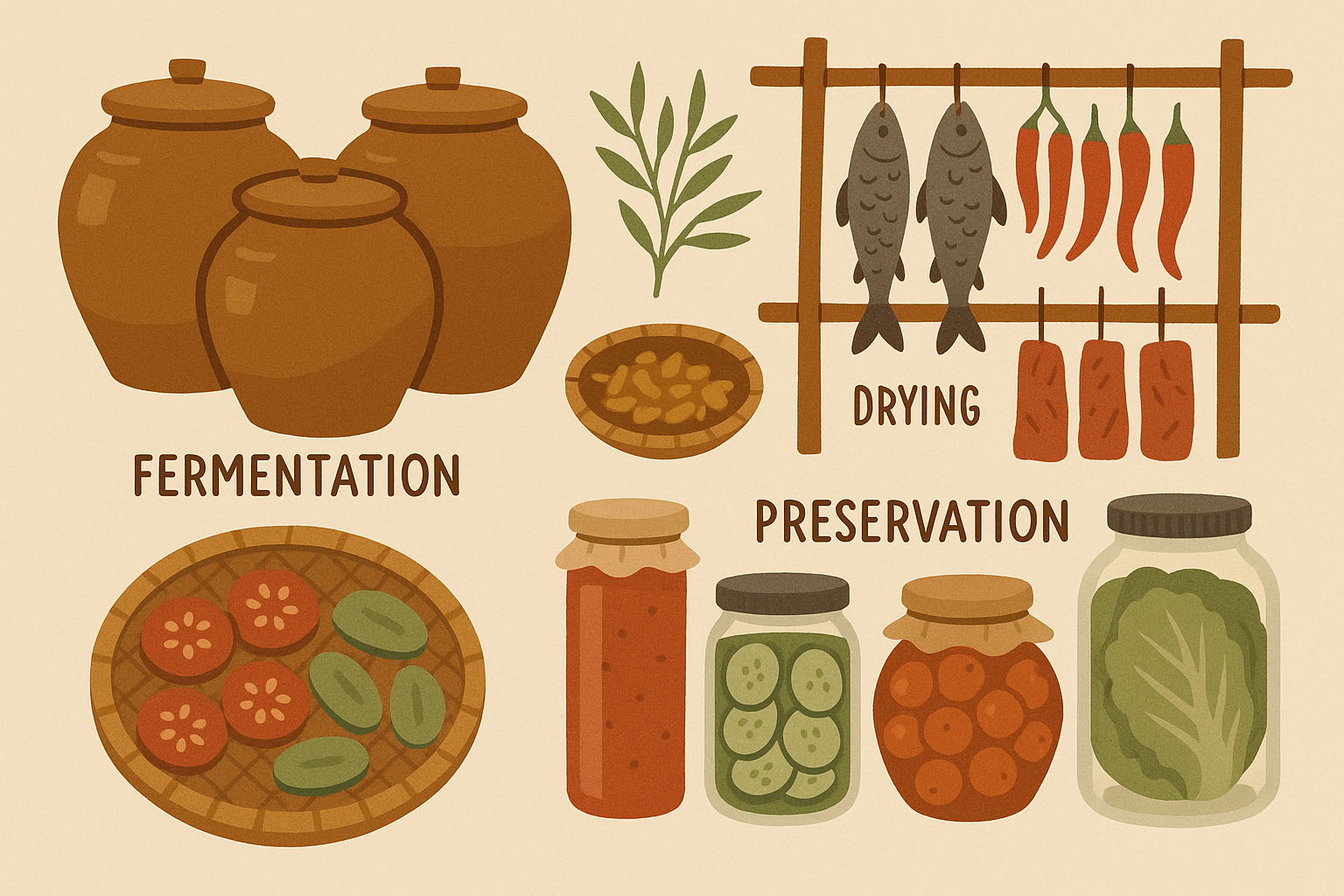
Many traditional preservation techniques work perfectly with homemade preservation methods that not only support your tight budget but also provide immune-supporting benefits.
Even modern meal kit services are catching on to these principles. “The cheapest meal delivery services” from Bon Appétit shows that services like EveryPlate offer meals as low as $5.99 per serving by focusing on simple, traditional preparation methods instead of exotic ingredients.
The key is understanding why these traditional methods worked so well. They weren’t just about saving money – they created food systems that provided consistent nutrition and satisfaction regardless of what was available or affordable.
Stop Throwing Away Liquid Gold
Modern food culture wastes enormous amounts of nutrition and flavor by throwing away parts of ingredients that traditional cultures treasured. Vegetable peels, bones, and cooking liquids contain concentrated nutrients that can transform your budget meals from bland survival food to genuinely delicious, nourishing dishes.
These traditional techniques often require less time and equipment than modern cooking methods once you understand the basic principles. The learning curve pays off in both cost savings and meal satisfaction.
Turn Scraps into Amazing Broth
Most people throw away bones that contain incredible nutritional and financial value. Here’s what I learned: bones from local butchers are often free or very cheap because they’re considered waste products.
Build relationships with local butchers – they’ll often save specific bones if you ask in advance. Source bones for under $1/pound, sometimes free.
Learn pressure cooking techniques for maximum extraction. A pressure cooker reduces bone broth cooking time from 24 hours to 3 hours while getting the same nutritional density.
Use that broth as cooking liquid for grains to multiply nutritional value. Cooking rice in bone broth instead of water adds protein, minerals, and flavor without any additional cost.
My friend Maria saves $40 monthly by making bone broth from chicken carcasses her butcher gives away. She uses 2 pounds of bones to make 12 cups of broth, which replaces expensive store-bought versions and serves as the cooking liquid for all her grains. One batch provides the base for a week’s worth of soups, risottos, and enhanced rice dishes.
Bone broth adds richness and satisfaction to simple meals that makes them feel luxurious despite minimal cost. The transformation from waste product to nutritional powerhouse shows how traditional wisdom can revolutionize your budget meals.
Fermentation: Making Food Multiply Itself
Fermentation sounds fancy and complicated, but it’s basically controlled spoiling that makes food better instead of gross. You can triple the volume of basic ingredients while dramatically increasing their nutritional value and shelf life.
Fermentation techniques complement digestive health strategies by introducing beneficial probiotics that support nutrient absorption, making your budget meals more nutritionally efficient.
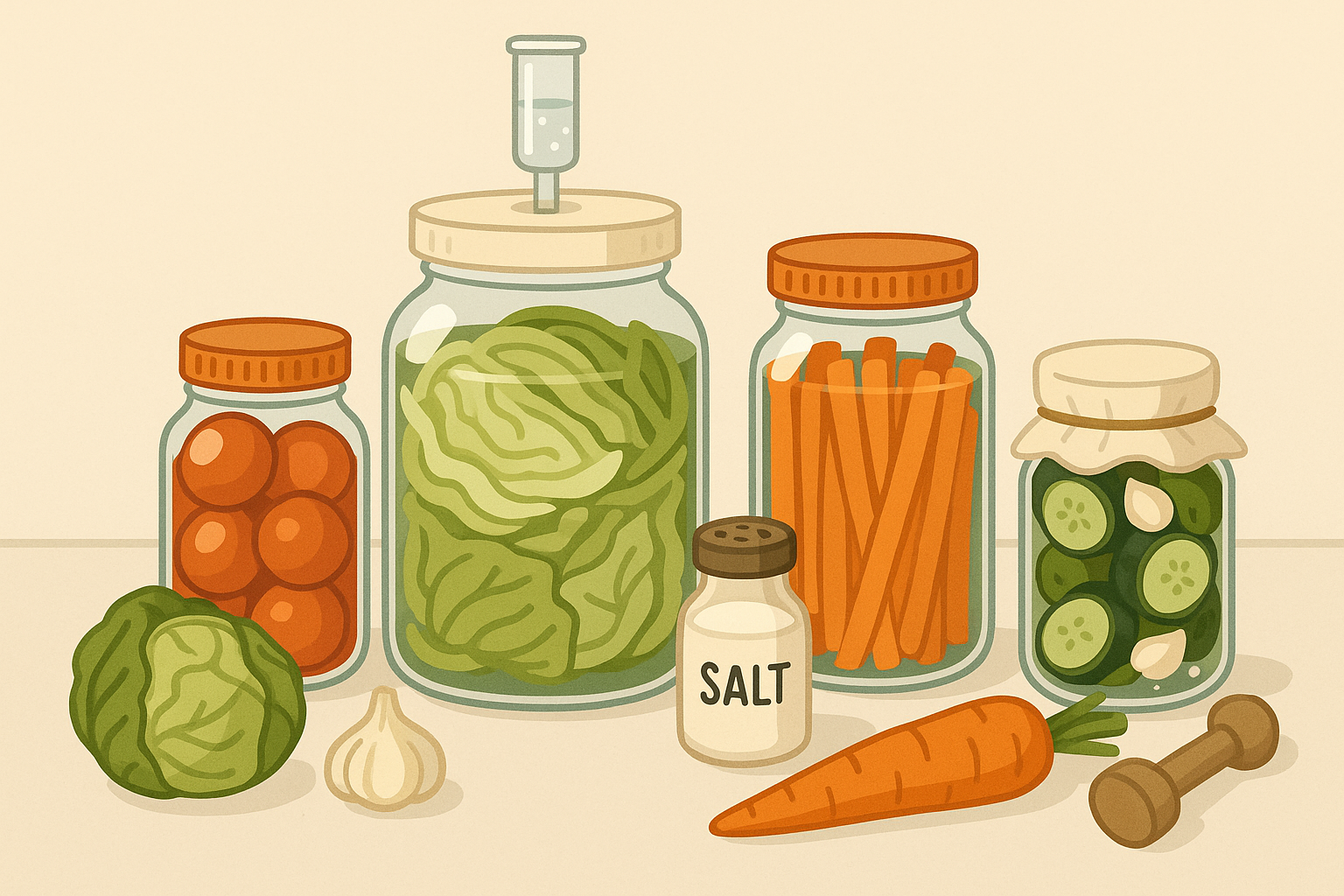
Start with sauerkraut – it’s literally just cabbage and salt sitting in a jar being awesome. No special equipment needed beyond clean jars and basic vegetables.
Simple vegetable ferments use just 2% salt by weight. Cabbage, carrots, and radishes ferment easily. Once you get the hang of it, these systems produce food indefinitely with minimal maintenance and ingredient costs.
Basic Fermentation Starter Kit:
- Mason jars (wide-mouth, various sizes)
- Kitchen scale for salt measurements
- Fermentation weights or clean stones
- Basic vegetables: cabbage, carrots, radishes
- High-quality sea salt (non-iodized)
Getting Complete Nutrition for Pennies
When every dollar counts, you need to balance caloric needs with nutritional requirements. Understanding which food combinations create complete proteins and which ingredients provide the most nutrients per dollar helps prevent deficiencies while maintaining extremely tight budgets.
Nutritional efficiency matters more than total calories when money is tight. Strategic food combinations can meet all essential nutrient needs at costs that seem impossible until you understand the science.
Your budget meals succeed when you prioritize nutrient density over convenience or familiar flavors. This opens up ingredient options that provide exceptional value while supporting optimal health.
Complete Proteins Without Breaking the Bank
You don’t need expensive animal proteins to get all essential amino acids. Specific combinations of legumes and grains provide complete protein profiles at costs under $0.50 per serving.
Map the amino acid profiles of your preferred legumes and grains. Beans and rice, lentils and barley, chickpeas and wheat – each combination has different nutritional strengths.
Create rotation schedules that ensure complete protein intake throughout the week. You don’t need complete proteins at every meal, just over several days.
Getting the Most Nutrients for Your Dollar
Nutrient density per dollar reveals some surprising winners. Chicken liver provides more nutrition per dollar than most expensive superfoods, but you need to develop cooking skills and get over any cultural squeamishness.
Create a nutrient-per-dollar comparison for your local stores. Compare vitamin A, iron, B vitamins, and other essentials across different protein and vegetable options.
Prioritize organ meats, dark leafy greens, and seasonal produce. These consistently offer the highest nutritional returns on investment when you know how to prepare them properly.
Working within extremely tight budget constraints forces you to discover ingredients you might never have considered. Chicken hearts, beef liver, and other organ meats provide incredible nutrition at prices that make them accessible even on the tightest budgets.
| Food Item | Cost per lb | Key Nutrients | Bang for Your Buck |
|---|---|---|---|
| Chicken Liver | $1.50 | Vitamin A, Iron, B12, Folate | Amazing |
| Spinach (frozen) | $1.20 | Iron, Vitamin K, Folate | Excellent |
| Sardines (canned) | $2.00 | Omega-3, Calcium, B12 | Great |
| Sweet Potatoes | $0.80 | Beta-carotene, Fiber, Potassium | Excellent |
| Lentils (dried) | $1.10 | Protein, Iron, Fiber | Amazing |
Setting Up Your Kitchen So You Don’t Sabotage Yourself
The gap between knowing what to do and actually doing it comes down to creating environments that make good choices automatic. Success isn’t about willpower – it’s about structuring your space, tools, and social connections to guide you toward budget-friendly decisions without constant mental effort.
Environmental design works hand-in-hand with mastering simple cooking techniques that become second nature, reducing the mental load of daily meal decisions.
Community programs prove this approach works. “Eat for Life helps Central Oregonians plan healthy meals on budget” from Oregon State University Extension shows how structured support systems and environmental design help people maintain budget meal planning long-term.
Willpower fails because it’s a limited resource that gets depleted throughout the day. Designing your environment to make good choices automatic eliminates the need for constant decision-making.
Kitchen Geography That Actually Works
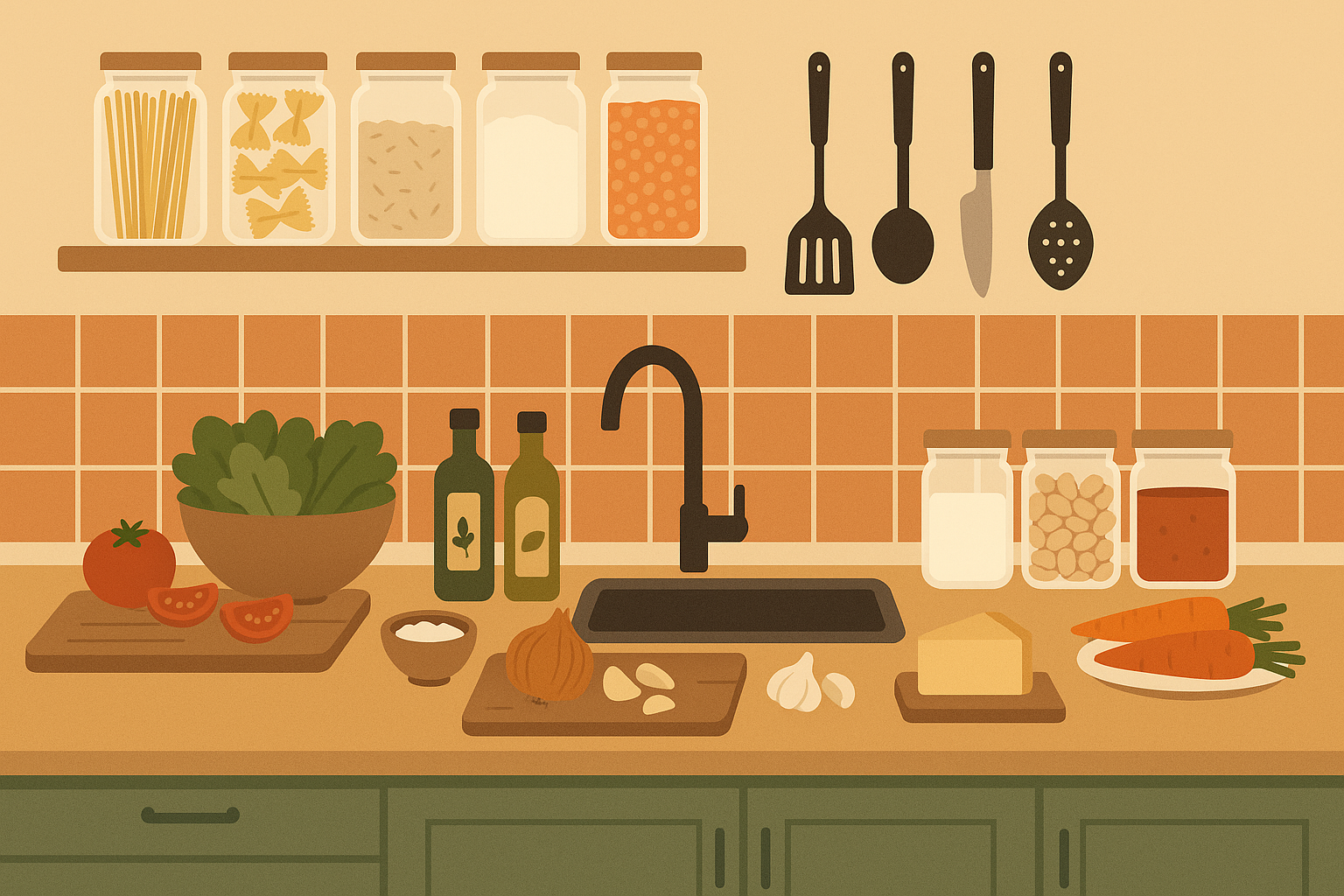
Your kitchen layout unconsciously influences every food decision you make. Small changes in how you organize your space create dramatic improvements in budget meal adherence without requiring additional willpower.
Put the Good Stuff Where You Can See It
Ingredients stored at eye level get used way more frequently than those requiring reaching or bending. Position budget-friendly ingredients at eye level in both pantry and refrigerator. Rice, beans, and seasonal vegetables should be immediately visible when you open storage areas.
Create dedicated prep stations with tools always accessible. Having cutting boards, knives, and mixing bowls permanently stationed reduces the effort required to start cooking.
Remove or hide expensive convenience items from immediate view. Store them in less convenient locations so choosing them requires deliberate effort rather than automatic reaching.
Technology That Actually Eliminates Thinking
Technology should eliminate decision-making, not add complexity. Simple digital systems can handle routine decisions automatically, leaving mental energy for creative cooking.
Create automated grocery lists based on proven meal rotations. Once you identify 10-15 meals that work within your budget, automate the shopping lists so you never start from scratch.
Set up price tracking for staple ingredients across multiple stores. Apps can monitor prices and alert you to deals on items you regularly purchase.
My friend David uses a simple spreadsheet with 12 proven budget meals and their ingredient lists. Each Sunday, he selects 4 meals for the week, and the spreadsheet automatically generates his grocery list with quantities calculated for his household size. This system reduced his planning time from 45 minutes to 5 minutes weekly while cutting grocery costs by 25%.
Building Your Support Network
Individual meal planning carries unnecessary burden when community cooperation can reduce costs and increase variety. Organizing with just 3-4 other households creates significant advantages for maintaining budget meals.
The Power of Splitting Costs
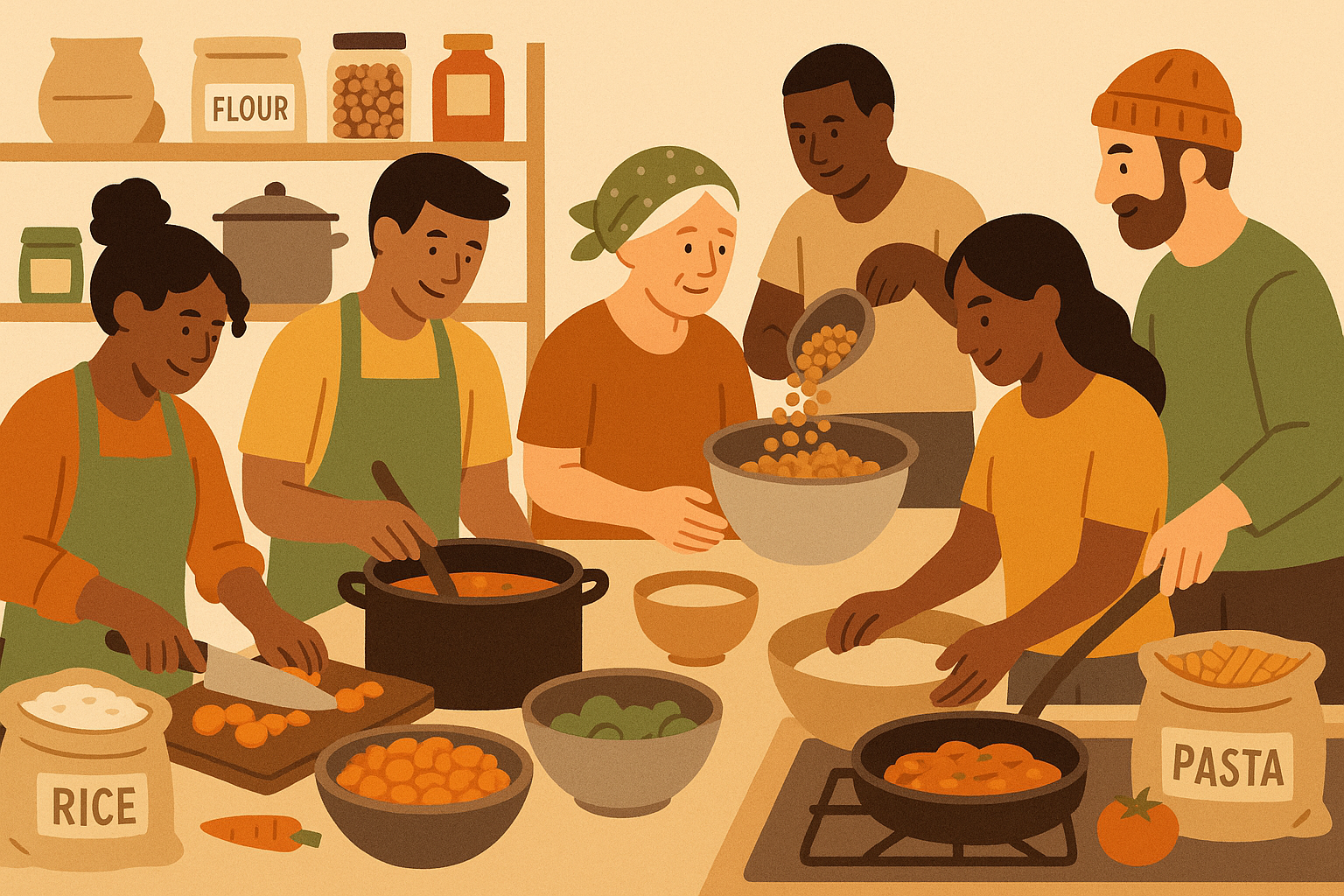
Find three neighbors who are also tired of throwing money at groceries. Split a warehouse store membership. Buy the giant bag of rice together. Take turns making huge batches of soup. It’s not rocket science, but it works.
Organize bulk buying groups for non-perishable staples. Splitting 50-pound bags of rice or cases of canned goods reduces per-unit costs while ensuring reasonable quantities for each household.
Establish meal prep cooperatives with neighbors or friends. Taking turns preparing large batches for multiple families reduces individual time investment while increasing meal variety.
Create skill-sharing networks for food preservation techniques. Someone teaches canning, another shares fermentation knowledge, building collective capabilities that benefit everyone.
Getting Started with Community Cooperation:
- Find 3-5 interested households in your area
- Create shared document for bulk purchasing coordination
- Set up monthly meeting schedule for planning
- Establish shared storage space for bulk items
- Create skill-sharing calendar for teaching sessions
- Develop simple cost-splitting system and payment method
Making One Ingredient Work for Multiple Meals
Advanced meal planning moves beyond basic weekly menus to create interconnected systems where each component serves multiple purposes. This approach treats ingredients as building blocks that transform into various meals throughout the week.
Interconnected planning eliminates waste while maximizing variety within budget constraints. Today’s dinner automatically provides components for tomorrow’s lunch, creating efficiency that reduces both time and money investments.
The most successful budget meal approaches recognize that ingredients can serve multiple functions across different meals and time periods. This transforms meal planning from isolated decisions into a cohesive system that builds momentum over time.
Building Blocks That Transform
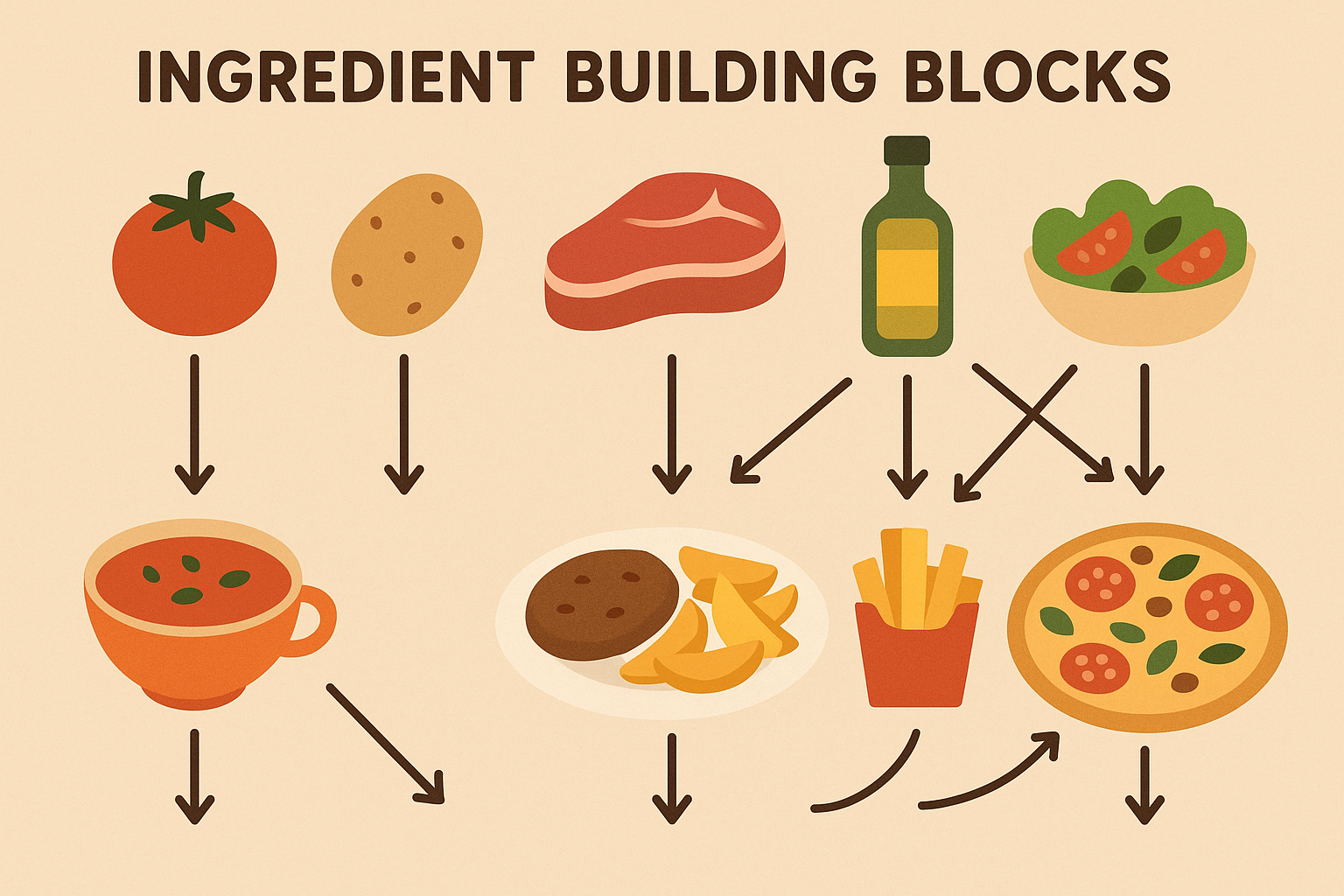
Creating base preparations that work across different cuisines eliminates the need to start from scratch for each meal. These “mother” preparations – sauces, proteins, and vegetable bases – can be combined and recombined to create seemingly different meals throughout the week.
Successful meal planning treats ingredients as building blocks rather than single-use items. Develop 3-4 versatile sauce bases that work across cuisines, dramatically reducing prep time and ingredient costs.
A tomato-based sauce transforms into Italian, Mexican, or Indian dishes depending on spice additions. One preparation, multiple applications.
Create protein preparations that work hot, cold, and repurposed. Roasted chicken becomes dinner, then cold sandwiches, then soup base – each application feels different while using the same base ingredient.
Strategic Leftover Integration
Traditional leftover management treats extra food as a problem to solve. Instead, plan “leftovers” as intentional components of future meals, eliminating waste while reducing prep time.
Cook proteins in larger batches with transformation in mind. Tonight’s roasted vegetables become tomorrow’s frittata ingredients, then later get pureed into soup base.
Prepare grains and starches with multiple texture applications. Rice works as side dish, then fried rice, then rice pudding – each preparation creates different eating experiences from the same base ingredient.
Timing Your Shopping Like a Pro
Coordinating purchases with natural abundance cycles creates massive savings opportunities while ensuring variety throughout the year. Understanding local seasonal patterns and developing preservation skills allows you to capture peak-season prices for year-round use.
Seasonal timing creates the biggest savings opportunities most people completely miss. Planning preservation activities months in advance captures peak abundance at minimum prices while supporting budget meals throughout the year.
Preservation Timing for Maximum Savings
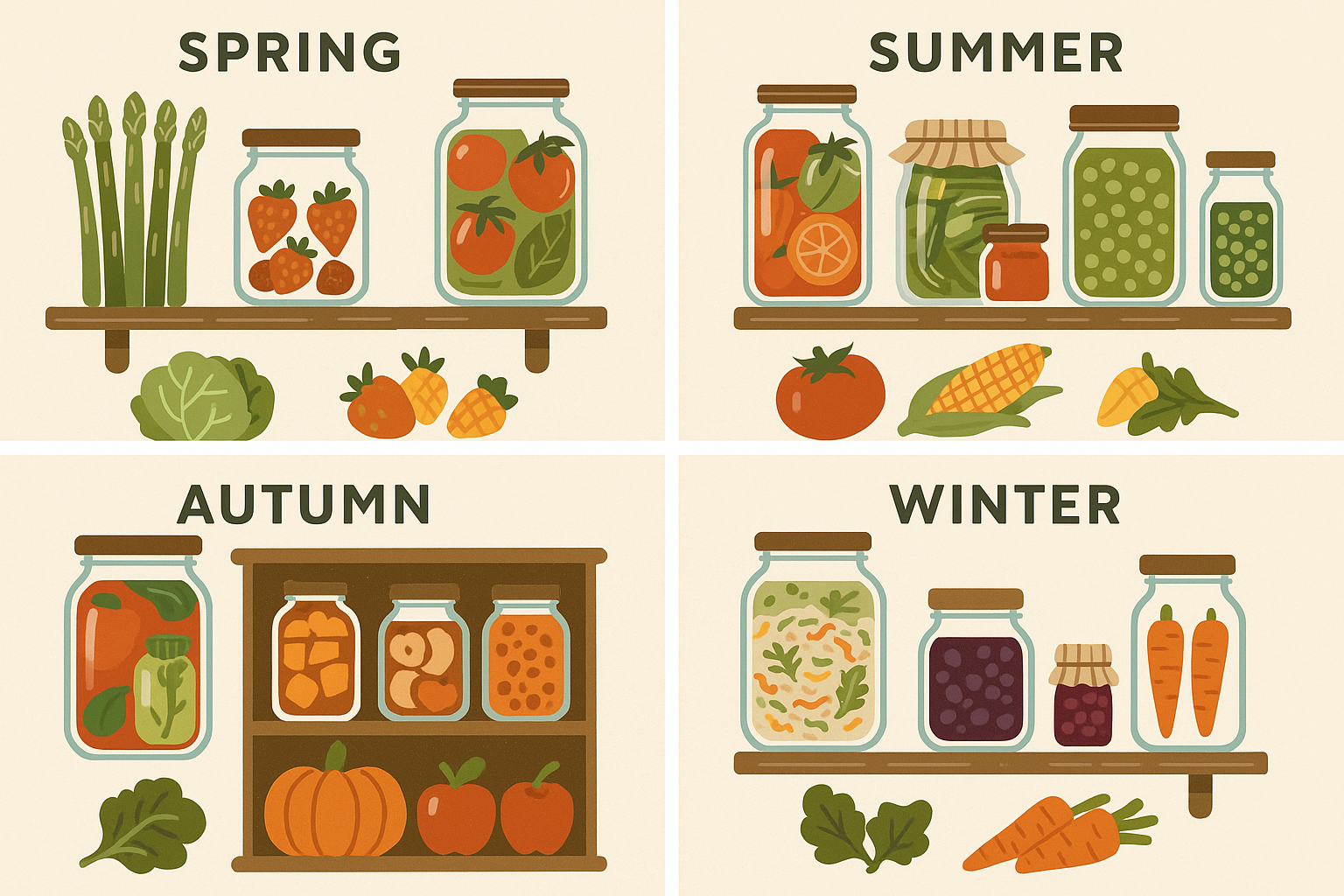
Map local seasonal abundance patterns for your region. Understanding when tomatoes, apples, or other staples reach peak season and lowest prices allows strategic purchasing and preservation.
Develop preservation skills 2-3 months before peak seasons. Learning canning techniques in May prepares you for July tomato abundance. Timing skill development prevents missed opportunities.
Create storage systems that maintain quality for 6-12 months. Proper containers, temperature control, and rotation systems ensure preserved foods remain appealing rather than becoming emergency-only options.
Seasonal Preservation Planning:
- Spring (March-May): Learn preservation techniques, prepare equipment
- Summer (June-August): Peak preservation season – tomatoes, berries, stone fruits
- Fall (September-November): Root vegetables, apples, late harvest items
- Winter (December-February): Plan next year’s preservation calendar, use stored items
Here’s the Real Talk
Look, you’re not broken if budget meal planning feels impossible. The whole food system is designed to separate you from your money as efficiently as possible. But now you know the game, and you can play it better.
Budget meal planning isn’t really about recipes or willpower – it’s about understanding how your brain works and creating systems that make success inevitable. The strategies I’ve shared come from recognizing that our modern food environment conflicts with ancient survival mechanisms, then designing workarounds that honor both our psychology and our budgets.
The most important thing I’ve learned is that struggling with budget meals doesn’t mean you lack discipline – it means you’re fighting against powerful psychological and environmental forces without the right tools. Once you understand why your brain craves convenience foods when you’re tired, or why bulk buying sometimes backfires, you can design systems that work with these tendencies instead of against them.
These aren’t just money-saving techniques – they’re life skills that connect you more deeply with your food, your community, and your own capabilities. When you master fermentation or develop relationships with local suppliers, you’re building resilience that extends far beyond your grocery budget.
Start with one thing – maybe it’s meal prepping on Sunday, maybe it’s making friends with your local butcher, maybe it’s just tracking where your food money actually goes for one week. Small changes add up to big wins.
Organic Authority understands that sustainable living isn’t about perfection – it’s about creating systems that support your values while fitting your real life. Their carefully curated resources and community-focused approach can help you implement these strategies with confidence, knowing you’re part of a larger movement toward more conscious, connected living. Whether you’re exploring fermentation techniques or building cooperative buying networks, having access to trusted guidance makes the journey more manageable and enjoyable.