
Low Carb Meal Plan Secrets: Why Your Body Clock Determines When You Should Eat Carbs


Okay, so I totally thought I had this low carb thing figured out. Just stay under 20 grams of carbs, right? Wrong. So, so wrong. Recent research from the CSIRO reveals that in a low-carb diet, approximately 10-14 percent of your total energy intake each day comes from carbs and 58 percent from healthy fats, with protein reaching 25-30 percent of your total energy needs. But here’s what nobody tells you – it’s not just about hitting those numbers. Your body has this internal clock that basically decides whether those precious few carbs are going to help you or totally mess with your day.
Table of Contents
- The Real Reason Your Low Carb Diet Isn’t Working (Spoiler: It’s About Timing)
- Stop Wasting Your 20 Daily Carbs on Junk That Doesn’t Help You
- Why Being Flexible Beat Being Perfect (And Saved My Sanity)
- Figuring Out What Actually Works for YOUR Body (Because We’re All Different)
- The Honest Truth About All This
TL;DR
- Whether you’re a morning person or night owl actually affects when your body can handle carbs (who knew?)
- Every single carb gram should work overtime for you – think spinach, not sad lettuce
- Doing super strict low carb for 5 days, then relaxing a bit for 2 days keeps your metabolism from freaking out
- Those glucose monitor things aren’t just for diabetics – they’ll show you which foods are secretly messing with you
- Your gut bacteria are picky eaters too, which explains why your friend’s “perfect” low carb foods make you feel terrible
The Real Reason Your Low Carb Diet Isn’t Working (Spoiler: It’s About Timing)
Most people following a low carb meal plan completely ignore when they’re actually eating. Trust me, I was one of them. I’d nail my macros perfectly but eat my tiny carb allowance at completely random times, then wonder why I felt like garbage. Turns out, your body doesn’t care that you’re being good about carbs – it still has specific windows when it can actually use those nutrients without making you crash.
Understanding your metabolic rhythms becomes even more critical when you’re already following how to find your carb tolerance with the keto diet protocols, as timing can dramatically impact your results. I watched my friend struggle for months, eating her daily carbs at breakfast when her body was basically still asleep. Once she switched to eating them when her body was actually ready? Game changer.

Your Genes Decide When You Should Eat Carbs (Seriously)
Whether you’re a morning person or a night owl isn’t just about when you like your coffee. Your genetic makeup literally determines when your body can best handle those limited carbs. I used to force myself to eat my low carb meals at “optimal” times I read about online, completely ignoring that my body operates on a totally different schedule.
Recent guidance from Diet Doctor’s keto diet plan emphasizes that keto meals should contain less than 20 grams of net carbs per day, but here’s what’s interesting – emerging research shows that timing these carbs according to your natural rhythm can make or break your results. Your low carb meal plan needs to work with your weird sleep schedule, not against it.
Morning People: Hit Your Carb Window Early (You Lucky Ducks)
If you’re one of those annoying people who bounds out of bed at 6 AM (I say this with love), your body is primed to handle carbs between 6-9 AM. This is when you should eat about 60-70% of your daily carb allowance – so maybe 15g of your 20g budget. Focus on the good stuff during this window: Brussels sprouts and asparagus become your best friends when you’re working with such tiny amounts.
My friend Sarah is one of those morning people (love you, Sarah!). She started eating 15g of her daily 20g carb allowance between 6-8 AM – Brussels sprouts with eggs (yeah, Brussels sprouts for breakfast is weird, but it works), plus some asparagus. She saved only 5g carbs for the rest of the day, sticking to leafy greens and seaweed. Did it work? Eventually, yes. But first she had to get over the fact that Brussels sprouts for breakfast is really weird. Within three weeks though, her energy was stable and she broke through a two-month plateau.
Night Owls: Your Time Comes Later (Finally, Some Good News)
If you’re like me and consider 10 AM “early morning,” you’re probably a night owl. Your body’s insulin sensitivity doesn’t peak until 4-6 hours later than those morning people. This means waiting until 10 AM-12 PM for your first carbs, then eating about 40% of your carbs in the afternoon (2-4 PM). I had to learn to pay attention to how evening carbs affected my sleep – turns out your low carb choices can either help you sleep or keep you staring at the ceiling.
Plot twist: If you’re naturally a night person, forcing yourself to eat your low carb meal early in the morning might actually work against you. Your body doesn’t follow Instagram influencer schedules.
Winter Changes Everything (And Nobody Warned Me)
Here’s something that threw me for a loop: your low carb tolerance actually changes with the seasons. When there’s less daylight, your hormones shift in ways that can actually improve fat burning, but you might need to focus more on warming foods. I’ve noticed that my carb tolerance improves during winter months – probably because my body gets better at using stored energy when it thinks food might be scarce.
When spring hits and daylight increases, insulin sensitivity naturally gets better. This creates opportunities for more variety in your low carb vegetables. Your body adapts to seasonal changes whether you’re paying attention or not.
Stress Is Secretly Sabotaging Everything
Can we talk about something that’s kind of obvious but nobody mentions? Stress completely messes with how your body processes even tiny amounts of carbs. During high-stress periods (hello, work deadlines), cortisol makes glucose metabolism go haywire. I learned to temporarily cut back on even low carb vegetables during these times and stick to stable protein sources.
Research from CSIRO’s clinical trial showed that the low-carb group experienced glycaemic stability improvements three times greater than the high-carb group, demonstrating how stress management combined with proper carb timing can significantly reduce blood glucose peaks and troughs throughout the day. Basically, managing stress matters just as much as managing macros for your low carb success.
Here’s what I do now: I track my stress levels and adjust my low carb meals accordingly. More stable proteins during crazy weeks, more diverse vegetables when life is calm. It’s not perfect, but it works better than pretending stress doesn’t affect my food choices.
Stop Wasting Your 20 Daily Carbs on Junk That Doesn’t Help You
Traditional low carb meal plans focus on staying under carb limits while completely ignoring whether those carbs are actually doing anything useful. I used to waste precious carb allowance on foods that barely provided any nutrition. Like, why would I spend 5g of my 20g budget on something that gives me basically nothing?
When you’re limited to 20 grams of carbs per day, every single gram needs to work overtime. Your low carb meal plan should be less about restriction and more about making smart choices with limited resources.
My 10:1 Rule (It’s Actually Pretty Simple)
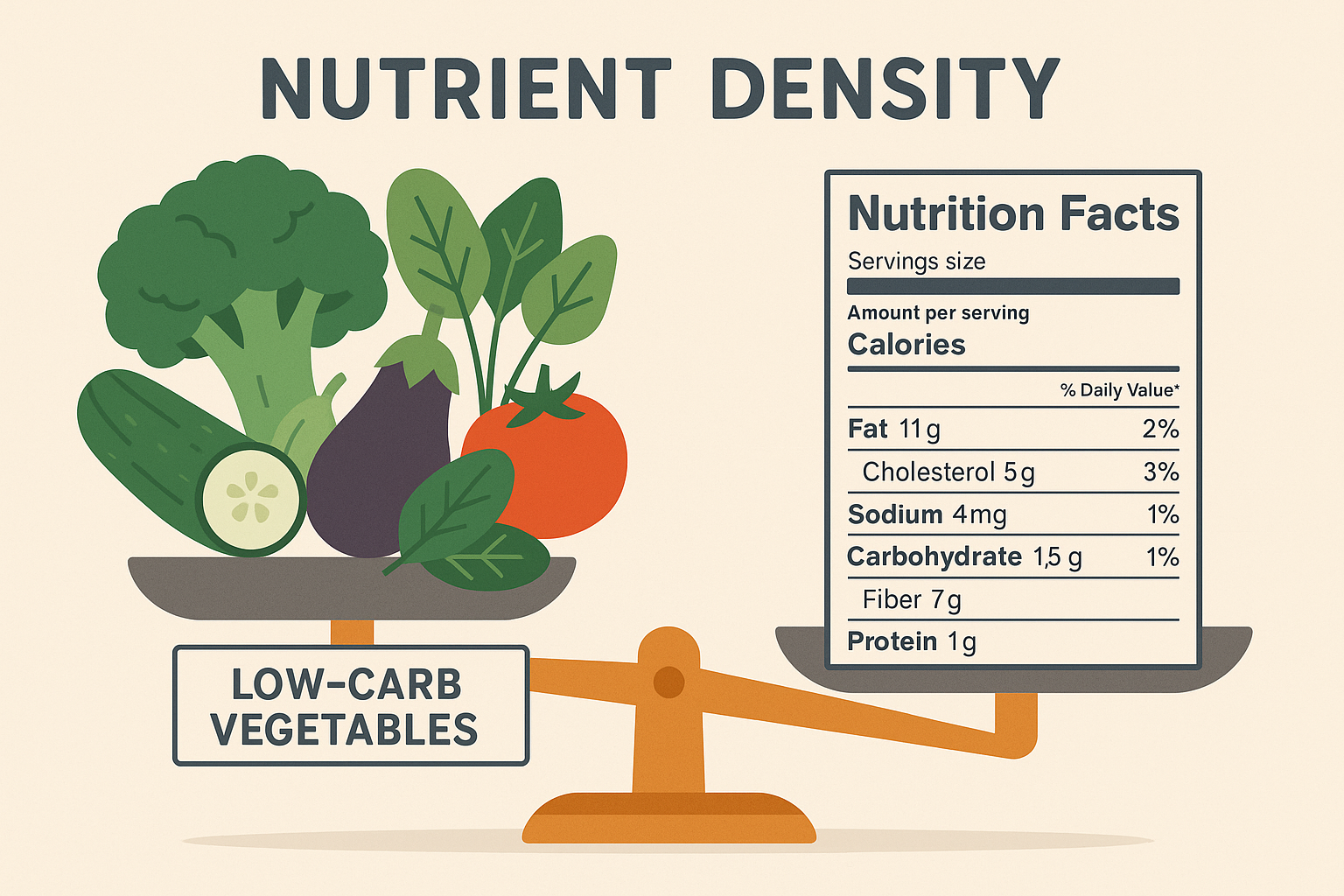
For every gram of net carbs I eat, I try to get at least 10 essential nutrients. Sounds complicated, but it’s really just about choosing foods that pack a punch. This creates meals that actually support your health while keeping you in ketosis.
Your low carb meal choices should pass this simple test: does this food give me at least 10 nutrients per carb gram? If not, find something better. This rule completely changed how I think about every food decision.
Here’s my cheat sheet of veggies that pack the biggest nutritional punch:
The Heavy Hitters:
- Seaweed (Nori): 2g carbs, 18 nutrients – Like a multivitamin you can actually chew
- Spinach: 1.4g carbs, 15 nutrients – The overachiever of the vegetable world
- Kale: 2.9g carbs, 16 nutrients – Yeah, I know, everyone talks about kale, but it really works
- Brussels Sprouts: 3.4g carbs, 12 nutrients – They don’t have to taste like sadness if you cook them right
- Broccoli: 2.6g carbs, 14 nutrients – The reliable friend of low carb vegetables
Sea Vegetables Are Weird But Worth It (Trust Me on This One)
I prioritize vegetables that give me maximum minerals per carb gram – sea vegetables, dark leafy greens, and cruciferous vegetables are my go-tos. Yes, we’re basically talking about eating seaweed. Like what washes up on the beach. But hear me out.
Sea vegetables provide trace minerals that are nearly impossible to get elsewhere while using almost no carb budget. I include sea vegetables in my low carb rotation 3-4 times per week, usually adding dulse or nori to salads or using them as wraps. It’s weird at first, but your body will thank you.
The Rainbow Approach (Low Carb Style)
I try to eat different colored low-carb vegetables throughout the week to make sure I’m getting various antioxidants. Purple cabbage, spinach, radishes, and small amounts of bell peppers. I rotate through different colors every few days and use herbs and spices to fill any gaps.
If this sounds overwhelming, just pick one thing to try. Don’t worry if you can’t do all of this – I certainly didn’t start here.
Making Your Body Actually Absorb These Nutrients (The Part Nobody Talks About)
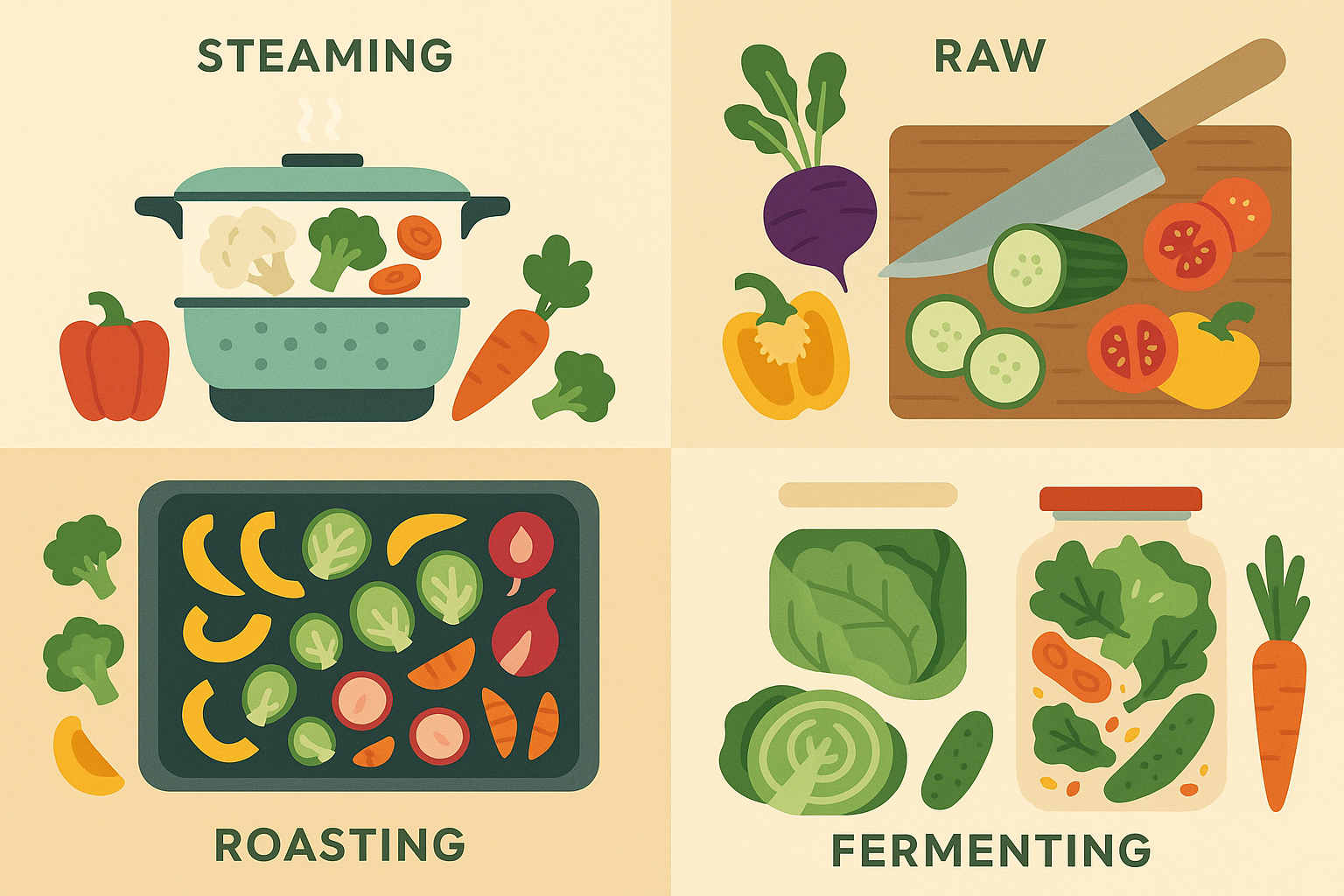
Okay, so here’s where it gets interesting. Many nutrients in low carb vegetables don’t get absorbed well unless you prepare and combine them right. Raw spinach gives you different nutrients than sautéed spinach. I rotate between different preparation methods to get maximum benefit from my limited carb allowance.
Your low carb meal preparation matters as much as your food choices. I’ve learned that certain prep methods significantly improve how much nutrition I actually get from these foods.
Why Being Flexible Beat Being Perfect (And Saved My Sanity)
I used to think consistency meant eating exactly the same macros every single day. Spoiler alert: this approach made me miserable and eventually led to a spectacular burnout where I stress-ate crackers for a week and felt terrible about it.
This approach uses planned variation to keep your metabolism from freaking out and going into “starvation mode.” Your low carb meal plan becomes a tool for training your metabolism rather than just restricting it.
For those exploring metabolic flexibility, understanding ladies intermittent fasting can complement your low carb approach by optimizing hormone balance and metabolic adaptation. I combine both strategies, though not perfectly, and it works better than my old all-or-nothing approach.
The 5-Day Thing That Actually Worked
I do 5 days of very low carb intake (under 15g net carbs) followed by 48 hours where I’m a bit more relaxed about it. This prevents my metabolism from adapting and slowing down while still getting low carb benefits. Your body needs some variation to keep things working properly.
According to Boston Children’s Hospital research, the low-carb diet reduced lipoprotein(a), a cardiovascular risk factor, by nearly 15 percent on average, compared to just 2 percent reduction with moderate-carb diets, demonstrating the power of strategic carb restriction cycles.
My buddy Mike tried this approach. First week? He was hangry and his wife threatened to hide his scale. Week 3? He started feeling human again. Week 8? Okay fine, he was annoyingly successful, but it took time and there were definitely some rough patches. He did 12g net carbs Monday through Friday (mostly spinach and cucumber), then increased to 35g on weekends with bell peppers and cherry tomatoes. After 8 weeks, he was still losing 1.5 pounds per week consistently without the metabolic slowdown that usually derails people.
Your Post-Workout Carb Window (Finally, Some Good News)
If you work out, you can be a bit more flexible with carbs right after exercise. I schedule slightly higher carb intake (30-40g) within 2 hours post-workout using quickly-absorbed sources, then go back to strict low carb eating within 4-6 hours.
Your post-workout low carb meal might include more bell peppers or cherry tomatoes than usual. Your body can handle it better after exercise, so take advantage of that window.
How Meal Timing Messes With Your Hormones (In Ways You Didn’t Expect)
The timing of your low carb meals affects hormonal balance way more than you’d think. It impacts sleep quality, mood, even reproductive health. Strategic meal timing can improve leptin sensitivity, which helps maintain metabolic rate and appetite control.
A 2018 study updated in 2020 Prevention Magazine reported found that people who ate a low to moderate amount of carbs burned more calories and saw significantly lower levels of ghrelin (appetite-increasing hormone) and higher levels of leptin (satiety hormone), highlighting the importance of strategic meal timing for hormonal optimization.
Your low carb meal timing affects way more than just weight loss. I pay attention to how meal timing impacts my sleep, energy, and mood – these are all signs that tell me whether my approach is actually working or just making me miserable.
Figuring Out What Actually Works for YOUR Body (Because We’re All Different)
Advanced low carb meal planning goes beyond generic recommendations by using your individual data to create something that actually works for your weird, wonderful body. I use genetic testing, continuous glucose monitoring, and gut microbiome analysis to figure out what works for my specific biology.
Your low carb meal plan should be as individual as your fingerprint. Generic advice works for some people, but personalized data reveals why certain approaches work better for you. I’ve discovered that my genetic variations require completely different strategies than what works for my friends following similar plans.
Your Genes Tell You Which Fats to Eat (Mind Blown)
Specific genetic variations affect how you respond to low carb diets. Your APOE gene variant influences fat processing, while MTHFR mutations affect folate metabolism. I need specific attention to folate-rich, low carb vegetables based on my genetic profile.
Understanding your genetic makeup helps explain why your friend thrives on coconut oil while it makes you feel sluggish. Your low carb meal plan should account for these individual differences rather than following one-size-fits-all recommendations.
Those Glucose Monitor Things Aren’t Just for Diabetics
I tried one of those continuous glucose monitors and holy cow, did I learn some stuff about my body. Even on low carb diets, they reveal how you respond to specific foods and meal timing. CGM data shows your unique carb tolerance patterns throughout the day and how stress affects your response to low carb foods. I wear a CGM periodically to understand how my body responds to different vegetables, meal timing, and stress levels. Your low carb meal plan becomes much more precise when you have real-time data about how your body processes different foods.
Mapping Your Personal Carb Tolerance (The Fun Detective Work)
I wear a CGM for 2-4 weeks while following my low carb meal plan to test individual foods and identify what actually triggers problems. Creating a personalized “safe foods” list based on real data helps me adjust meal timing and figure out which foods work when.
My Personal Testing Schedule:
- Week 1-2: Test 3 different vegetables in the morning, 3 in the afternoon, 2 in the evening
- Week 3-4: Confirm my top performers and test how stress affects everything
- What I Track: Glucose spikes, energy levels, how I actually feel
- Adjustments: Remove problem foods, optimize timing windows
My friend Lisa discovered through CGM testing that bell peppers caused a huge glucose spike when eaten in the morning but were totally fine in the afternoon. She also found that her “safe” cucumber caused unexpected spikes during stressful work days. By adjusting her vegetable timing and having different protocols for stress days, she maintained stable glucose levels throughout her low-carb journey. Her success came from understanding her individual patterns rather than following generic guidelines that didn’t fit her body.
Your Gut Bacteria Are Picky Eaters Too
Your gut microbiome decides how effectively you digest and metabolize low carb foods. Certain bacteria convert fiber into beneficial compounds, but everyone’s bacterial populations are different. This affects which foods work for you and how you should prepare them.
Supporting your gut health becomes crucial when following restrictive eating patterns, which is why exploring are drinking vinegars the next big thing for gut health can provide additional digestive support during your low carb journey. I’ve found that my microbiome testing revealed why certain vegetables that work perfectly for others cause digestive issues for me.
The Histamine Problem Nobody Talks About (But Should)
Many people unknowingly have histamine processing issues that make certain low carb foods problematic. This requires eliminating high-histamine low carb foods for 4 weeks, gradually reintroducing while monitoring symptoms, and focusing on fresh, properly stored vegetables.
If you suspect histamine intolerance is affecting your low carb progress, learning about do you need to do an elimination diet can help you identify problematic foods systematically. I discovered that my afternoon fatigue wasn’t from my low carb meal choices themselves, but from histamine reactions to aged foods I was including.
My Low-Carb Histamine Reality Check:
- Remove aged cheeses and cured meats for 4 weeks (this sucked)
- Eliminate fermented vegetables temporarily (goodbye, sauerkraut)
- Avoid leftover proteins – cook fresh daily (meal prep became harder)
- Focus on fresh, never-frozen vegetables
- Track symptoms: headaches, skin issues, digestive weirdness
- Reintroduce one food every 3 days after elimination phase
- Monitor reaction patterns for 72 hours (because reactions can be sneaky)
Food Prep Techniques That Actually Matter (Not Just Instagram Pretty)
Proper preparation and storage of low carb meals significantly impact nutrient retention, how well you digest them, and your metabolic response. I’ve found that using fermentation, enzymatic processes, and cold-processing methods can help your body get more nutrition from limited carbs.
When you’re working with such limited carbs, every preparation choice matters. I’ve learned that raw preparations and using sous vide cooking below 140°F preserves nutrients that traditional cooking destroys. Brief steaming beats boiling every time, and adding enzyme-rich foods helps your body extract maximum nutrition from every bite.
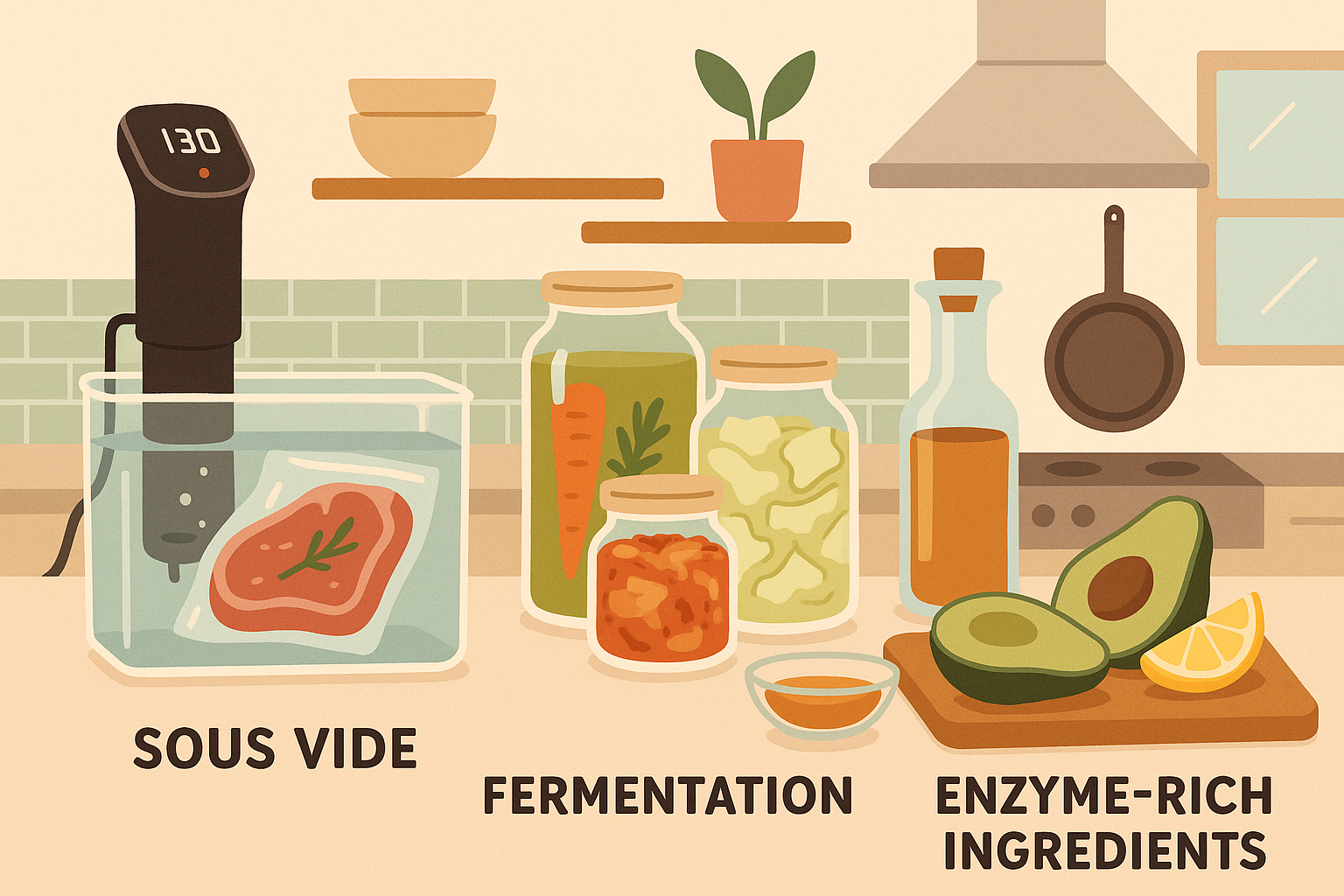
Your low carb meal preparation can either enhance or destroy the nutrients you’re working so hard to optimize. I use fermentation for certain vegetables, cold-pressing for others, and strategic enzyme additions to maximize what I get from my limited carb budget. It’s not perfect, and some days I just steam everything because that’s what I have energy for.
Clinical research from CSIRO’s two-year study demonstrated that the low-carb group experienced diabetes medication reductions twice as large as the high-carb group, with blood triglycerides decreasing by 0.4 mmol/L compared to just 0.01 mmol/L in the control group, emphasizing how proper nutrient optimization can amplify low-carb benefits.
For those looking to optimize their low carb journey with high-quality supplements, Organic Authority’s carefully vetted collagen products can support your wellness goals through superior bioavailability – much like how these advanced meal planning techniques maximize nutrient absorption from your limited carb intake.

The Honest Truth About All This

Honestly? I still don’t have it all figured out. Last week I stress-ate crackers and felt terrible about it. But I’ve learned that beating myself up doesn’t help. I spent years thinking low carb was just about staying under 20 grams of carbs per day. Turns out, when you eat those carbs, which ones you choose, and how your unique body processes them matters just as much as the total count.
Whether you’re a morning person or night owl literally determines when your body can handle carbs. Your stress levels, your genes, even your gut bacteria all play roles in how successful your low carb meal plan will be. Some of this might not work for you, and that’s totally fine.
The biggest game-changer? Realizing that my body needed flexibility, not rigidity. Those strategic 5-day deep ketosis cycles followed by moderate carb increases prevented the metabolic slowdown I’d experienced with other approaches. Using a continuous glucose monitor showed me that my “safe” low carb foods weren’t actually safe for my unique physiology.
This isn’t about making low carb more complicated – it’s about making it more effective. When you’re limiting yourself to such a small amount of carbs, shouldn’t every single gram count toward your health goals? Your body is giving you data every day through energy levels, sleep quality, and how you feel. Start paying attention to those signals, and your low carb meal plan becomes less of a restriction and more of a personalized system that actually works.
If this sounds overwhelming, just pick one thing to try. Don’t worry if you can’t do all of this – I certainly didn’t start here. Tomorrow’s a new day, and I’ll try again. Maybe you will too. We’re all just doing our best here, and that’s enough.