
Grilled Fruit Recipes: 4 Ways to Turn Summer’s Best Produce Into Dessert
Summer fruit belongs on the grill. The heat does something to the natural sugars that raw fruit simply can't replicate.

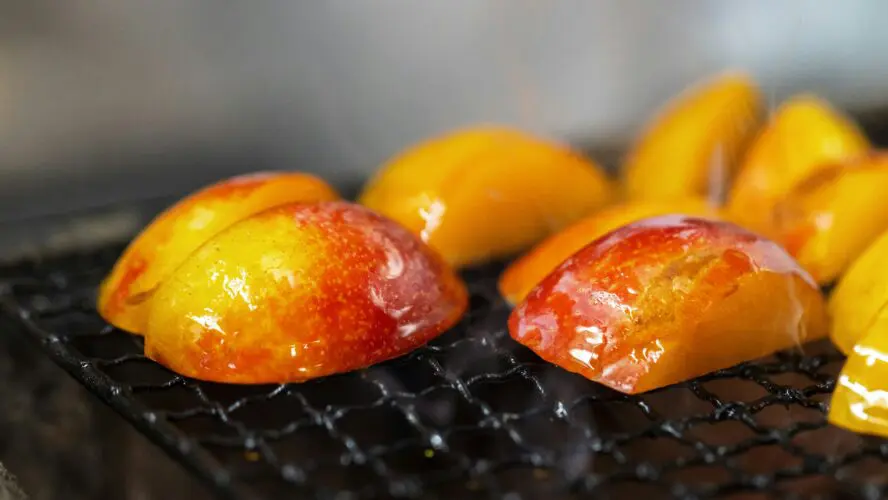
I can’t even begin to express the magical alchemy that takes place when you grill fruit. These four grilled fruit recipes that turn your backyard grill into the dessert implement of your dreams. No oven, no extra dishes, and no turning off the heat. Grilled pineapple spears, peach halves, cinnamon apples, and fruit salad kabobs, all ready in under 15 minutes while the grill is still hot. We have a full guide on plant-based grilling full of tips and tricks, here.
Why Grilling Fruit Works
Fruit contains natural sugars that caramelize beautifully under direct heat. The same Maillard reaction that gives a good sear its depth works on stone fruit, pineapple, and apples too. What you get is a concentrated, slightly smoky sweetness that raw fruit simply doesn’t have, with a warm, tender center and lightly charred edges that make it feel genuinely dessert-worthy.
Never miss a new recipe. Sign up for our newsletter for more sweets, sips, and eats ideas along with well-researched, non-toxic living guidance and smart wellness advice.
Can’t grill outside?
Btw, if you’re reading this and outdoor grilling is not an option for you, we recently tested a non-toxic indoor grill that would work really well here. We also adore Staub’s cast iron grill pan, which would make an ideal substitute for outdoor grilling.
A few things make the difference between fruit that holds together on the grate and fruit that falls apart:
Ripeness matters more than anything else. Go firm-ripe across all four recipes here. Fruit that gives slightly when pressed is ideal — soft or overripe fruit loses structural integrity the moment it hits the heat and turns to mush before you get grill marks. If your peaches are very soft, save them for a smoothie and use firmer ones here.
Clean, oiled grates are non-negotiable for fruit. Sugar scorches and sticks faster than meat does, and fruit doesn’t have the fat content to protect it the way a protein would. Before you put any fruit on the grill, brush the grates clean and wipe them with a lightly oiled cloth.
For kabobs specifically, soak your wooden skewers in water for at least 30 minutes before threading. Dry wooden skewers char and can split under heat, which is one of the two most common reasons kabobs fall apart. The other is overripe fruit, see above.
1. Grilled Pineapple Spears
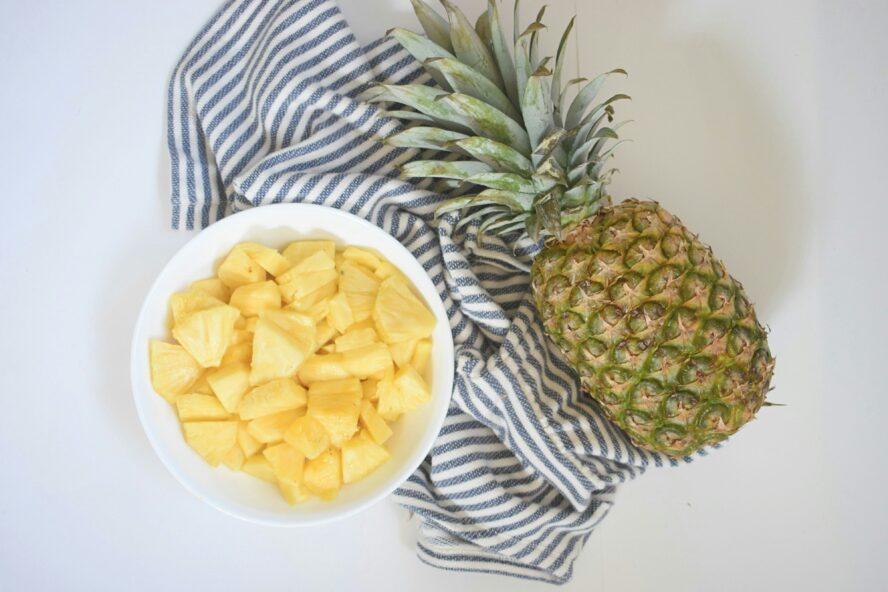
Pineapple is the most forgiving fruit to grill. Its firm, fibrous texture holds together well even over high heat, and its natural sugars caramelize fast and deeply.
Use a ripe but still firm pineapple; overripe pineapple will be too soft to handle the grate.
Serves 4 (about 12 to 15 spears)
Ingredients:
- 1 pineapple, cut into 1-inch spears
- ½ cup butter, melted
- 1 cup sucanat or brown sugar
Method:
- Toss pineapple spears in melted butter, then roll in sucanat or brown sugar to coat.
- Grill over high heat for about 3 minutes per side, 12 to 15 minutes total, until lightly caramelized on each side.
Tested note: The sugar coating can flare up over high heat so keep an eye on it and move spears to a cooler part of the grate if they’re darkening too fast. You want deep caramelization, not char.
2. Grilled Peach Halves
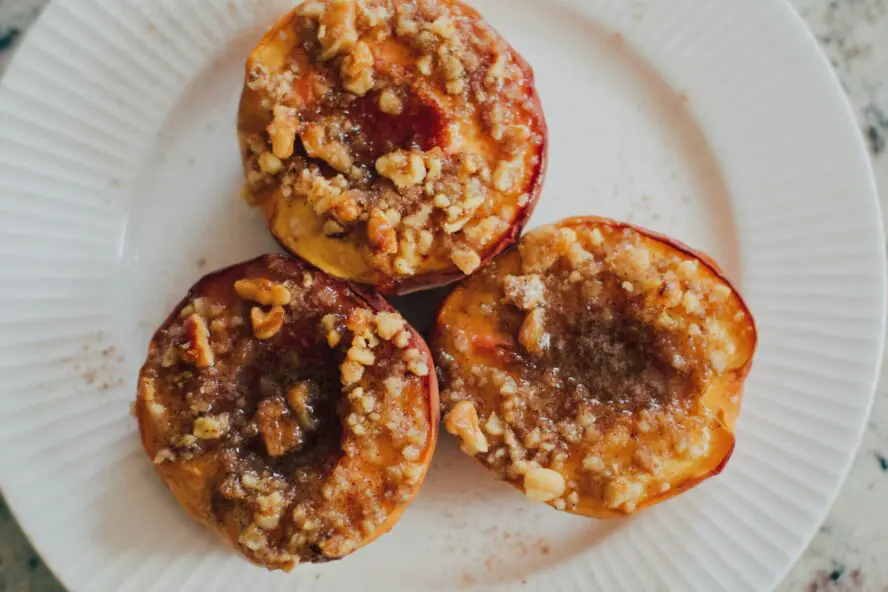
Stone fruit is where grilling really earns its keep. The heat concentrates the peach’s natural sweetness and softens the flesh just enough while keeping the shape intact as long as you start with firm-ripe peaches. Very ripe peaches won’t hold their shape on the grate. We have a couple of favorite ways to use grilled peaches, stuffed with yogurt and granola, or in a smokey, peachy cocktail, but you do you.
Serves 4 (8 halves)
Ingredients:
- 4 peaches, halved and pitted
- ¼ cup butter, melted
Method:
- Brush peaches on their cut sides with melted butter.
- Place cut-side down on a clean, oiled grate over medium-high heat.
- Grill for 10 to 15 minutes, turning every few minutes, until caramelized and warmed through.
Tested note: Don’t rush the flip. Wait until the peach releases naturally from the grate before turning. If it sticks, it needs another minute.
3. Grilled Cinnamon Apples
Apples take a little longer than stone fruit and hold their shape well, making them a reliable choice even for newer grillers. The warm spice mix here, cinnamon, nutmeg, cloves, turns this into something that tastes like pie filling came off a grill. (Slightly off topic, but we also love making apples in the slow cooker.)
Serves 4 (8 halves)
Ingredients:
- 4 apples, cored and halved
- ¼ cup butter, melted
- 2 tablespoons sucanat or brown sugar
- ½ teaspoon cinnamon
- ¼ teaspoon nutmeg
- ⅛ teaspoon ground cloves
Method:
- Brush apple halves with melted butter.
- Mix sucanat, cinnamon, nutmeg, and cloves together and sprinkle evenly over the cut sides.
- Grill over medium-high heat for 10 to 15 minutes, turning every few minutes, until caramelized and tender.
Tested note: A firmer apple variety like Honeycrisp or Granny Smith holds up better than a softer variety like McIntosh, which can turn mealy on the grill.
4. Barbecue Fruit Salad Kabobs
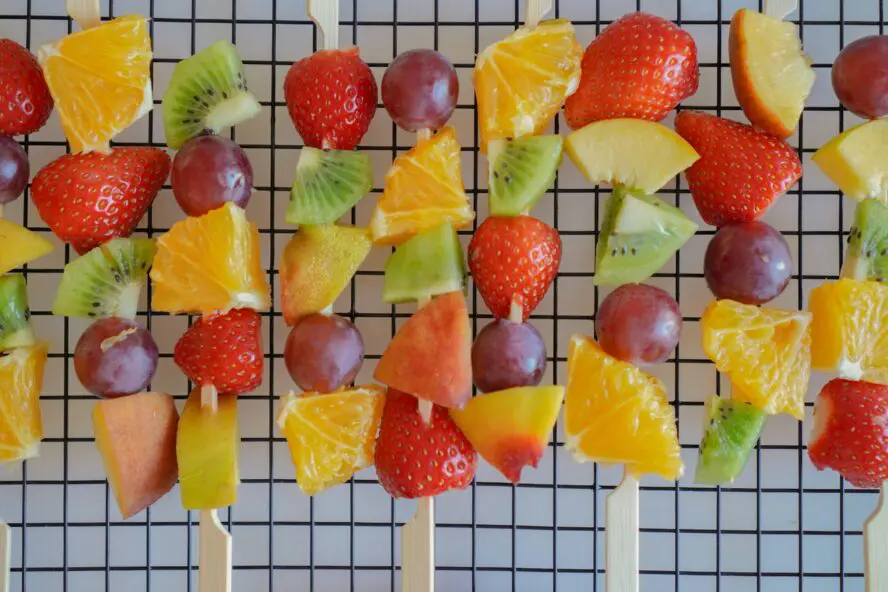
The most visually impressive of the four, and the one that requires the most prep. The honey-butter-lime glaze pulls the different fruits together into something that tastes like a considered dessert rather than an afterthought. Soak those skewers.
Serves 4 (8 kabobs)
Ingredients:
- ½ cup butter, melted
- 2 tablespoons honey or maple syrup
- 1 teaspoon fresh lime juice
- 2 peaches, peeled, pitted, and quartered
- 4 kiwis, peeled and quartered
- 2 bananas, peeled and cut into 4 pieces each
- 8 strawberries, hulled
- 8 wooden skewers, soaked in water for at least 30 minutes
Method:
- Whisk together melted butter, honey or maple syrup, and lime juice.
- Thread fruit pieces onto each skewer, alternating varieties.
- Place skewers on a foil-covered grill over medium-high heat.
- Drizzle half the honey-butter glaze over the fruit and grill for 5 minutes.
- Flip skewers, drizzle with remaining glaze, and grill for another 5 minutes.
Tested note: Bananas soften fast — thread them between firmer fruits like peach and kiwi so they’re supported on the skewer and don’t slide off during flipping.
Substitutions and Dietary Swaps
Butter: Coconut oil swaps in 1:1 across all four recipes for a vegan version. It has a slightly higher smoke point than butter and works well over high heat.
Sucanat/brown sugar: Honey or maple syrup can replace sucanat in the pineapple and apple recipes — brush it on rather than tossing or sprinkling. For a lower added sugar version, skip the coating entirely and let the fruit’s natural sugars do the work; you’ll get less caramelization but still good flavor.
Honey in the kabob glaze: Maple syrup swaps in 1:1 and gives a slightly earthier sweetness that works well with the peach and banana.
Fruit in the kabobs: Most firm-ripe fruit works here. Mango, pineapple chunks, and plum quarters are all good additions or substitutions. Very soft fruit (overripe berries, very ripe banana) won’t hold on the skewer.
Tips for the Best Grilled Fruit
Start with a clean, hot grate. Brush it clean and wipe with oiled cloth before the fruit goes on — this is the single most important step for preventing sticking and scorching.
Choose firm-ripe fruit every time. Soft or overripe fruit falls apart on the grate before it has a chance to caramelize. If you press the fruit and your finger sinks in, it’s too soft to grill.
Watch the heat for sugared fruit. The pineapple and apple recipes involve a sugar coating that can go from caramelized to burnt quickly. Stay close and move pieces to a cooler zone if they’re darkening too fast.
Know when it’s done. You’re looking for deep grill marks and a warmed-through center — not full softening. Overcooking turns grilled fruit mushy. The fruit should still hold its shape when you take it off the grate.
Serve immediately. Grilled fruit is best the moment it comes off the grill. It doesn’t hold well and doesn’t reheat — plan to serve it straight to the plate.
Is Grilled Fruit for Dessert Healthy?
Grilling doesn’t diminish what fruit already brings to the table. According to the USDA, stone fruits like peaches are a meaningful source of vitamin C, potassium, and dietary fiber.¹ Pineapple provides vitamin C and manganese, and contains bromelain, an enzyme with well-studied anti-inflammatory properties.² Apples contribute quercetin, a polyphenol that the NIH notes has been studied for its antioxidant activity.³
The butter and sugar coating in these recipes is a flavor choice, not something that needs a disclaimer, it’s a small amount spread across four servings, and the fruit itself is still doing the nutritional heavy lifting. If you’d prefer to skip the coating, the fruit grills beautifully without it.
Storing Leftover Grilled Fruit
Grilled fruit is best the moment it comes off the grill and doesn’t hold the way a baked dessert would. Once dressed and cooled, the texture softens considerably and the caramelized edges lose their contrast.
If you have leftovers, refrigerate them in an airtight container for up to two days. Don’t expect reheating to restore the original texture. Microwaving makes it mushy, and the grill marks won’t come back. The best use for leftover grilled fruit is folding it into yogurt or oatmeal the next morning, or blending it into a smoothie where the texture doesn’t matter.
Grilled Fruit FAQs
What fruits grill best for dessert? Firm, not-quite-soft-ripe fruit holds up best on the grate. Pineapple, peaches, apples, and bananas are all reliable choices. Very soft or overripe fruit loses its structure before it has a chance to caramelize and will fall apart on the grill.
Do you need to oil the grill grates for fruit? Yes, always. Sugar scorches and sticks to grates faster than meat does, and fruit doesn’t have the fat content to protect it. Clean the grates and wipe them with a lightly oiled cloth before any fruit goes on.
Can you make grilled fruit without butter? Yes. Coconut oil substitutes 1:1 across all four recipes for a vegan version. For a lower-fat option, you can grill the fruit with no coating at all, you’ll get less caramelization but the fruit will still pick up some char and sweetness from the heat.
How do you know when grilled fruit is done? Look for deep grill marks and a warmed-through center. The fruit should still hold its shape when you remove it from the grate. If it’s collapsing, it’s gone too far. Overcooking turns grilled fruit mushy regardless of how firm it was going in.
More Easy Recipes to Try
If grilled fruit is your new go-to summer dessert, these belong in the same spread. For the main event before dessert, barbecue chicken under a brick and heirloom tomato and Red Ruffle basil salad round out a Labor Day table that looks far more effortful than it actually is. These herbaceous late summer cocktails would not go amiss (with mocktail options) nor would some boozy, adult slushies.
Sources:
- USDA FoodData Central, Peaches, raw. https://fdc.nal.usda.gov/food-details/169928/nutrients
- NIH National Center for Complementary and Integrative Health, Bromelain. https://www.nccih.nih.gov/health/bromelain
- NIH Office of Dietary Supplements, Antioxidants: In Depth. https://ods.od.nih.gov/factsheets/Antioxidants-Consumer/