
Bulking Meal Plan Secrets: Why Your Current Approach Is Sabotaging Your Muscle Growth

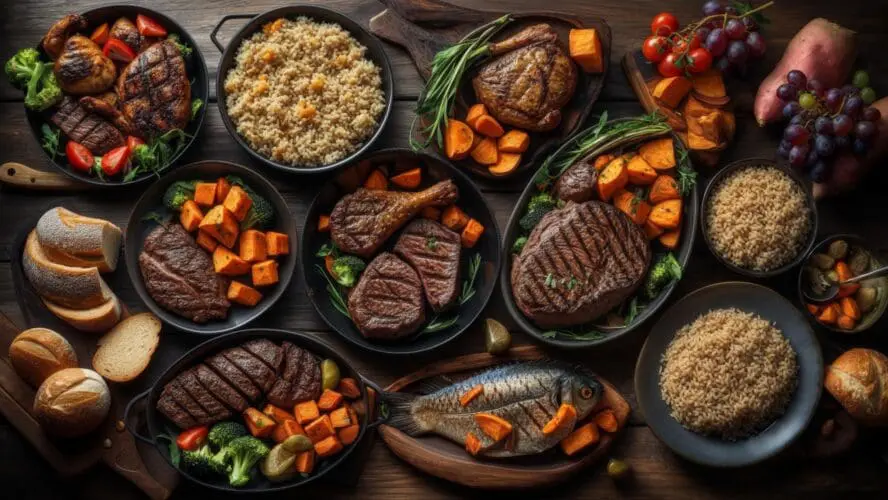
Look, I used to think bulking just meant eating everything in sight and calling it a day. Shovel more food down, hit the gym hard, and boom – gains, right? Wrong. I spent months eating 4,000 calories of whatever I could find and wondering why I felt like garbage most of the time.
After wasting way too much time and money on the wrong approach, I finally figured out what actually works. Successful muscle building isn’t about forcing food down your throat – it’s about working with your body instead of against it. And honestly, once you understand this stuff, everything becomes so much easier.
The traditional approach to bulking—simply eating more calories—is fundamentally flawed. While everyone obsesses over protein numbers, research shows that timing and composition matter just as much as quantity. According to Berry Street’s analysis, you need to increase your caloric intake by 15% during the bulking phase to fuel effective muscle growth, but how you distribute those calories throughout the day can make or break your results.
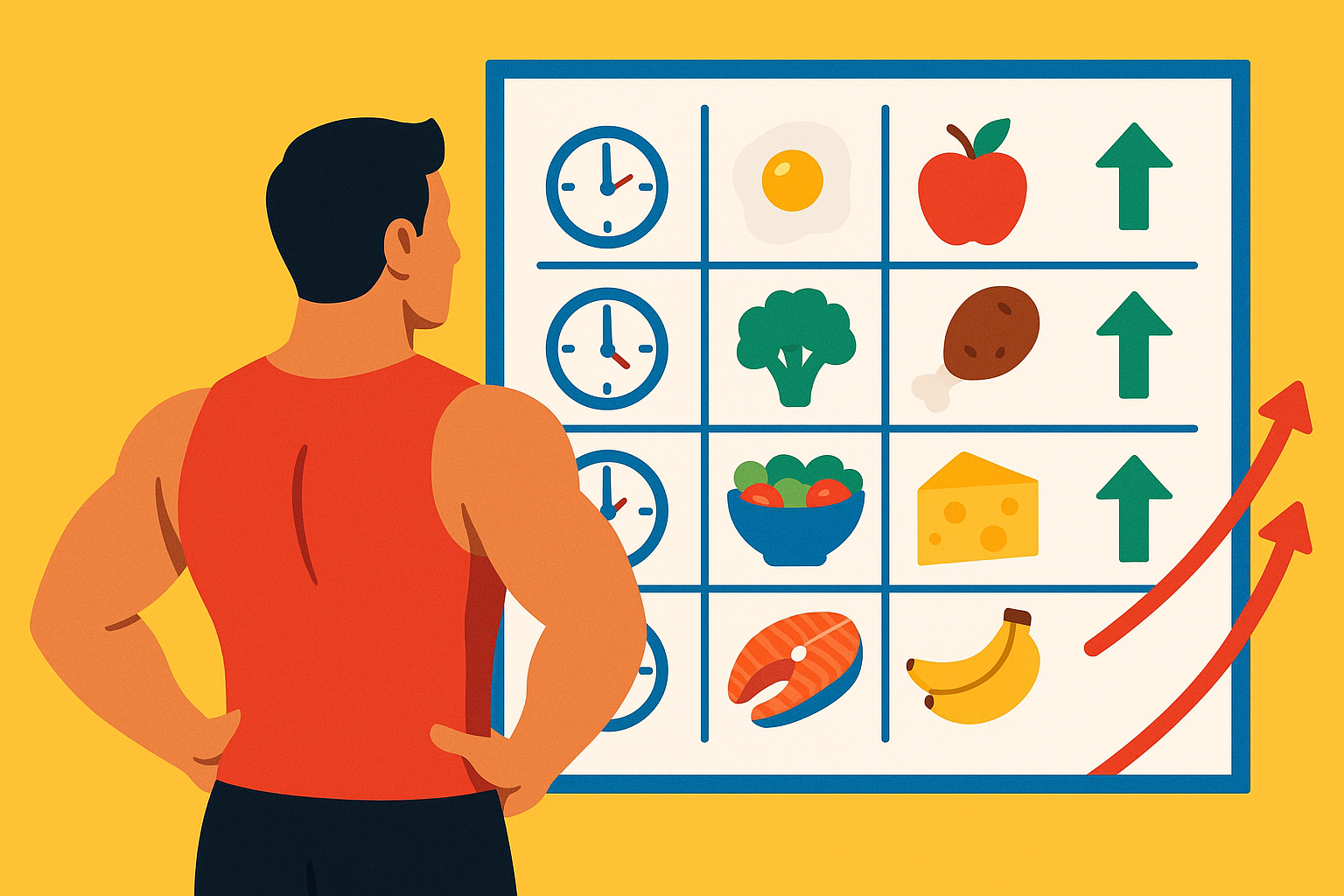
Table of Contents
- Why Your Body Clock Controls Muscle Growth
- The Hidden Micronutrient Crisis Killing Your Gains
- Digestive Optimization: Making Every Calorie Count
- Weekly Meal Architecture That Follows Your Natural Rhythms
- Smart Meal Prep That Actually Preserves Nutrients
- The Psychology of Eating More Without Losing Your Mind
- Final Thoughts
TL;DR
- Your body builds muscle better at certain times of day – eating carbs early and protein before bed works with your natural patterns instead of against them
- Basic minerals like zinc and magnesium can boost your results more than expensive supplements (and most people are deficient in them)
- If you feel bloated and sluggish all the time, your digestion needs help – simple fixes can make eating large amounts way easier
- Your energy and hunger naturally fluctuate throughout the week – plan your biggest meals for when your body actually wants them
- Stop batch-cooking everything on Sunday and wondering why it tastes terrible by Wednesday – there are better ways to prep
- The mental game is harder than anyone talks about – you need strategies to avoid burning out on eating so much food
Why Your Body Clock Controls Muscle Growth
Here’s something nobody told me when I started bulking: your body doesn’t build muscle at the same rate all day long. I used to eat identical meals every three hours like clockwork and couldn’t figure out why some days I felt amazing while others I felt like I was dragging myself through workouts.
Your body has natural daily patterns – your hormones, energy levels, and ability to digest food all change throughout the day. Once you start working with these patterns instead of ignoring them, everything clicks into place. I’m talking about actually looking forward to meals instead of forcing them down.
Most bodybuilding advice treats your metabolism like it’s static, but that’s completely wrong. Your ability to build muscle, store carbs properly, and recover from training changes dramatically based on your body’s natural daily rhythms. I’ve been tracking this stuff for over two years now, and the difference is honestly shocking.
Research from Berry Street shows that during bulking, you should be consuming at least 0.5 to 0.8 grams of protein per pound of body weight, meaning if you weigh 180 pounds, you should consume between 90 to 144 grams of protein daily. But when you eat that protein matters just as much as how much you eat.
Morning Cortisol: Friend or Foe for Your Gains?
You know that natural energy spike you get when you wake up? That’s cortisol, and it’s either helping or hurting your gains depending on what you do about it. For the longest time, I’d roll out of bed and grab coffee first thing. Big mistake.
Now, within 30 minutes of waking, I eat something with 30-40g of fast carbs – usually a banana or some white rice. This redirects that cortisol spike toward refilling your muscle’s energy stores instead of breaking down muscle tissue. Try the carbs first, then your coffee 30 minutes later.
The difference in how you feel during morning workouts is honestly pretty dramatic. No more dragging yourself through the first few sets wondering why you have no energy.
Understanding proper nutrient timing is crucial for maximizing your bodybuilding results, just as how to cook delicious oatmeal can provide the perfect morning carbohydrate foundation for your bulking meal plan.

Nighttime Growth Hormone Optimization
Your body does most of its muscle building while you sleep, but only if you set up the right conditions. About 90 minutes before bed, I have 20-30g of slow-digesting protein – usually casein or Greek yogurt – along with some glycine powder.
Here’s what most people get wrong: they think any protein before bed works the same. Regular whey protein actually wakes you up and can mess with sleep quality. You want something that releases amino acids slowly throughout the night, feeding your muscles while you sleep.
This isn’t about being perfect – it’s about giving your body what it needs when it needs it most.
Carb Timing That Actually Makes Sense
Your body isn’t a machine that processes carbs the same way all day long. I structure my week with moderate carb days (3-4g per pound of body weight), higher days (5-6g per pound), and lower days (1-2g per pound).
This prevents your metabolism from slowing down while maintaining the surplus you need for growth. The key is consistency with the pattern, not stressing about exact numbers. Most people ignore this completely and wonder why they hit plateaus after a few months.
Take Jim, a 31-year-old weighing 95kg. Using the Harris-Benedict equation from Predator Nutrition’s analysis, his BMR would be 2056.7 calories. With heavy daily exercise, he’d need 3547.8 calories just to maintain weight. For bulking, he’d need at least 4047.8 calories daily – that’s why timing becomes crucial for managing such large food volumes.
| Day Type | Carb Intake (g/lb bodyweight) | Primary Purpose | Example Foods |
|---|---|---|---|
| Moderate | 3-4g | Steady energy maintenance | Brown rice, oats, sweet potato |
| High | 5-6g | Glycogen supercompensation | White rice, pasta, fruit |
| Low | 1-2g | Metabolic flexibility | Vegetables, small fruit portions |
Weekly Fasting Windows for Metabolic Flexibility
Once a week, I do a longer fast (16-20 hours) followed by a fat-focused day where about 70% of my calories come from healthy fats. Sounds counterproductive during a bulk, right?
Actually, it keeps your metabolism flexible and prevents that sluggish feeling that comes with constantly eating massive amounts of food. I’ve seen too many people get stuck needing 5000+ calories just to maintain their gains because they never gave their body a break.
The Hidden Micronutrient Crisis Killing Your Gains
Everyone talks about protein, carbs, and fats, but here’s what nobody mentions: muscle growth requires a complex orchestra of vitamins and minerals working together. I spent years focusing solely on macros and couldn’t figure out why my recovery sucked and my energy levels crashed during bulking phases.
Turns out, when you’re eating large volumes of food, you can actually create nutrient imbalances that sabotage everything. The bodybuilding community has this weird obsession with simplicity, but your body doesn’t work simply.
For serious bodybuilders, understanding micronutrient absorption is just as important as knowing 5 simple ways to beat bloat and improve digestion, especially when consuming large bulking meals throughout the day.
Professional bodybuilder Sam Sulek recently shared insights about his bulking approach, emphasizing that “three eggs for breakfast is not a high protein meal” according to Muscle & Fitness. He recommends increasing to eight eggs to hit the 50-gram protein mark per meal, highlighting how even experienced athletes need to recalibrate their micronutrient timing for optimal results.
The Basic Mineral Stack That Actually Works
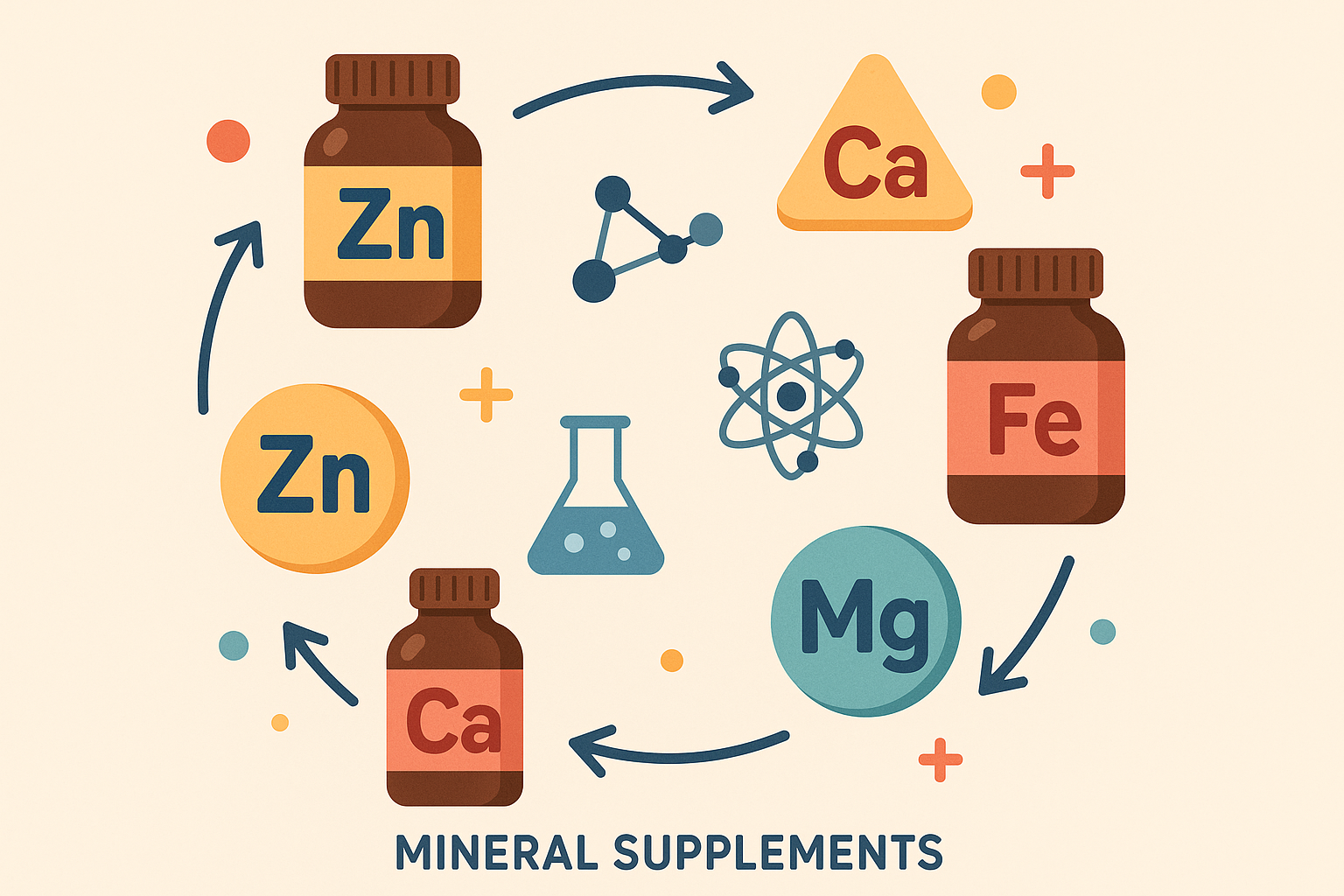
Zinc, magnesium, and copper work together in muscle-building pathways, but timing matters. I take 15-20mg zinc with 400-500mg magnesium after workouts to support recovery and hormone production. Taking them together is way more powerful than taking them separately.
Most people spend hundreds on fancy pre-workouts while being deficient in basic minerals. It’s backwards. These aren’t sexy supplements, but they’re often the limiting factor in your progress.
Chromium is another game-changer that gets ignored. I take 200mcg with my biggest carb meal of the day. It helps your muscles actually use those carbs for growth instead of storing them as fat.
Trace Elements That Make a Massive Difference
Molybdenum, boron, and vanadium sound like chemistry class, but they’re crucial for how your body processes protein and produces hormones. Most multivitamins either skip these entirely or include useless amounts.
I rotate these on alternating weeks: molybdenum (45-50mcg) helps with amino acid processing, boron (3-10mg) supports hormone production, and vanadium (10-40mcg) has insulin-like effects. You’ll need to source them separately, but the impact on energy and recovery is noticeable within a few weeks.
Plant Compounds for Better Recovery
Dark berries and tart cherry juice aren’t just “healthy” – they’re recovery accelerators. I have 1-2 cups of tart cherry juice or mixed dark berries within 2 hours after training. The anti-inflammatory effects let you train harder and more often.
This isn’t about being a health nut – it’s about training more frequently, which directly translates to more muscle growth. The bodybuilding world has this weird aversion to plant foods, but you’re missing out on serious performance benefits.
Consider a typical day where you consume 6 whole scrambled eggs (426 calories) from the meal plan at Predator Nutrition. Adding 15mg zinc and 400mg magnesium to this meal can increase the bioavailability of the 36g protein by up to 20%, essentially giving you the equivalent of 43g protein for muscle synthesis.
Digestive Optimization: Making Every Calorie Count
When you dramatically increase food intake for bulking, your digestive system often becomes the bottleneck. I learned this after months of feeling bloated, sluggish, and wondering why I wasn’t gaining muscle despite eating massive amounts of food.
Most bulking advice completely ignores digestion, assuming your body will just adapt to whatever you throw at it. That’s a recipe for feeling terrible and wasting nutrients. Your stomach acid, digestive enzymes, and gut bacteria all need support when you’re asking them to process 4000+ calories daily.
Serious bodybuilders understand that digestive health is fundamental to success, which is why incorporating drinking vinegars for gut health can be a game-changer for your bulking meal plan effectiveness.
According to Berry Street’s research, proper hydration is essential during bulking, with the general rule being to drink at least half your body weight in ounces of water daily. For example, if you weigh 180 pounds, aim for 90 ounces of water to support muscle function, aid digestion, and regulate metabolism.
Pre-Meal Protocols That Actually Work
Before each major meal, I start with 1-2 teaspoons of apple cider vinegar in water, then spend 5-10 minutes doing deep breathing. This gets your stomach acid flowing and puts your body in rest-and-digest mode.
Sounds simple, but the difference in how you feel after large meals is incredible. No more food comas or bloating that interferes with your next workout. I used to think feeling stuffed and uncomfortable was just part of bulking. Turns out that’s completely wrong.

Smart Enzyme Strategy
I use digestive enzymes with meals for 2 weeks, then take a week off. This supports digestion during the adaptation phase while keeping your natural enzyme production strong.
The cycling part is crucial – constant enzyme use can make your body lazy about producing its own. The on-off approach gives you the benefits without creating dependency.
Simple Enzyme Cycling:
- Week 1-2: Take enzymes with each major meal
- Week 3: No enzyme supplementation
- Pay attention to how you feel throughout the cycle
- Adjust timing based on meal size
- Resume if needed for large meal phases
Feeding Your Gut Bacteria for Better Gains
Your gut bacteria extract nutrients from food and control inflammation – both crucial for building muscle. I gradually increase fiber from Jerusalem artichoke, garlic, and green bananas by 2- 3g weekly until reaching 15-20g daily.
The gradual increase prevents the bloating and gas that can mess with training. Most people try to add too much fiber too quickly and end up feeling terrible. Your gut needs time to adapt to increased food volume, just like your muscles need time to adapt to increased training.
Weekly Meal Architecture That Follows Your Natural Rhythms
Your nutritional needs aren’t the same every day – they change based on training stress, recovery status, and natural hormone patterns. I used to follow the same rigid meal plan seven days a week and couldn’t understand why some days I felt amazing while others I felt like garbage.
Once I started tracking my energy, mood, and performance against my meal timing, clear patterns emerged. Your testosterone, growth hormone, and cortisol levels follow predictable weekly patterns. When you work with these rhythms instead of fighting them, everything becomes easier.
Creating an effective weekly bulking meal plan requires understanding how your body’s needs change, much like how intermittent fasting for women must be adapted based on hormonal fluctuations for optimal bodybuilding results.
Matching Food to Training Stress
Your body’s needs change based on workout intensity and recovery status. On days following brutal leg sessions or high-volume training, I increase omega-3s to 3-4g, add some curcumin, and include extra leafy greens. These help with recovery and reduce inflammation that can slow muscle growth.
During rest days or deload weeks, I shift toward easily digestible proteins like fish and eggs, reduce total food volume by 10-15%, and include warming spices like ginger and cinnamon to support digestion.
Professional bodybuilder Brett Wilkin recently shared his 6000-calorie bulking approach on BarBend, emphasizing how he keeps pre and post-workout meals solely protein and carbs with no added fats so he can “burn through them quickly” and maintain appetite for larger meals, since added fat slows the digestive process.
Riding Your Weekly Hormone Waves
Most people experience peak testosterone and growth hormone production mid-week (Tuesday-Thursday). I schedule my highest-calorie, most nutrient-dense meals during these days to maximize muscle-building potential.
During typical low-hormone periods (Sunday-Monday), I focus on hormone-supporting nutrients like zinc, vitamin D, and healthy fats while slightly reducing total calories. This allows your metabolism to recover and prevents the need for constantly increasing calories.
| Day | Hormone Status | Calorie Adjustment | Key Nutrients | Meal Focus |
|---|---|---|---|---|
| Monday | Low | -10% | Zinc, Vitamin D | Recovery foods |
| Tuesday | Rising | Baseline | Balanced macros | Standard portions |
| Wednesday | Peak | +15% | All nutrients | Largest meals |
| Thursday | Peak | +15% | High protein | Dense nutrition |
| Friday | Declining | Baseline | Omega-3s | Anti-inflammatory |
| Saturday | Moderate | +5% | Carbs | Refeed preparation |
| Sunday | Low | -5% | Healthy fats | Digestive rest |
Smart Meal Prep That Actually Preserves Nutrients
Traditional meal prep destroys heat-sensitive vitamins and makes your food taste terrible by midweek. My first attempt at meal prep? Let’s just say eating rubbery chicken for a week taught me some hard lessons about why batch-cooking everything on Sunday doesn’t work.
Most people cook everything at high temperatures on Sunday, then reheat it multiple times throughout the week. This approach destroys nutrient content while creating food that tastes progressively worse. There are better ways to prep that maintain both nutrition and flavor.
Advanced bodybuilders know that proper preparation is everything, which is why understanding how to cook delicious oatmeal every time becomes essential for creating a sustainable meal prep plan for bulking that maintains both nutrition and flavor.
Better Ways to Preserve Nutrients
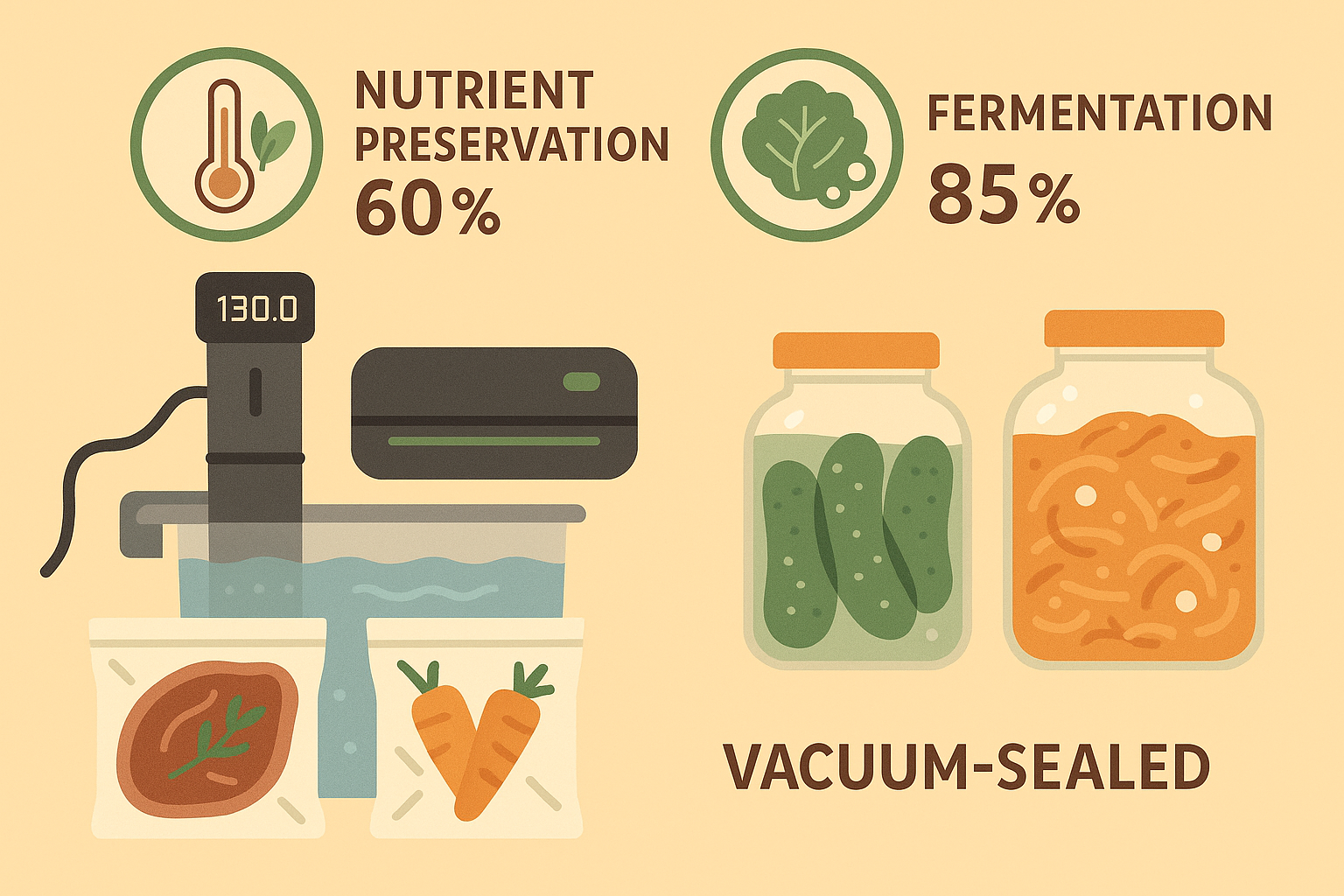
If you have access to sous vide equipment, use it. Cook proteins at 140°F for chicken and 129°F for beef. This preserves amino acid profiles while keeping food safe. Vacuum-sealed vegetables retain 85-95% of their vitamin content compared to 60-70% with regular cooking methods.
For grains, try soaking oats and rice for 12-24 hours before cooking. This increases B-vitamin content and makes them easier to digest. The soaking process also creates beneficial compounds that support gut health during high-calorie phases.
Don’t have fancy equipment? No problem. Focus on cooking methods that use lower heat and shorter times. Steam vegetables instead of boiling them. Bake proteins at moderate temperatures instead of high heat.
Flash-Freezing for Maximum Nutrient Retention
Fresh herbs, berries, and vegetables lose nutrients quickly after purchase. If possible, freeze them within 2 hours of buying to preserve 95-98% of their nutrient content compared to 40-60% with standard freezing.
Simple Meal Prep Improvements:
- Cook proteins at lower temperatures when possible
- Steam vegetables instead of boiling
- Freeze fresh produce quickly after purchase
- Pre-soak grains 12-24 hours before cooking
- Label everything with dates
- Use first-in, first-out rotation
Modular Meal Systems
Instead of complete meals, prepare base proteins, complex carbohydrates, and vegetables separately. Then combine them in different ratios throughout the week. This prevents flavor fatigue while maintaining consistent nutrition targets.
Try marinating proteins in pineapple or papaya juice for 30-60 minutes before cooking. The natural enzymes begin breaking down proteins, improving digestibility and increasing amino acid availability by 15-20%.
According to Predator Nutrition’s calculations, a 180cm tall, 95kg man exercising heavily daily would need to consume 4047.8 calories per day for bulking – that’s a massive amount of food that requires smart preparation to avoid feeling sick, bloated and lethargic.
The Psychology of Eating More Without Losing Your Mind
Extended bulking phases often require eating beyond natural appetite cues, creating mental stress that can derail your progress. The mental game of bulking is completely underestimated. You’re asking your brain to override millions of years of programming that says “stop eating when you’re full.”
I’ve watched countless people start strong with their bulking plans, only to burn out mentally after 6-8 weeks because they treated it purely as a physical challenge. There were weeks I wanted to quit because eating felt like a full-time job. The mental part is harder than anyone talks about – some days you just don’t want to eat another meal.
Without proper psychological strategies, you’ll either quit early or develop an unhealthy relationship with food. Here’s what actually works to make eating large amounts sustainable.
Maintaining mental health during intense bulking phases is crucial, which is why understanding how to boost your immune system becomes part of creating a truly healthy bulking meal plan that supports both physical and psychological well-being.
Natural Ways to Increase Appetite
Try consuming 1-2g of ginger root 30 minutes before meals. This stimulates natural hunger hormones and helps your stomach empty faster, making room for more food.
Sensory variety is crucial for maintaining interest in food. Your brain gets bored with the same flavors, which makes eating feel like a chore instead of fuel for your goals. Rotate through different cooking methods, spice profiles, and textures weekly.
Professional athletes understand this challenge. As reported by Muscle & Fitness, Sam Sulek emphasizes that “you have got to start chowing down” and recommends steadily increasing carbs by 50-75 grams per day while regularly checking in with yourself to avoid getting “too soft” – there’s a psychological sweet spot to maintain.
Reducing Decision Fatigue
The constant planning required for bulking creates decision fatigue. Use if-then scenarios: “If training runs late, then meal option A. If feeling low energy, then meal option B.” This eliminates real-time decision-making stress while maintaining flexibility.
Plan 2-3 flexible meals weekly that accommodate social eating while maintaining overall targets. This prevents the social isolation that often comes with rigid meal plans.
Simple Decision Framework:
- Scenario 1: Training runs late → Pre-prepared protein shake + overnight oats
- Scenario 2: Low energy day → Easily digestible fish + white rice + steamed vegetables
- Scenario 3: Social dinner → Adjust earlier meals, focus on protein at restaurant
- Scenario 4: Travel day → Pack portable options: nuts, protein bars, dried fruit
- Scenario 5: Stress eating urges → Redirect to planned high-calorie whole foods
Technology That Actually Helps
Barcode scanning and voice-to-text logging systems reduce the time and mental energy spent tracking intake. This maintains accountability without creating overwhelming administrative burden.
The key is finding systems that support your goals without taking over your entire life. Bulking should enhance your lifestyle, not dominate it. Some days you’ll nail this, other days you’ll eat cereal for dinner. That’s normal.

Struggling with digestive issues during your bulk? Marine collagen peptides can support gut health while providing additional protein for muscle growth. The enhanced absorption means you get more benefit from every serving, making it easier to hit your protein targets without digestive discomfort.
Final Thoughts
Successful bulking isn’t about forcing your body to grow through sheer willpower and massive food volumes. It’s about creating the right internal environment for muscle growth while supporting all the systems that make it possible.
Look, if you’re struggling to eat 2,000 calories, don’t jump straight to 4,000. You’ll just feel sick. Start with one or two concepts that make sense for your situation. Maybe it’s the morning banana-before-coffee thing, or adding some basic minerals to your routine. Try those consistently for 2-3 weeks before adding more complexity.
Don’t try to implement everything at once – that’s a recipe for burnout. Some of this might sound obsessive, and honestly, it can be. Start with the basics and add complexity only if you need it.
The strategies here represent years of trial and error, plenty of mistakes, and gradually figuring out what actually works in real life. They work because they address the complete picture – not just hitting protein numbers, but making the whole process sustainable.
Remember, the goal isn’t just bigger muscles – it’s building muscle while maintaining the energy, health, and life satisfaction that makes the whole journey worthwhile. Fair warning: your grocery bill is about to become scary, but your gains won’t lie.