
Diabetic Meal Plan Delivery: The Hidden Psychology That’s Changing Everything About Managing Diabetes at Home

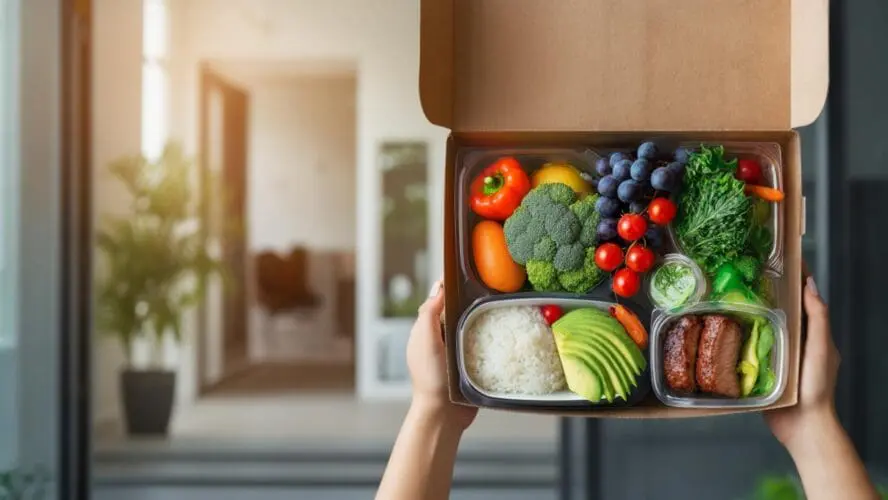
When Maria’s husband was diagnosed with type 2 diabetes, she suddenly became responsible for every meal decision in their house. Sound familiar? If you’re nodding your head right now, you’re not alone.
Here’s what we’ve found: people with type 2 diabetes experienced an average increase of 6.8% in their time in range (TIR) for blood glucose levels during a 28-day intervention using home-delivered meals. That’s real improvement you can measure.
Table of Contents
- Why Your Family Dynamics Matter More Than Your Blood Sugar Numbers
- The Technology Revolution You Don’t See (But Definitely Feel)
- Building Your Diabetes Support Network Through Food
- How to Actually Choose and Use Meal Delivery Services
- The Money Game: Insurance, Costs, and Geographic Reality
- Future Tech That’s Already Here (And What It Means for You)
- Final Thoughts
TL;DR
- Diabetic meal planning isn’t about you alone – it’s about your entire family system, especially whoever’s doing the emotional heavy lifting of meal management
- Modern services use smart tech working behind the scenes to personalize your experience in ways that go far beyond counting carbs
- Community features and peer support often matter more for sticking with it than perfect nutritional content
- Insurance coverage and where you live create huge differences in who can access quality diabetic meal delivery
- DNA testing and gut bacteria analysis are already being built into meal planning, making truly personalized nutrition possible
- Success means treating meal delivery as part of your healthcare system, not just a convenience service
Why Your Family Dynamics Matter More Than Your Blood Sugar Numbers
Understanding the psychology behind meal planning gets even trickier when you consider how digestive health affects the entire family’s eating patterns, making diabetic meal delivery a household decision rather than an individual choice.
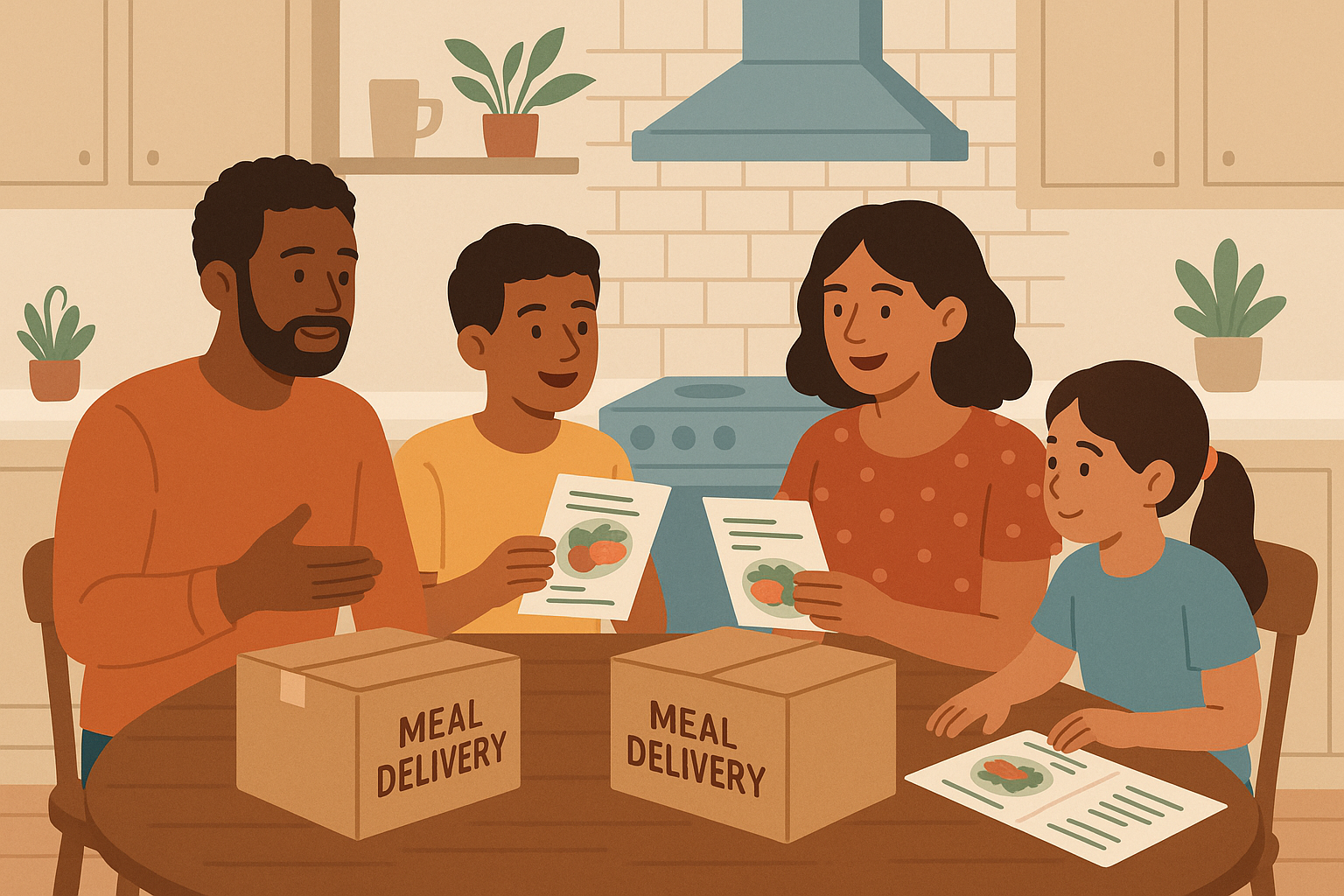
Most people think diabetic meal planning is just about the person with diabetes. Wrong. It’s about whoever’s carrying the emotional weight of daily food decisions – and that’s usually mom. The meal delivery services that actually work get this. They understand that the person with diabetes often isn’t the person making food decisions, and they design their whole experience around family dynamics instead of just medical needs.
The Real Story Behind “Mom’s Meals” and Family-Centered Care
Here’s something nobody talks about: when I first started looking into diabetic meal delivery, I thought it was all about the person with diabetes. Boy, was I wrong. It’s actually designed for whoever’s doing the meal planning in your house – and let’s be honest, that’s usually mom.
Think about your own kitchen. Who actually decides what’s for dinner tonight? Who feels that pit in their stomach when the blood sugar numbers come back high after a meal? Who’s lying awake at 2 AM wondering if they’re doing enough?
Recent research shows this family-centered approach is gaining traction. “Several meal delivery companies offer diabetes-friendly plans, which tend to be lower in carbs and higher in fiber and protein” according to diaTribe, but the services that actually last are the ones that design their entire user experience around family decision-making rather than just individual dietary needs.
The best services get that Mom’s Meals aren’t about nutrition alone – they’re about understanding that the person ordering often isn’t the person eating, and that programs that work have to address the psychological needs of both people.
When Caregivers Carry the Weight (And the Guilt)
I’ve talked to dozens of families, and here’s what I keep hearing: the guilt is crushing. One woman told me she felt like she was “giving up” on her husband when she started using meal delivery, even though his blood sugar got way better.
Decision fatigue is real, and it’s killing people. When you’re responsible for someone else’s health outcomes through food choices, every meal becomes a medical decision. This is especially tough for moms managing multiple family members’ dietary needs while trying to handle diabetic restrictions. The services that work reduce this mental load by offering smart defaults while still letting you feel in control.
Many moms find themselves becoming amateur nutritionists overnight when a family member gets diagnosed with diabetes. The learning curve is steep, and the emotional weight of making the “wrong” food choice can be overwhelming. Services that recognize this burden and provide educational support alongside meal delivery see much higher retention rates.
Take Sarah’s story. She’s a working mom whose 65-year-old dad moved in after his diabetes diagnosis. Suddenly she’s spending her entire weekend planning his meals, checking carb counts, trying to make diabetes-friendly versions of everything. She was drowning.
After switching to a family-friendly meal service, her planning time went from three hours to fifteen minutes. Her dad got to pick his own meals from pre-approved options. His numbers improved, and she got her weekends back. Win-win.
Keeping Your Family’s Food Story Alive
Your grandmother’s tamales aren’t just food – they’re family history wrapped in corn husks. And no, that sad diabetes-friendly version that tastes like cardboard doesn’t count.
The meal services that last are the ones that actually care about this stuff. They hire people who understand that when you mess with someone’s cultural food, you’re messing with their identity. Advanced meal delivery services now work with cultural food consultants who figure out how to recreate traditional family recipes within diabetic guidelines. This isn’t about swapping ingredients; it’s about understanding that food is identity, not just fuel.
I’ve seen services crash and burn because they offered “diabetic-friendly Mexican food” that no actual Mexican family would recognize. The good ones? They spend time learning what your family actually eats before they try to “fix” it.
This challenge hits especially hard for moms who serve as cultural gatekeepers in their families. They’re often the ones responsible for passing down traditional recipes and maintaining cultural food practices. When diabetes enters the picture, these moms face the impossible task of preserving cultural identity while managing medical needs.
The services that work provide modified recipes and education about how traditional ingredients can be adapted, plus reassurance that cultural food traditions don’t have to be abandoned entirely. Some even offer cooking classes specifically designed to help moms learn how to modify family recipes for diabetic family members.
The Technology Revolution You Don’t See (But Definitely Feel)
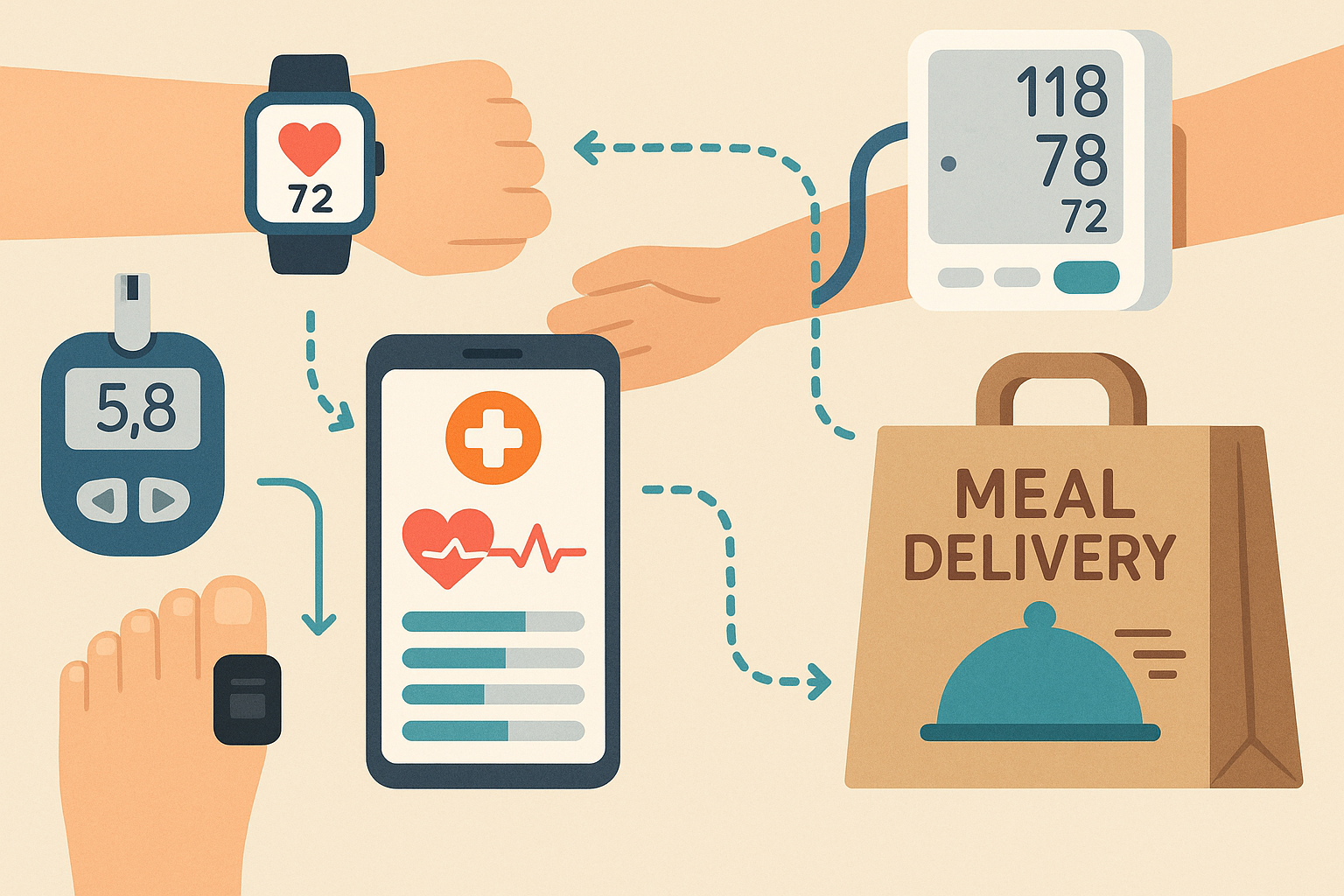
Modern diabetic meal delivery services run smart tech behind the scenes that uses predictive algorithms, health device connections, and behavioral psychology to create experiences that feel intuitive. This technology goes way beyond basic nutrition calculations to include sleep patterns, stress levels, body rhythms, and habit-building strategies that optimize what you eat, when you eat it, and how you eat it for better blood sugar stability and long-term behavior change.
Your Meals Are Getting Smarter (Even If You Don’t Realize It)
The sophistication of modern meal customization is similar to advances in personalized carb tolerance testing, where individual metabolic responses drive dietary recommendations rather than one-size-fits-all approaches.
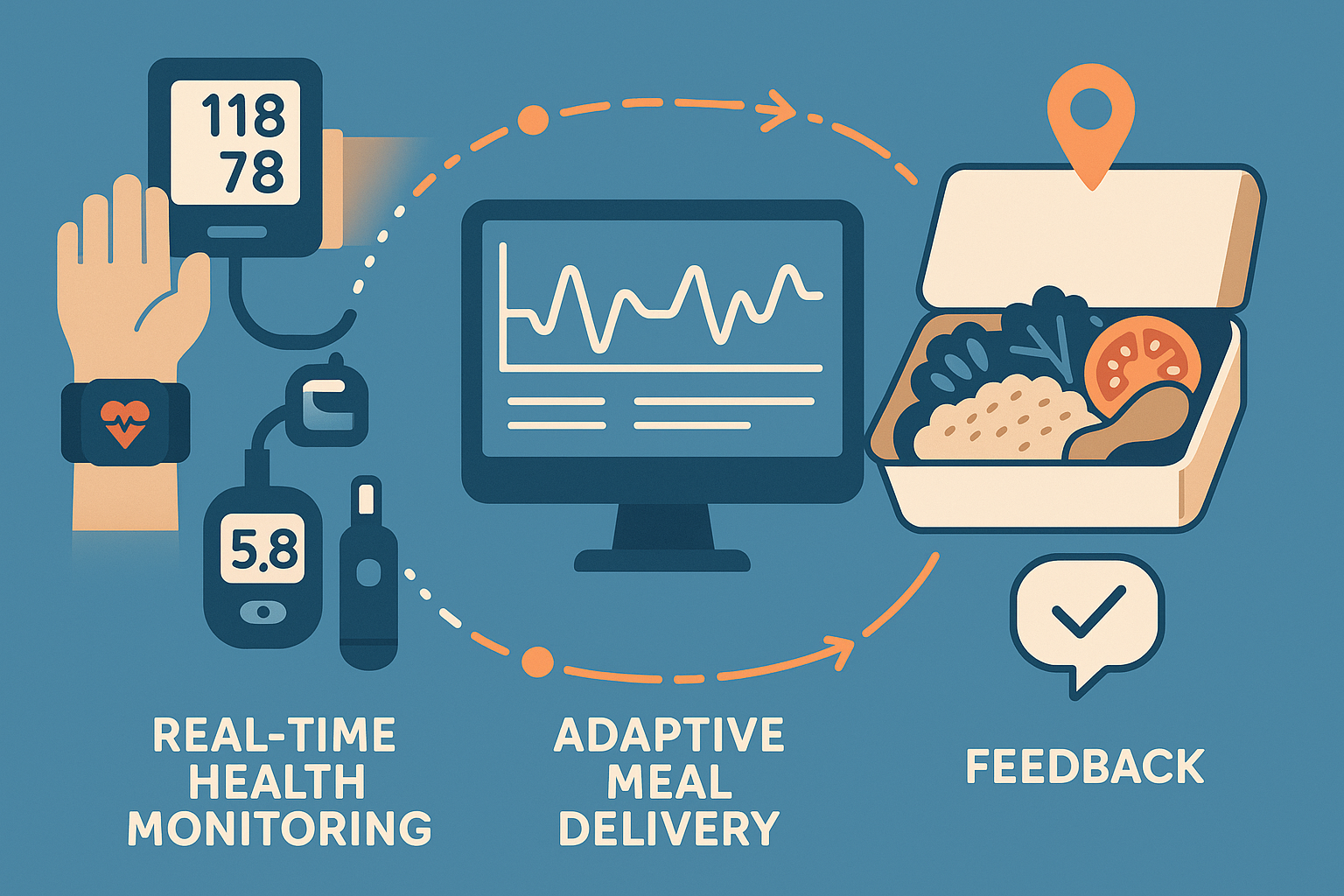
The meal that shows up at your door has been through more data crunching than most medical treatments. Seriously. Modern services are pulling info from your sleep tracker, your glucose monitor, your stress levels from your smartwatch, even your location data. They’re figuring out what should be in your meal, when it should arrive, and how it should be prepared.
Here’s the wild part: your body processes the exact same meal differently depending on when you eat it. Smart services are starting to figure this out and time your deliveries around your natural rhythms.
This technology is especially valuable for busy moms managing diabetic family members. Instead of trying to track a million variables in your head, the technology handles the complicated stuff while you just pick from simple meal choices. The algorithms can even account for family schedules, making sure meals arrive when moms are most likely to be available for meal prep or supervision.
| Technology Level | What They Track | How It Helps | What You Notice |
|---|---|---|---|
| Basic | Manual food logs, dietary preferences | Standard meal rotations, allergen filtering | Better convenience, right portion sizes |
| Intermediate | Glucose monitor data, activity trackers | Dynamic carb adjustments, meal timing | Better glucose stability, fewer spikes |
| Advanced | Sleep patterns, stress indicators, genetic markers | Body rhythm meal timing, gut bacteria-responsive menus | Complete metabolic optimization, predictive health management |
Building Better Habits Without Trying
Here’s something most people miss: the order of your meals matters just as much as what’s in them. Services that understand behavioral psychology use strategic meal progression to build sustainable eating habits gradually. They’re sending you diabetic-friendly food and training your taste buds and habits at the same time.
This habit formation happens through meal sequencing that introduces new foods and flavors while keeping blood sugar stable. It’s like having a behavioral psychologist design your meal plan, except it’s happening through algorithms you never see.
For moms managing diabetic family members, this approach reduces pushback to dietary changes. Instead of dramatic overnight switches that often lead to rebellion or giving up, the gradual progression helps family members adapt to new eating patterns without feeling deprived or restricted.
Building Your Diabetes Support Network Through Food
The community aspect of diabetes management extends beyond meal delivery to include intuitive eating principles that help individuals develop a healthier relationship with food while managing their condition.
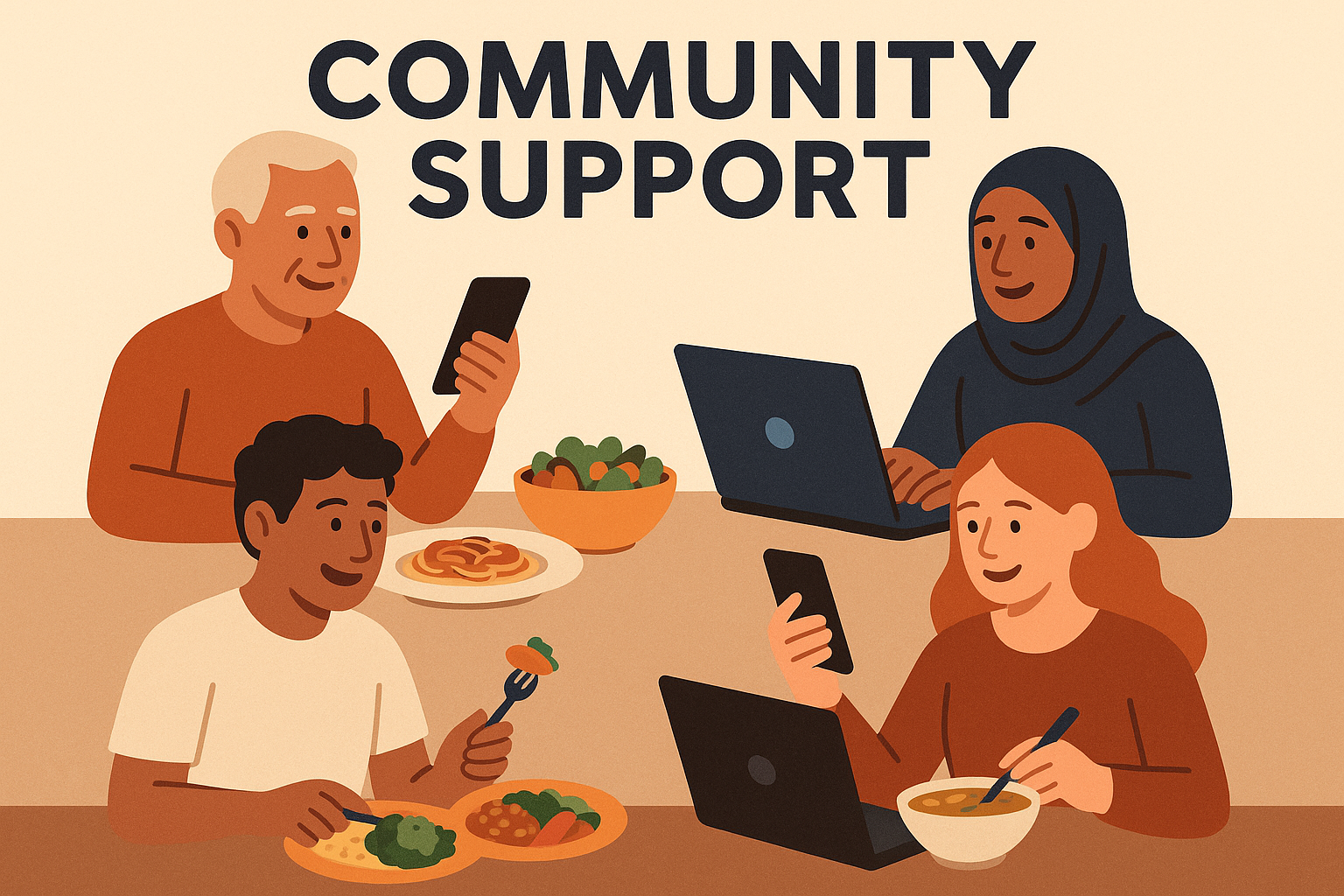
The meal delivery services that actually change lives create virtual communities where users share blood sugar responses, recipe modifications, and emotional support, turning individual meal planning into a social experience. These peer-to-peer networks provide recipe validation through crowdsourced health data, integrate local food cultures, and amplify success stories in ways that boost both program sticking power and user satisfaction more effectively than clinical oversight alone.
Why Community Features Beat Perfect Nutrition Every Time
I used to think the best diabetic meal service would have the most accurate carb counts and strictest nutrition rules. Completely wrong. The ones that actually change lives are the ones that make you feel less alone.
The revolutionary part? Users share their actual blood sugar responses and taste preferences to make meals better for everyone. You’re not just getting a meal – you’re getting one that’s been tested by people whose bodies work like yours.
This community aspect is especially valuable for moms who often feel isolated in their caregiving roles. Connecting with other families facing similar challenges provides emotional support and practical tips that no clinical resource can match.
Maria’s story is perfect here. She’s a 52-year-old teacher who found out through her service’s community that other users with similar insulin resistance had great luck with a Mediterranean meal. She tried it, tracked her response, and her post-meal glucose stayed 40 points lower than usual. Her review helped the service recommend that meal to other people with similar patterns.
How Local Food Culture Makes Everything Work Better
Services that succeed long-term understand that sustainable diabetic eating has to feel familiar and culturally appropriate rather than medically imposed. This requires incorporating regional food preferences, seasonal ingredient availability, and local food traditions that make healthy eating feel natural rather than restrictive, while still maintaining the medical precision necessary for effective diabetes management.
Regional food preferences aren’t just about taste – they’re about sustainability. Services that incorporate seasonal availability and local food traditions create meal plans that feel natural rather than imposed. When your diabetic meal delivery includes foods that actually grow in your region during the right season, sticking with it becomes easier because it aligns with your existing food environment.
Success story amplification creates powerful motivation loops. When you see someone from your area with similar challenges achieving better blood sugar control, it becomes real in a way that clinical studies never can. These stories encourage both retention and referrals while providing evidence that the program works for people like you.
Getting Your Whole Family On Board
Here’s the reality check: diabetes management is rarely a one-person job. The platforms that work let multiple family members contribute to meal selection and planning, acknowledging that successful diabetes management happens within family systems rather than in isolation.
When your teenager can vote on next week’s meals or your spouse can adjust portions based on their schedule, everyone feels like they have a say. This collaborative approach often determines whether meal delivery sticks or becomes another failed attempt.
This is especially important for moms who usually get stuck with all the meal planning decisions. When the whole family can participate, it takes the pressure off mom while getting everyone more invested in making it work.

How to Actually Choose and Use Meal Delivery Services
Making smart decisions about meal delivery requires the same careful evaluation approach used when choosing daily supplements, focusing on evidence-based benefits rather than marketing claims.
Successfully integrating diabetic meal delivery requires a strategic approach that goes beyond comparing prices or reading nutrition labels. This involves taking an honest look at your current diabetes management, creating a simple evaluation system for comparing services, and tracking both health outcomes and family satisfaction rather than relying on convenience alone.
Stop Guessing and Start Measuring What Actually Matters
Most people choose meal delivery services like they pick restaurants – by looking at pretty pictures and reading a few reviews. That’s backwards. You need to start with an honest look at your current diabetes management before you can figure out whether any service will actually help.
Before you sign up for anything, spend two weeks documenting your current situation. Track meal planning stress, time spent, family conflicts, blood sugar patterns – all of it. This gives you real data to work with instead of guessing what you need.
Pre-Service Reality Check:
- Track current meal planning time and stress levels for 2 weeks
- Document which family members are involved in food decisions
- Record blood sugar patterns around current meals
- Identify cultural food preferences and restrictions
- Check kitchen capabilities and storage space
- Review insurance coverage for medical nutrition therapy
- Figure out realistic budget for monthly costs
- List current diabetes management tools and apps
Your Personal Service Evaluation System
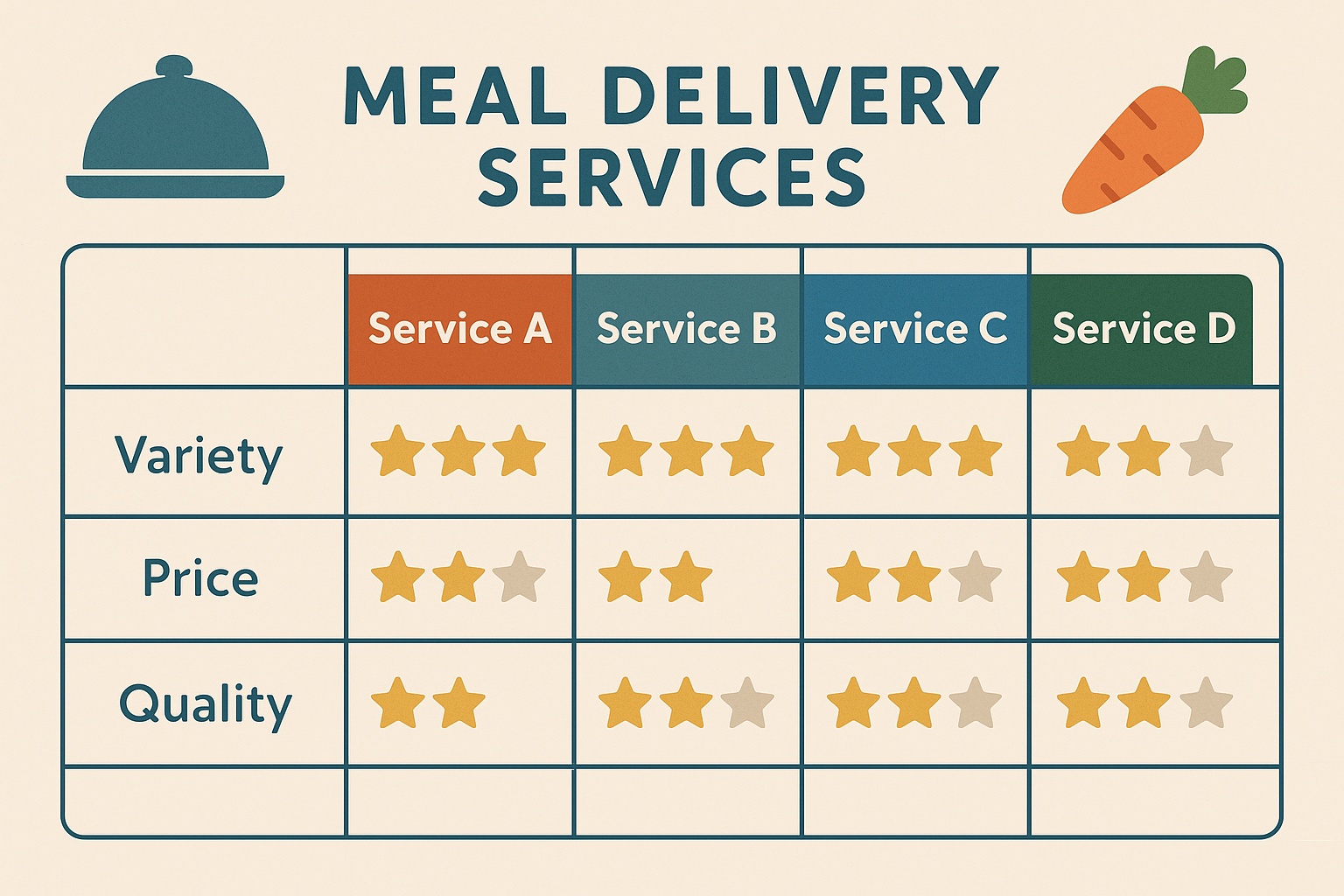
Build a simple scoring system for what actually matters to your family. Nutritional accuracy might be worth 30% of your decision, but if family buy-in is crucial for your household, that might deserve 25% of the weight.
Technology features deserve serious consideration even if you’re not super tech-savvy. Services that connect with your glucose monitor or sync with your healthcare provider’s systems can provide value that justifies higher costs or minor inconveniences in other areas.
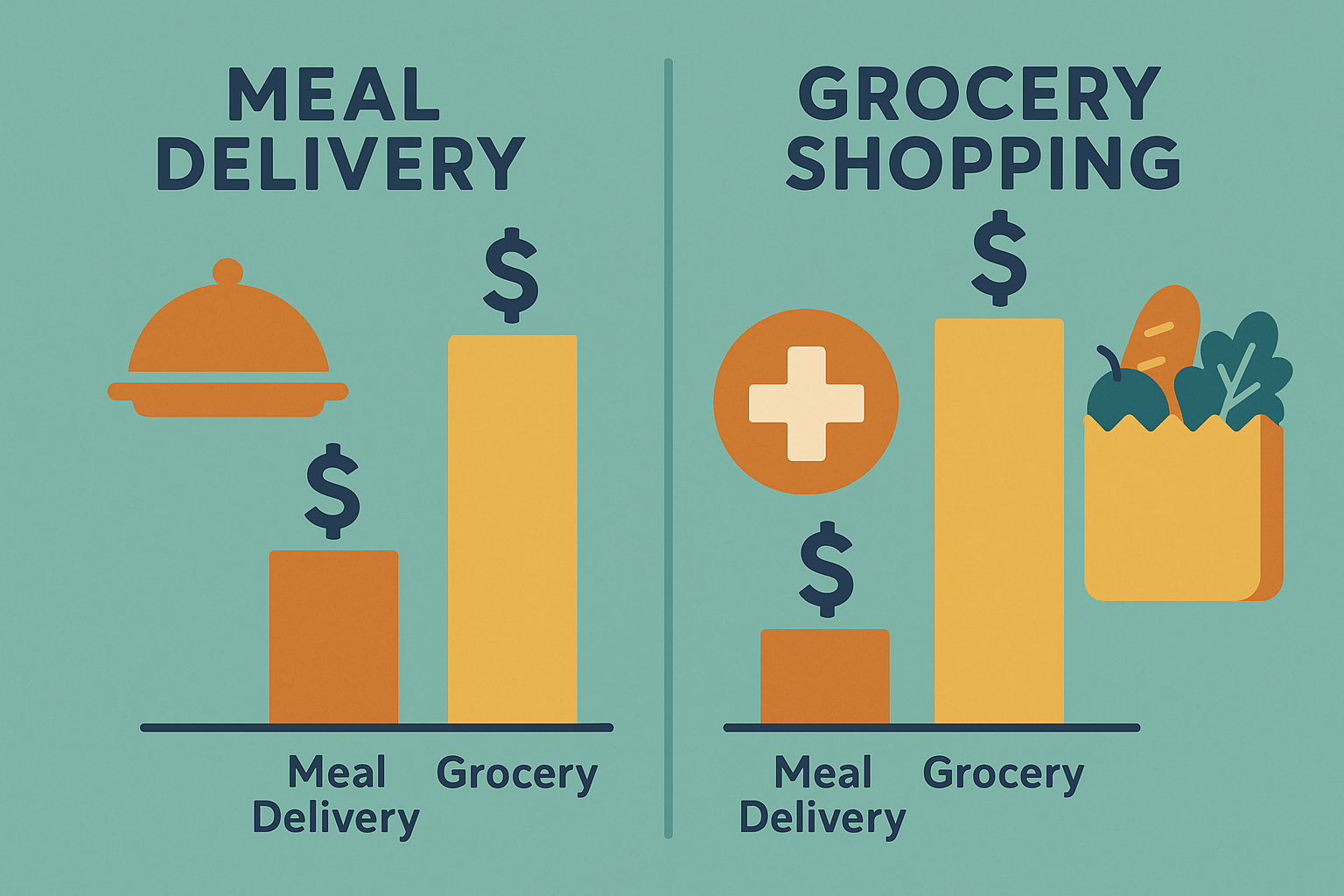
Here’s the cost reality check: while home-cooked meals can cost as little as $3 per serving, a typical delivered meal ranges from about $7-15 per serving (without shipping), according to diaTribe research. Understanding this upfront helps you decide whether the convenience and health benefits are worth the premium.
Making It Work in Real Life (Beyond Paper Plans)
Successful adoption requires treating meal delivery like any other health intervention, similar to how you might approach an elimination diet with careful baseline tracking and systematic outcome monitoring.
Success works best when you treat this like a medical intervention, not just a convenience upgrade. Get baseline numbers for blood sugar patterns, energy levels, meal satisfaction, and family stress levels before you start. This lets you measure the real impact beyond simple convenience.
| Service Feature | Weight (%) | What to Look For | How to Score It |
|---|---|---|---|
| Nutritional Accuracy | 30% | Carb counts, fiber content, medical oversight | 1-10 scale based on clinical standards |
| Family Integration | 25% | Multi-user accounts, collaborative planning, cultural options | Test user experience with family members |
| Technology Features | 20% | Glucose monitor integration, app quality, data tracking | Check compatibility with existing devices |
| Cost Effectiveness | 15% | Price per meal, insurance coverage, hidden fees | Calculate total cost over 3-month period |
| Flexibility | 10% | Meal variety, dietary accommodations, delivery options | Assess customization options |
Tracking What Really Changes (Beyond Blood Sugar Numbers)
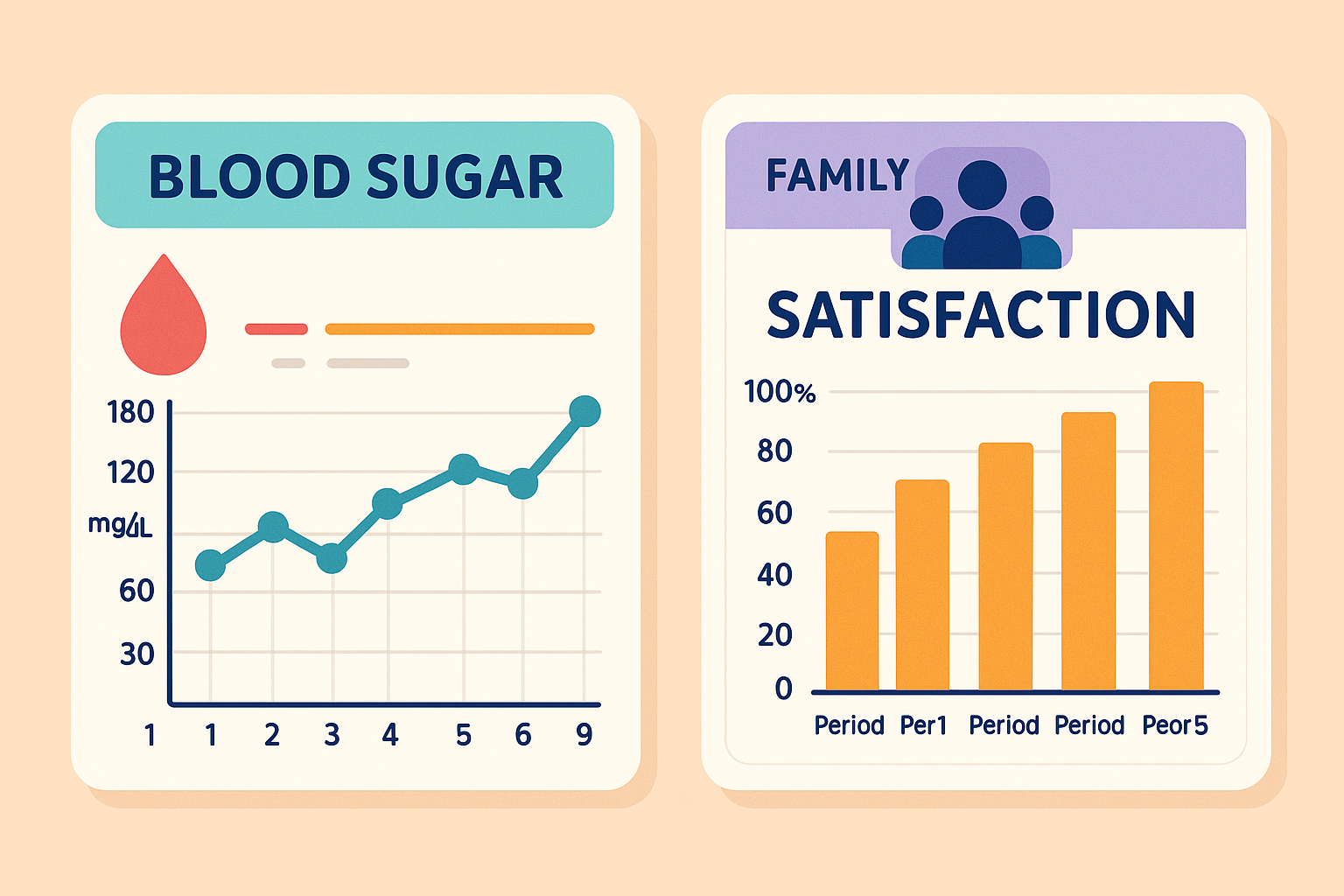
Measuring success requires monitoring blood sugar responses to delivered meals while also tracking how meal delivery affects household dynamics, caregiver stress, family meal experiences, and overall quality of life. This comprehensive tracking approach helps identify both positive outcomes and potential issues early enough to make adjustments that improve long-term program success.
Blood sugar response mapping becomes crucial data for optimizing your meal selections. Create detailed logs that note patterns and individual variations – this information helps you communicate effectively with your service about what’s working and what needs adjustment.
Family satisfaction tracking often reveals unexpected benefits or problems. Maybe your spouse feels less stressed about meal planning, but your kids complain about missing family cooking time. These insights help you adjust your approach to maximize benefits for everyone involved.
Continuous optimization requires regular review cycles where you assess service performance, adjust meal selections based on health outcomes, and communicate feedback to providers. This isn’t a “set it and forget it” solution – it’s an ongoing partnership that improves over time.
David’s example is perfect: 58-year-old with type 1 diabetes who tracked his glucose, his wife’s stress levels, AND their teenage daughter’s meal satisfaction. After three months, his time-in-range improved 12%, his wife’s meal planning anxiety dropped 60%, but their daughter missed family cooking time. Solution? Sunday family cooking, delivery for weekdays. Everyone wins.
Post-Implementation Tracking System:
- Daily blood glucose patterns and meal responses
- Weekly family satisfaction surveys
- Monthly cost analysis and budget impact
- Quarterly health outcome reviews with healthcare provider
- Seasonal preference adjustments and service optimization
The Money Game: Insurance, Costs, and Geographic Reality
The economics of diabetic meal delivery involve complex relationships between insurance coverage, preventive care benefits, and regional availability that significantly impact accessibility and affordability. Understanding how to navigate HSA/FSA eligibility, Medicare programs, and employer wellness benefits can dramatically reduce costs, while geographic disparities in service availability create equity issues that affect both rural and urban communities differently.
Getting Insurance to Pay (When It’s Possible)
Progressive diabetic meal delivery services are pioneering healthcare integration models where meal costs receive partial coverage through preventive care benefits, but accessing these benefits requires understanding specific documentation requirements, medical coding, and cost-benefit calculations that position meal delivery as medical nutrition therapy rather than convenience food service.
Insurance integration is happening, but it’s complicated and inconsistent. Some services work directly with Medicare Advantage programs, others qualify for HSA/FSA reimbursement, and a few have partnerships with employer wellness programs that provide significant discounts.
Getting coverage often requires specific physician documentation that positions meal delivery as medical nutrition therapy. Your doctor needs to use particular medical codes and language that insurance companies recognize as legitimate medical expenses rather than lifestyle choices.
Insurance Navigation Checklist:
- Contact insurance provider about medical nutrition therapy coverage
- Request physician documentation using appropriate medical codes
- Research Medicare/Medicaid meal delivery benefits in your area
- Check HSA/FSA eligibility for specific services
- Investigate employer wellness program partnerships
- Document health outcomes to support coverage appeals
The Real Math on Long-term Costs vs. Benefits
Calculating the true cost of diabetic meal delivery must include potential savings from reduced hospitalizations, fewer medication adjustments, improved quality of life metrics, and decreased caregiver burden that insurance companies and healthcare systems increasingly recognize as valuable preventive care investments.
Cost-benefit analysis gets interesting when you include potential savings from better diabetes management. Reduced hospitalizations, fewer emergency room visits, and more stable medication needs can offset meal delivery costs significantly over time.
The subscription psychology creates unique dynamics around commitment and control. Some people thrive with the structure and predictability, while others feel trapped by recurring charges and limited flexibility. Understanding your own relationship with subscription services helps predict long-term satisfaction.
Why Your Zip Code Determines Your Options
Regional availability and food desert solutions reveal how diabetic meal delivery services face unique challenges in serving rural and underserved communities, requiring innovative distribution models such as community hub partnerships and seasonal availability adjustments that affect both service quality and accessibility across different geographic areas.
Rural delivery infrastructure creates real challenges that affect service quality and availability. Maintaining cold chain integrity and delivery frequency in remote areas explains why some regions have limited options and higher costs that aren’t about market demand alone.
Community hub distribution models are emerging where services partner with rural healthcare centers, pharmacies, and community centers to create pickup points. This reduces delivery costs while maintaining food safety standards, but requires more effort from users.
Urban Food Deserts Face Different Problems
Even in cities, diabetic meal delivery accessibility varies significantly by neighborhood, with services often avoiding certain zip codes due to delivery logistics, perceived market viability, or infrastructure challenges that create equity issues in accessing quality diabetes management tools through food delivery services.
Urban food access equity reveals how services often avoid certain neighborhoods due to delivery issues or perceived market problems. This creates disparities where people who might benefit most from diabetic meal delivery have the least access to quality services.
Seasonal availability fluctuations affect rural areas particularly hard, with weather-related delivery delays and limited local sourcing options that impact meal variety and consistency during certain times of year.
Future Tech That’s Already Here (And What It Means for You)
Emerging technologies in diabetic meal delivery include genetic testing integration, microbiome analysis, and real-time metabolic monitoring that promise truly individualized nutrition but raise questions about data privacy and medical oversight. These advanced personalization technologies go far beyond carbohydrate counting to incorporate timing meals with your medications, personalized macronutrient ratios, and adaptive systems that respond to continuous biometric feedback.
When Your DNA Determines Your Dinner
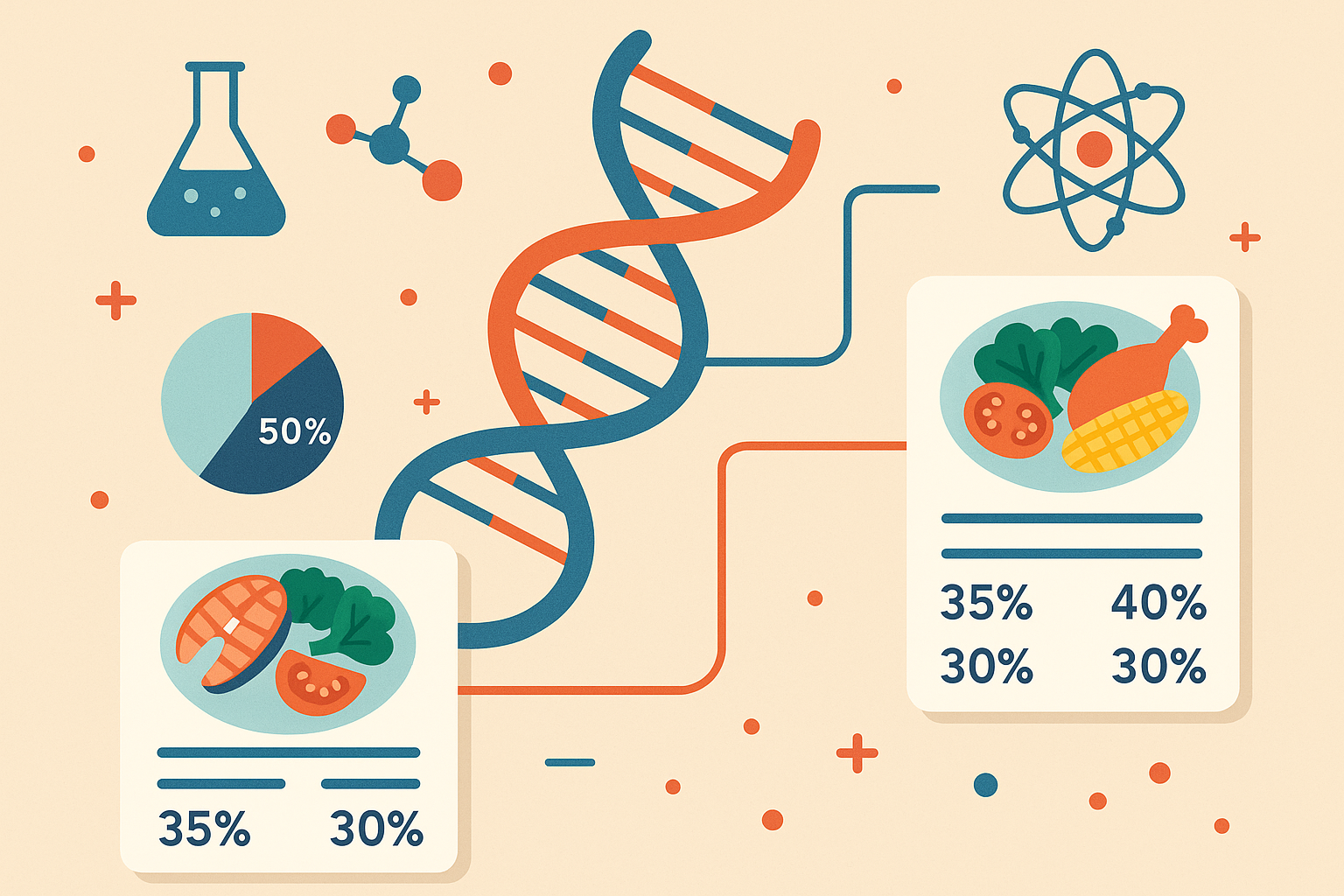
Cutting-edge services are incorporating genetic testing results to customize meal plans based on individual metabolic variations, medication metabolism rates, and nutrient absorption patterns that standard diabetic guidelines cannot address. This genetic nutrition integration enables timing meals with your medications and personalized macronutrient ratios that can diverge significantly from traditional recommendations while achieving better blood sugar control.
Some services are starting to use genetic testing to customize meal plans based on how your individual body processes nutrients and medications. This isn’t sci-fi anymore – it’s happening now.
Timing meals with your medications uses genetic markers to predict how your body metabolizes diabetes medications, allowing for precise meal timing that optimizes drug effectiveness while minimizing side effects. This level of personalization was impossible just a few years ago.
Your Gut Bacteria Are Getting a Say in Menu Planning
Advanced services analyze gut bacteria composition to predict individual responses to specific foods and design meal rotations that promote beneficial bacterial growth while maintaining glycemic control. This gut bacteria-responsive menu planning represents a fundamental shift toward understanding diabetes management as a complex ecosystem rather than simple blood sugar control.
Some services now analyze your gut bacteria composition to predict how you’ll respond to specific foods. They design meal rotations that promote beneficial bacterial growth while maintaining glycemic control – it’s like having a personalized ecosystem approach to diabetes management.
Personalized macronutrient ratios based on genetic markers for carbohydrate sensitivity, fat metabolism, and protein utilization can create meal plans that diverge significantly from standard diabetic recommendations while achieving better outcomes.
Real-Time Adjustments Based on How You Actually Feel
Integration with continuous glucose monitors and wearable devices creates dynamic meal adjustment systems that respond to actual metabolic responses rather than predicted ones, representing a fundamental shift from static meal planning to responsive nutrition management that includes adaptive portion control and predictive craving management based on comprehensive biometric data.
Real-time metabolic feedback loops integrate with continuous glucose monitors and other wearables to create dynamic meal adjustment systems. Instead of static meal plans, you get responsive nutrition management that adapts to your actual metabolic state.
Adaptive portion control systems use smart packaging and delivery adjustments based on recent glucose patterns, activity levels, and appetite indicators measured through various biometric inputs. Your meals literally get customized based on how your body responded to yesterday’s food.
Predictive craving management uses AI to anticipate food cravings based on hormonal cycles, stress indicators, and historical patterns. The system proactively adjusts meal compositions to prevent problematic eating episodes before they happen.
This technology raises important questions about data privacy and medical oversight. When your meal delivery service knows more about your metabolic state than your doctor, who’s responsible for medical decisions? These are questions we’re still figuring out as the technology advances.
For readers dealing with the overwhelming complexity of modern diabetic meal delivery options, Organic Authority’s rigorous evaluation approach provides a framework for making informed decisions. Just as we scrutinize supplement bioavailability and ingredient sourcing, the same level of analysis applies to meal delivery services that claim to support diabetic health. Our commitment to transparency and science-backed wellness solutions helps you navigate services that truly deliver on their health promises rather than marketing claims alone. Ready to find a diabetic meal delivery service that aligns with your values of clean, effective nutrition? Explore our comprehensive reviews and recommendations to make the choice that’s right for your health journey.
Final Thoughts
Diabetic meal plan delivery has evolved way beyond convenience food into a real healthcare tool that addresses family dynamics, uses advanced technology, and creates supportive communities around diabetes management. The services that work understand that managing diabetes through food isn’t about the person with diabetes alone – it’s about entire family systems, cultural food identities, and the complex psychology of caregiving and food relationships.
The fancy technology is impressive, but the human stuff determines whether you’ll stick with it. Community support, family integration, and cultural sensitivity often matter more than perfect nutrition calculations. When choosing a service, focus on how well it fits your actual life circumstances rather than how impressive its features sound on paper.
Geographic and economic disparities in access remain significant challenges, but understanding insurance options and alternative distribution models can help you find solutions even in underserved areas. The future promises even more personalized approaches through genetic testing and real-time biometric feedback, but these advances will only be valuable if they’re built on solid foundations of family support and sustainable behavior change.
Success with diabetic meal delivery requires treating it as part of your healthcare system, rather than a convenience service. Document your baseline health metrics, involve your family in the decision-making process, and maintain regular communication with both your healthcare providers and your meal delivery service to optimize outcomes over time.
The goal isn’t perfect – it’s sustainable improvement that actually fits your real life.