Simple Organic Heirloom Tomato Salad That Tastes Like Peak Summer
The best heirloom tomato salad starts with the best tomatoes. Look for a mix of varieties at your local farmers market for peak summer flavor.
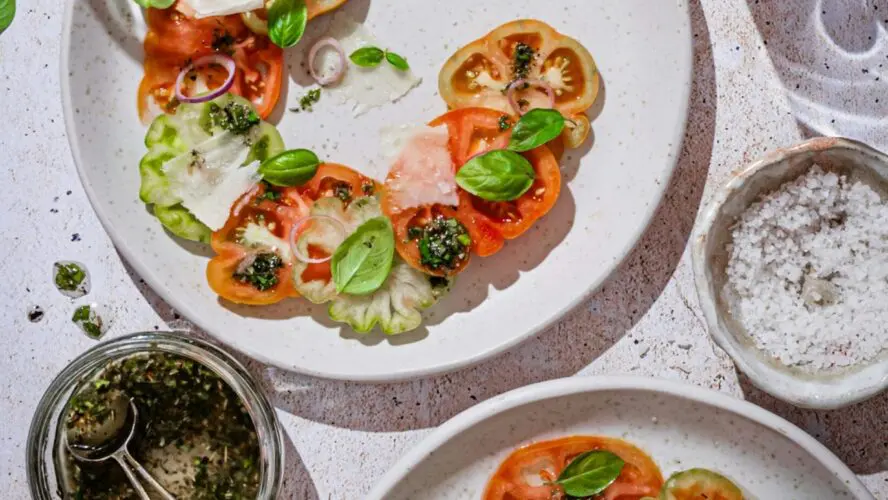
This heirloom tomato salad comes together in 15 minutes with no cooking required. Celebrate summer’s bounty with this mix of colorful heirloom tomato varieties, torn Red Ruffle basil, a handful of fresh herbs, and a simple balsamic and olive oil dressing. It’s the kind of dish that looks like you spent an hour on it and tastes like peak summer (read our guide to summer produce here).
Why This Simple Heirloom Tomato Salad Works
A tomato salad sounds almost too simple to have a technique. But there are a handful of judgment calls that separate a genuinely great one from a watery, underdressed mess. And after years of making this with farmers-market-fresh ingredients, I’ve landed on a few I won’t compromise on.
The Tomato Mix
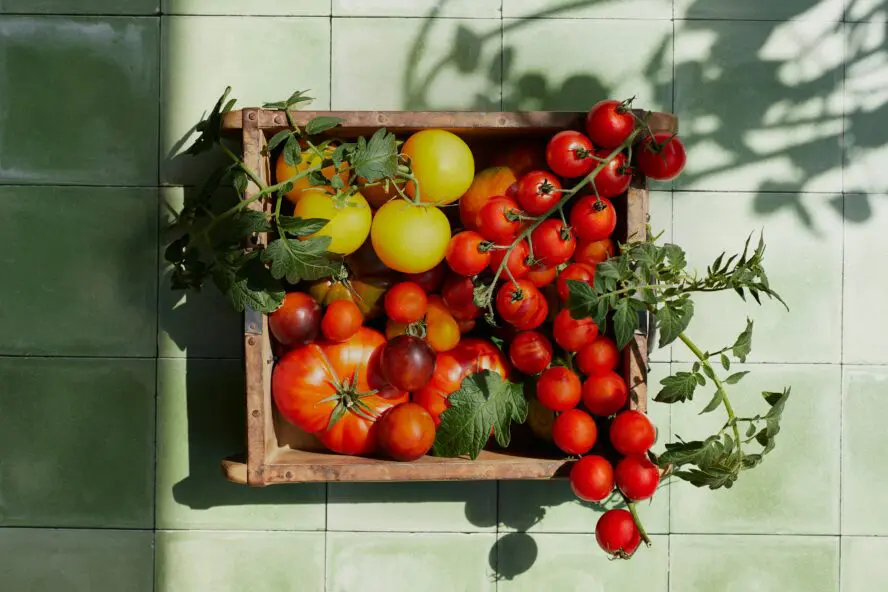
The tomato variety mix matters more than most recipes admit. Different varieties bring different sugar levels, acidity, and water content, and the contrast in texture between a thick heirloom wedge and a tiny, sweet cherry tomato makes every bite different. A bowl of one variety, however beautiful, is flat by comparison.
Heirloom tomatoes: Look for a mix of colors and sizes. Pineapple tomatoes are sweet and low-acid with a beautiful yellow-orange interior. Brandywines are meaty and rich. Green Zebras bring a slight tartness that cuts through the richness of the dressing. Any combination works — the point is variety, not a specific lineup. Buy them at peak ripeness; underripe heirlooms are a completely different (worse) ingredient.
Multicolored cherry or grape tomatoes: These add sweetness and a burst of juice that the larger slices don’t have. Yellow cherry tomatoes are milder and slightly more floral; red ones are more acidic. A mix of both is ideal.
Have an abundance? Here are 7 ways to use your heirloom tomatoes and if you’re itching to use up your sweet summer corn, pair them both with avocado for blissful backyard salad. For more on tomatoes varieties, how to select them, and how to store them, this is worth a read before your next farmers market run.
The Herbs
Red Ruffle basil: This is the ingredient that makes this salad its own thing rather than a standard caprese adjacent. Red Ruffle is a ruffled, red-purple variety with a peppery, slightly clove-like bite that’s noticeably more complex than standard Genovese basil. It also holds its color beautifully against the tomatoes. If you can’t find it, regular basil substitutes cleanly.
Tear the basil, don’t chop it. Chopping bruises the cell walls and releases the oils too fast, which means the basil oxidizes and turns dark quickly. Torn basil stays brighter longer and releases its fragrance more gradually as you eat. Red Ruffle basil in particular has a peppery, almost clove-like edge that Genovese basil doesn’t, and tearing it keeps that character intact instead of muddying it.
Mixed fresh herbs: Marjoram, thyme, tarragon, and Italian parsley. This combination adds layers that a single herb can’t achieve — the marjoram brings a mild oregano warmth, the thyme adds earthiness, the tarragon a faint anise note, and the parsley keeps everything bright and clean. Don’t skip the mix in favor of just one.
The Accoutrement
Use fleur de sel, not table salt. This one sounds precious, but there’s a real reason. Table salt dissolves instantly on contact and begins drawing liquid out of the tomatoes almost immediately. Fleur de sel, with its larger, irregular crystals, dissolves slowly and seasons without aggressively pulling moisture. In a dish where watery dressing is the enemy, that difference matters.
Crack the pepper fresh: Pre-ground pepper doesn’t have the same aromatic punch.
Shaved Parmesan: The saltiness and umami of Parmesan plays off the acid in the dressing and the sweetness of the tomatoes. Shave it rather than grating it, the larger pieces give you a distinct textural moment in each bite.
Extra virgin olive oil: Use the best you have. In a dressing this simple, the olive oil is load-bearing. Look for something with a grassy, peppery finish rather than a bland or buttery one.
Balsamic vinegar: Start with 2 tablespoons and taste. A good balsamic should be slightly sweet and syrupy; a thin or sharp one may need less. Aged balsamic from Modena is ideal if you have it.
Timing Is Everything
Dress right before serving, every time. The number one thing that turns a tomato salad watery is dressing it too early. Salt and acid start drawing liquid out of the tomatoes the moment they hit, and within 20 minutes you have a pool at the bottom of the bowl. Mix the olive oil and balsamic directly on the tomatoes and serve immediately.
What to Serve With It
This salad is versatile enough to anchor a summer spread or sit quietly alongside almost anything off the grill.
For a simple meal, serve it over a bed of arugula or alongside good crusty bread to soak up the dressing, the leftover balsamic and tomato juices at the bottom of the bowl are worth planning for.
For a dinner-party spread, this pairs especially well with grilled proteins. The acidity of the dressing cuts through rich meats beautifully, and the bright colors make the table look intentional without requiring much effort. Our legs of fire barbecue chicken and the sweet corn succotash with pecorino are two pairings I keep coming back to.
For a more substantial vegetarian plate, serve it alongside a grain like farro or white beans, too, would pick up the dressing particularly well and turn this into something close to a full meal.
Is It Healthy?
Heirloom tomatoes are one of the better arguments for eating with the seasons. They’re rich in lycopene, a carotenoid that gives tomatoes their red and pink color. According to the NIH, lycopene is a powerful antioxidant that may support cardiovascular health and has been studied for its potential role in reducing oxidative stress.¹ Tomatoes also provide vitamin C, potassium, and folate in meaningful amounts.
The olive oil here isn’t just flavor, it’s functional. The American Heart Association identifies extra virgin olive oil as a primary source of monounsaturated fat, which supports healthy cholesterol levels and is associated with cardiovascular health benefits.² Olive oil also supports the absorption of fat-soluble compounds like lycopene, which means the dressing isn’t just dressing, it’s helping you absorb more of what the tomatoes have to offer.
Fresh basil and herbs round things out with additional phytochemicals and a meaningful hit of vitamin K.
The Parmesan adds calcium and protein, and the balsamic contributes a small amount of polyphenols from the grape reduction. Nothing in this salad needs a disclaimer. It’s a plate of vegetables, good fat, and fresh herbs — eat it freely and often while tomatoes are in season.
Heirloom Tomato Salad Ingredients
How to Make It
- Core the large heirloom tomatoes and slice into generous wedges. Remove stems from the cherry tomatoes and slice in half.
- Arrange the tomatoes on a wide, shallow platter or in a large bowl — a single layer for the large slices, with the cherry tomatoes scattered on top and around them.
- Drizzle the olive oil evenly over the tomatoes, followed by the balsamic vinegar. Start with 2 tablespoons of balsamic and add more to taste.
- Scatter the chopped fresh herbs over the top, followed by the torn Red Ruffle basil leaves.
- Shave the Parmesan directly over the salad.
- Finish with fleur de sel and a generous amount of fresh cracked pepper.
- Toss gently and serve immediately.
Substitutions and Variations
Tomatoes: Any ripe, flavorful tomato works here, this recipe isn’t precious about variety. Roma tomatoes are fine in a pinch but less juicy. Avoid hothouse or off-season supermarket tomatoes; they’ll make the salad taste flat regardless of what you do with the dressing.
Basil: Red Ruffle basil substitutes 1:1 with regular Genovese or purple basil. The flavor will be milder and less peppery, but the salad still works beautifully. Thai basil also works for a more anise-forward profile.
Fresh herbs: The mix is flexible. Chives, chervil, or fresh oregano all work in place of any of the four listed. The more variety, the better, a single herb makes the salad taste one-dimensional.
Balsamic vinegar: Red wine vinegar works as a substitute and gives a sharper, less sweet result. Sherry vinegar is excellent if you want something slightly nutty. White balsamic keeps the dressing lighter in color if presentation is a priority.
Parmesan: Leave it out entirely for a dairy-free version — the salad holds up without it. Pecorino Romano is a saltier, slightly sharper substitute that works well. Burrata or fresh mozzarella turns this into more of a caprese, which is a different dish but a good one.
Olive oil: Avocado oil works as a substitute and has a more neutral flavor. I wouldn’t use a refined vegetable oil here, the olive oil’s flavor is part of the dressing.
Tips for the Best Results
Buy tomatoes at peak ripeness and use them the same day. Heirloom tomatoes don’t improve in the refrigerator, the cold kills their flavor and changes their texture. Buy them the day you’re making this, or let them ripen on the counter and use them at their peak.
Don’t refrigerate before serving. Cold tomatoes are mealy tomatoes. If you’ve already prepped your tomatoes, keep them at room temperature until you’re ready to dress and serve.
Dress the salad at the last possible moment. This bears repeating because it’s the most important technical point in the whole recipe. Salt and acid draw liquid out of tomatoes almost immediately. Dress right before serving, not 10 minutes before.
Use a wide, shallow platter rather than a deep bowl. A deep bowl means the top layer of tomatoes gets dressed and the bottom layer sits in pooled dressing. A wide platter lets everything get evenly coated and shows off the color contrast.
Season in layers. A little salt on the tomatoes before the dressing goes on helps them hold their structure slightly better. Add the fleur de sel after dressing for texture and a final hit of seasoning.
Storing Leftovers
This salad doesn’t hold. Once dressed, the tomatoes continue releasing liquid and the herbs wilt. Within a couple of hours, you’re looking at a bowl of soggy tomatoes sitting in a pool of pink dressing.
The best use for dressed leftovers is blending them into a quick tomato vinaigrette or using them as a base for a fast pasta sauce, both put the liquid to work instead of fighting it.
Frequently Asked Questions
What is Red Ruffle basil, and can I use regular basil instead? Red Ruffle is a ruffled, red-purple variety of basil with a peppery, clove-like edge that’s more complex and assertive than standard Genovese basil. It also holds its color beautifully, which makes the salad look more dramatic. If you can’t find it, and it’s not always easy to track down outside of farmers markets or specialty grocery stores, regular Genovese or purple basil substitutes 1:1. The flavor will be milder, but the salad works.
Why did my tomato salad turn watery? Almost always, it comes down to timing. Salt and acid draw liquid out of tomatoes quickly, within 10 to 15 minutes of dressing, you’ll start to see pooling at the bottom of the bowl. The fix is simple: dress the salad right before you serve it, not ahead of time. If you’re making this for a party and need to prep in advance, store the components separately and combine them at the last minute. Alternatively? Serve it with some crusty bread and sop up all that fresh goodness.
Can I make this ahead of time? The thing about this recipe is it really comes together in moments, so there’s really no need. If you were really crunched for time, you could chop the herbs (not the basil) and shave the Parmesan, then refrigerate them separately. I wouldn’t tear the basil, or slice and refrigerate the tomatoes ahead of time. Dress everything just before eating.
Do I need to peel or seed heirloom tomatoes? No. The skin on heirloom tomatoes is thin enough that peeling is unnecessary and removes texture you actually want. The gel-like seed pockets are where a significant amount of flavor lives. Seeding them leaves you with a more bland and dry tomato. I’d leave both intact.
What’s the best salt for a tomato salad? Fleur de sel. The irregular, larger crystals dissolve more slowly than table salt, which means they season the tomatoes without aggressively pulling out moisture. Maldon sea salt flakes are a good alternative with similar properties. Table salt works in a pinch, but dress and serve even faster if you use it.
More Easy Recipes to Try
If this salad made your weeknight (or your dinner party) easier, these are worth keeping in your back pocket for the rest of tomato season. Both our grilled artichokes with gremolata and grilled peaches with granola and vanilla ice cream use the same no-fuss approach to peak-season produce.
Sources: