Why Your Organic Honey May Not Be What It Seems: The Label Fraud Scandal
Your imported honey may taste delicious, but is it really organic?
If you’re spending top dollar on organic honey, take a closer look at its origins: Not all “organic” honey sold in the U.S. may be what it seems. At least, those are the allegations in a new lawsuit filed by Bruce Kaser, a certified organic farmer, activist, and attorney on behalf of American honey producers.
According to the suit, some imported honey, mostly from Brazil, bears the organic label without necessarily adhering to USDA organic standards. This loophole skirts federal regulations and has the potential to mislead American consumers.
“US consumers who rely on the USDA organic seal to guarantee honey is produced by bees feeding in an agrichemical-free environment are being defrauded,” said Kaser.
How American Honey Consumers Are Being Defrauded By Illegal Imports
The loophole that has allowed for such widespread honey fraud comes down to the way imported organic products are certified. While American farmers producing food that has been certified organic by the USDA must submit to annual inspectors by accredited certifiers, this isn’t the case for foreign farmers. This has contributed to well-documented instances of organic fraud, notably with “organic” grains, as the Washington Post reported back in 20171.
The same thing, the suit alleges, is currently transpiring in the world of “organic” honey. About 80% of all honey sold in the U.S. is imported, and most honey with the organic label comes from Brazil, where chemically intensive farming is even more widespread than it is in the United States. According to a 2023 study in Hygiene and Environmental Advances, Brazil is one of the world’s chief consumers of pesticides. The authors assert that this stems from a widescale trend of government permissiveness when it comes to the interests of big agribusinesses in Brazil2.
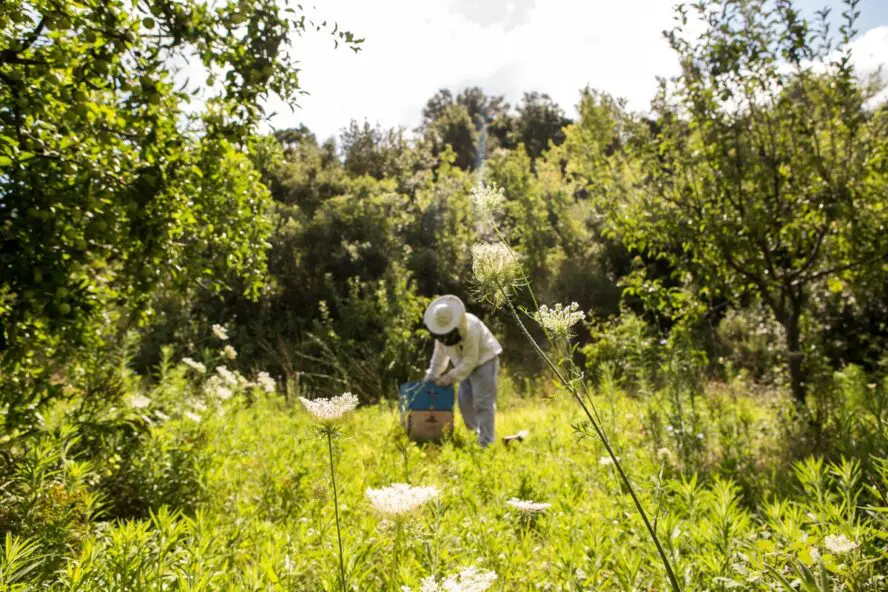
To protect honey consumers from the detrimental effects of pesticides, organic honey in the U.S. must be produced in an area with a 10-square-mile buffer between the nearest agrichemical use and their hives. But imported honey is not held to the same standards, in large part because organic certification for Brazilian honey comes not from on-premises inspections, but by way of an equivalency arrangement with Canada.
This matters because Canadian standards for organic honey production are a bit looser, notably with regards to the prohibition on synthetic fertilizers and chemical sprays. This makes it possible to site Brazilian beehives in environments that may mirror intensive conventional farms in the U.S. And it creates a loophole that not only misleads consumers but, as alleged by the suit, makes it impossible for American honey producers to fairly compete on the marketplace.
Other Instances of American Honey Fraud
This is not the only recent example of honey fraud in the United States. Given the increase in global demand, honey has become one of the most frequently adulterated foods in the world, according to recent data from the Journal of Food Protection3. This is particularly true when it comes to premium products like Manuka honey4, which has been attributed with a number of health benefits, including improved immunity and digestion5.
For example, unscrupulous producers looking to make good on honey’s healthy reputation have been found to dilute the product with cheaper sugar syrups. One European investigation found that nearly half of all honey imported into the EU between 2021 and 2022 had been adulterated with rice or corn syrup6, and an FDA investigation in April found that 4% of samples tested contained cheaper sweeteners7. And while we need more data to understand the full repercussions of this practice, one 2020 research review in Foods revealed that these sorts of adulterated honeys could cause blood sugar levels to rise more sharply than natural honey, potentially increasing the risk of metabolic disease or diabetes8.
Buying Trustworthy Honey
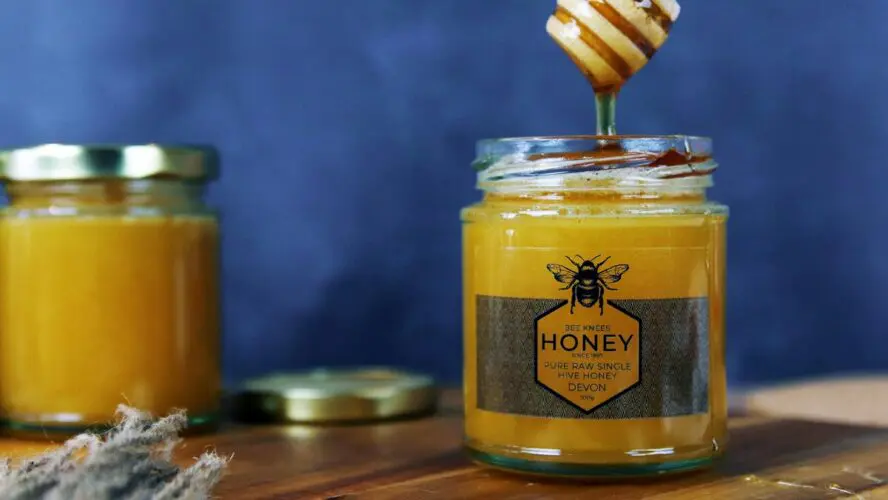
Honey, particularly when raw, unfiltered, and local, has been attributed with a host of health benefits9, including improved allergy symptoms10, improved cholesterol levels, and improved metabolic health. Plus, it’s equally delicious as an ingredient in homemade granola as it is as a flavor enhancer for grilled carrots or this mustard-y baked salmon. But to best reap those benefits, you’ll want to source your honey from a trustworthy source.
Whenever possible, seek out local beekeepers selling raw, unfiltered honey. The cloudier the honey, the more likely it is to contain bits of pollen — which has been shown to add flavor and even polyphenol content11. If you must buy from a larger store, look for certified organic honey made in the United States, where producers will have had to submit to actual inspections. Seek out brands that are transparent about their methods, like mission-driven Nate’s, which voluntarily submits to third-party tests to guarantee the purity of its product.
Sources:
- https://www.washingtonpost.com/news/wonk/wp/2017/06/12/millions-of-pounds-of-apparently-fake-organic-grains-convince-the-food-industry-there-may-be-a-problem/
- https://www.sciencedirect.com/science/article/pii/S2773049223000363
- https://www.sciencedirect.com/science/article/pii/S0362028X24000115
- https://www.sciencedirect.com/science/article/abs/pii/S2212429224008587
- https://pubmed.ncbi.nlm.nih.gov/28901255/
- https://food.ec.europa.eu/food-safety/eu-agri-food-fraud-network/eu-coordinated-actions/honey-2021-2022_en
- https://www.food-safety.com/articles/11336-fda-finds-adulteration-in-4-percent-of-honey-samples
- https://pmc.ncbi.nlm.nih.gov/articles/PMC7692231/
- https://pmc.ncbi.nlm.nih.gov/articles/PMC10346535/#sec3-nutrients-15-03056
- https://pmc.ncbi.nlm.nih.gov/articles/PMC6074882/
- https://pmc.ncbi.nlm.nih.gov/articles/PMC8160746/