
What Causes Lung Cancer in Non-Smokers? A New Study Suggests It Could Be Pesticides
In disappointing news, if you make an effort to eat healthy, you may have a higher risk of lung cancer — even if you don’t smoke.

Our understanding of healthy eating and other habits was recently rocked by a recent study from the University of Southern California1. According to the study, Americans under the age of 50 who had never smoked and consumed a diet rich in fruits and vegetables actually had a higher risk of developing lung cancer. But the study authors believe the culprit probably isn’t the produce — it’s the pesticides.
“The finding is surprising because it runs counter to the prevailing dominant nutrition narrative: eat more fruits, vegetables, legumes, and whole grains, and cancer risk will decrease,” says Dr. Nathan Goodyear, a nationally recognized physician specializing in integrative oncology, precision medicine, and emerging cancer therapies and co-founder of Williams Cancer Institute, which was not involved in the study. That said, he continues, “the bigger picture does not surprise me.”
“We have made the mistake of defining food only by what it is — a fruit, a vegetable, a grain — without asking what happened to that food before it reached the plate,” he says. “A food can be nutritionally healthy and still serve as a vehicle for an unhealthy exposure.”
The New Study is Observational but Promising
This study was carried out following a recent rise in lung cancer specifically among young non-smokers — and this in the midst of a steady decline in both smoking rates and lung cancer cases in the U.S. since the mid-80s. To better understand why, the researchers launched the Epidemiology of Young Lung Cancer Project, which analyzed the diets and lifestyles of 187 people who had been diagnosed with lung cancer by age 50.

Their findings, while observational and preliminary, point towards pesticides being the cause. Their first clue: the form of lung cancer that developed in these young people is biologically distinct from the kind typically caused by tobacco use.
They also uncovered an intriguing gender bias, with young women showing a higher risk of developing lung cancer. This is despite the disease traditionally being associated with older men who smoke, reports Science Daily2. This, the authors posit, may have to do with the fact that the women in the study tended to eat more produce and whole grains than their male counterparts, potentially increasing their potential for pesticide exposure.
Lung Cancer Risk Is Influenced by a Variety of Factors
Dr. Ayesha Bryant, MD, MSPH, Clinical Advisor of Alpas Wellness in Maryland, echoes the authors’ calls for more research before considering these findings anywhere near conclusive.
“Proving that a particular exposure caused lung cancer is very difficult,” says Bryant, who was not involved in the study. “The amount of risk associated with lung cancer is influenced by a variety of factors, including genetics, air pollution, work environment, passive cigarette smoke, and personal lifestyle choices. As such, observational studies cannot adequately control for all possible confounders.”
Goodyear agrees, noting that the study findings above all open more areas for conversation and research.
“Does this study prove that pesticide exposure caused these cancers? No,” he says. “Yet, it definitely raises the question. That is different from answering it. But it is a question and answer clearly worth pursuing.”
He suggests that next steps in research should include seeking out pesticide-specific mutational, epigenetic, and metabolic signatures. “That would begin connecting the dots between exposure and disease and move the conclusion from association to causation,” he says.
How to Control Your Exposure to Pesticides
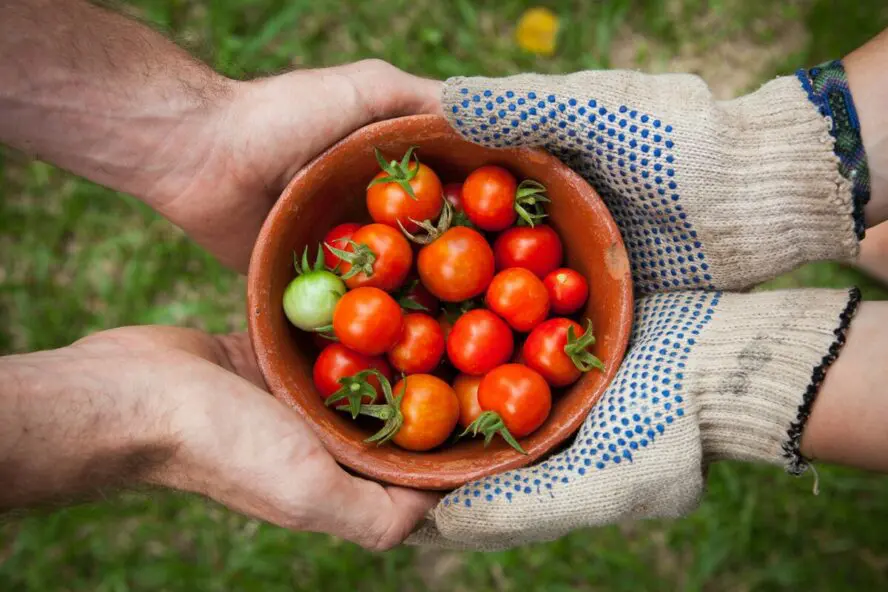
While the causational link between pesticide exposure and lung cancer is far from proven, it doesn’t hurt to take steps to reduce the pesticide load of your food. Unfortunately, with the recent rejection of an amendment to the Farm Bill, it remains difficult to hold pesticide producers accountable for failing to warn consumers about the risks of their products. This means we as consumers continue to be responsible for taking our health into our own hands.
“Focusing on evidence-based strategies to decrease pesticide exposure in foods without generating undue anxiety would be the best approach,” says Bryant. Here are the steps our experts recommend people take to do just that.
Source Organic Produce
The first step in reducing your pesticide exposure is definitely buying organic, experts say. Toxic organophosphate pesticides still haven’t been banned by the EPA, so it’s more important than ever to invest in organic. Seek out the USDA Organic label when shopping at the supermarket, or source from small producers you trust.
“Local growers using organic, regenerative, or integrated pest-management practices are excellent options, even when they do not carry formal organic certification,” says Goodyear. In fact, they may even be safer than some imported products that do bear organic labels — like “organic” honey — due to loopholes in labeling requirements.
While it’s great to choose certified pesticide-free produce whenever possible, take particular care when sourcing fruits and veggies on EWG’s Dirty Dozen list, which are more likely to carry higher loads of pesticides.
Diversify Your Diet
Another great way to offset exposure to pesticides is to consume a wide range of fruits and vegetables from a variety of sources, Goodyear explains.
“Eating the same food from the same source every day can repeatedly expose someone to the same chemical profile,” he says. Instead, choose a wide range of seasonal products, and vary your diet regularly.
Wash Your Produce Well Before Consuming
While washing doesn’t remove all pesticide residue, it can certainly help. Goodyear suggests washing produce thoroughly under running water and scrubbing anything firm. “Remove the outer leaves of leafy vegetables,” he adds. “Peel when appropriate, understanding that peeling may also remove valuable fiber and nutrients.”

That said, he notes, “washing is not a perfect solution. It may reduce surface residues, but it does not reliably remove systemic pesticides that have been absorbed into the plant.”
It’s for this reason that it’s a good idea to choose organic particularly when it comes to soft fruits like berries or stone fruit.
Don’t Cut Out Produce from Your Diet
Perhaps the most important piece of advice cited by both of our experts, however, is not to react to this news by panicking and avoiding produce altogether.
“Fears about pesticide residues should not deter consumption of fruits and vegetables,” Bryant says. “The overwhelming majority of epidemiologic studies continue to associate consumption of fruits and vegetables with enhanced overall health.”
“The message is by no means to ‘avoid healthy food,’” echoes Goodyear. “The message is ‘pay attention to the quality and source of healthy food.’”
“This is not about living in fear,” he continues. “It is about being informed and lowering the cumulative burden where we reasonably can.”
Sources:
- https://www.sciencedaily.com/releases/2026/04/260417224454.htm
- https://www.sciencedaily.com/releases/2026/07/260712011758.htm