
What Do French People Eat That Keeps Them Healthy? Live Microbes
It’s not all those delicious baguettes and croissants that keep the French healthy — it’s foods rich in live microbes.

The evidence continues to stack up: Foods rich in live microbes are great for your health. In recent years, studies have linked consumption of fermented foods with everything from improved digestion1 to reduced risk of depression2. And according to new research, this might be part of why the French are so healthy.
According to the new research published in Nutrition Bulletin, dietary intake of live microbes is particularly high in France, with nearly all children (97.7%) and adults (98.4%) consuming between 100–200 grams of foods naturally rich in microbes every single day3. Meanwhile, research published in 2022 found that just 59% of children and 67% of adults in the U.S. consumed foods rich in live microbes4 — and this at around half the volumes consumed in France.
Why Does This Matter?
“As a gastroenterologist and microbiome specialist, this doesn’t surprise me at all, but it deeply concerns me,” says Dr. Savita Srivastava, a Yale-trained gastroenterologist, microbiome specialist, and author of First 1000 Days: How Your Baby’s Gut Microbes Shape Lifelong Health.
“The modern American diet is low in wholesome ingredients and high in ultra-processed ones,” she continues. “We have spent the last century leveraging hyper-pasteurization, chemical preservatives, and extreme food processing to extend shelf life. But this has its own downstream consequences: the decline in human health.”
While the widespread adoption of processes like pasteurization successfully eliminated foodborne pathogens, she explains, “they inadvertently got rid of the harmless, beneficial environmental microbes our ancestors consumed daily.”
The result? Less resilience, lowered immunity, and more chronic disease. It’s perhaps no surprise that the French consume as many live microbes as they do. In the land of pastry, dessert is a daily indulgence — but the French actually tend to close their meals not with pâtisserie but with gut-friendly yogurt, preceded by a portion of raw milk cheese. On the other hand, while current healthy living trends in the U.S. certainly indicate an uptick in the popularity of fermented foods like kimchi, kombucha, and sauerkraut, experts believe we might still be missing the mark.

“There is a massive disconnect between marketing and microbiology,” says Srivastava. “Well-intentioned consumers reach for ‘gut-health’ products that are actually doing little to sustain good health.”
Here’s what you need to know about the health benefits of microbe-rich foods — and how to make sure you’re integrating them into your diet in the most helpful, healthful way.
The Health Benefits of Microbe-Rich Foods
While for years, according to Srivastava, the standard advice for improving gut health was “just to eat more fiber,” landmark research published out of Stanford University in 2021 “changed the paradigm5.”
“Researchers found that while fiber is crucial, a diet rich in live fermented foods reliably and rapidly increases gut microbial diversity while lowering 19 distinct inflammatory markers (including Interleukin-6),” explains Srivastava. “In study after study, microbiome diversity is a marker of health, longevity, and vitality.”
Microbe-rich foods have been found to improve digestive function6 and gastrointestinal symptoms7, reducing constipation, bloating, and flatulence. And their impact on gut health is just the beginning. Consumption of these foods has also been found to reduce inflammation8 and have beneficial effects on mental health, thanks in large part to the gut-brain axis9. Notably, research published in 2024 in Environmental Health and Prevention found an association between a high dietary intake of live microbes and a lower risk of depression10.
Microbe-rich fermented foods could also have benefits for cardiovascular health, according to 2023 research in The Journal of Nutrition, which found that they were beneficial for plasma levels of glucose, insulin, and cholesterol11. A 2026 study, meanwhile, showcased an association between the consumption of microbe-rich foods and a reduction in all-cause mortality in coronary heart disease12.
The evidence is clear, according to Srivastava. “Ancient food wisdom, passed down through generations, is now being validated by modern science,” she says. “Live microbes are not a wellness trend; they are essential to human health.”
How to Reap the Benefits of Live-Microbe Foods
Perhaps the most beneficial live-microbe foods are fermented. These include dairy like yogurt, kefir, and raw milk cheeses, vegetables like sauerkraut and kimchi, and soy-based ferments like miso, natto, and tempeh. Given the ever-growing evidence of the health benefits, it’s no surprise that folks around the globe are refocusing on mindful consumption of such foods, with countries like South Korea even integrating them into national food policies13.
On the opposite end of the spectrum, the American guidelines seem to lag far behind. The study authors note that the FDA “does not at this time recognize probiotics or fermented foods as a distinct regulatory category.”
Srivastava expresses her hope that this study may pave the way for a recommended daily intake of living foods in the U.S. “As microbiome science is rapidly evolving, a focus on fermented foods will drive new dietary recommendations with a laser sharp vision to build a robust and healthy microbiome,” she says.
In the meantime, American consumers are forced to be their own guides — and unfortunately, the misinformation is plentiful.
“In my practice, I often see people purchase products marketed as ‘gut-friendly’ but that contain added sugars or are pasteurized, without realizing they won’t bring the same health benefits as expected,” explains Sophia Guillot, a Registered Dietitian at TeamNutrition.
Here’s what you need to know about separating marketing mumbo-jumbo from the real deal.
Eat a Wide Range of Fermented Foods — and Feed them Well
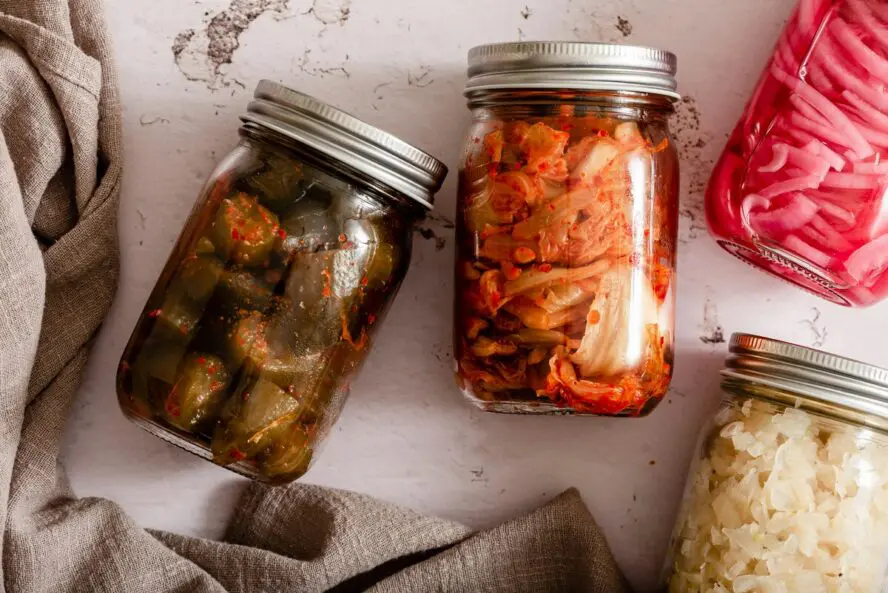
Americans have an unfortunate habit of attempting to bottle holistic living advice into a single “magic potion,” from distilling the health benefits of turmeric down to a capsule to hyping a single “superfood” like açai, kale, or quinoa. And the same thing, according to Serena Pratt, MS, RDN, a Columbia University-trained dietitian and owner of the virtual private practice Serena Pratt Nutrition, is happening in the world of fermented foods.
“Many people are trying to ‘hack’ gut health with one trendy product or supplement instead of looking at how gastrointestinally supportive the overall pattern of the diet is,” she explains.
This is important because synergy is crucial to promoting better gut health — specifically between probiotics (aka the microbes) and prebiotics, the fiber they feed on. Research published in Food Bioengineering in 2024 showcased this crucial interplay14, and experts say it’s important to bear this synergy in mind when building a truly gut-healthy diet.
“The key takeaway from this study is that improving overall dietary patterns, not simply adding one ‘gut health’ product, offers the greatest potential for long-term health benefits,” explains Kristy Thomas, a Registered Nutritionist at Prowise Healthcare.
For Guillot, the first step is variety: Consume a wide range of fermented foods, such as plain yogurt with live cultures, kefir, and kimchi.
“Consuming a variety of these foods can be associated with better gut and overall health, in part because of their positive impact on microbiota diversity,” she explains, citing 2024 research published in Microorganisms15. Indeed, echoes Thomas, “Including a variety of fermented foods is likely to provide greater microbiome diversity than relying on a single source.”
Start Small and Stay Consistent
As you start to modify your diet, Pratt suggests starting with baby steps. “For someone who is new to fermented foods or has IBS, reflux, bloating, or food sensitivities, I would start small,” she says. “A few bites of fermented vegetables or a small serving of kefir may be more realistic than adding several new fermented foods at once.”
The key, adds Guillot, is to consume these foods regularly — and alongside fiber- and polyphenol-rich foods like fruits, vegetables, legumes, and whole grains.
“Fiber is especially important because it helps feed beneficial gut bacteria that are already living in the digestive tract,” says Pratt. “Diversity of fiber-rich foods is important, eating a wider range of plant foods and fermented foods helps support a more diverse gut microbiome, which is generally associated with better overall gut health.”
Srivastava adds, “The magic happens when we combine the two: the live microbes from fermented foods remodel and diversify the gut ecosystem, while the prebiotic fiber acts as the nourishing food microbes need to thrive and produce gut-healing short-chain fatty acids (SCFAs).”
Minimize Sugar
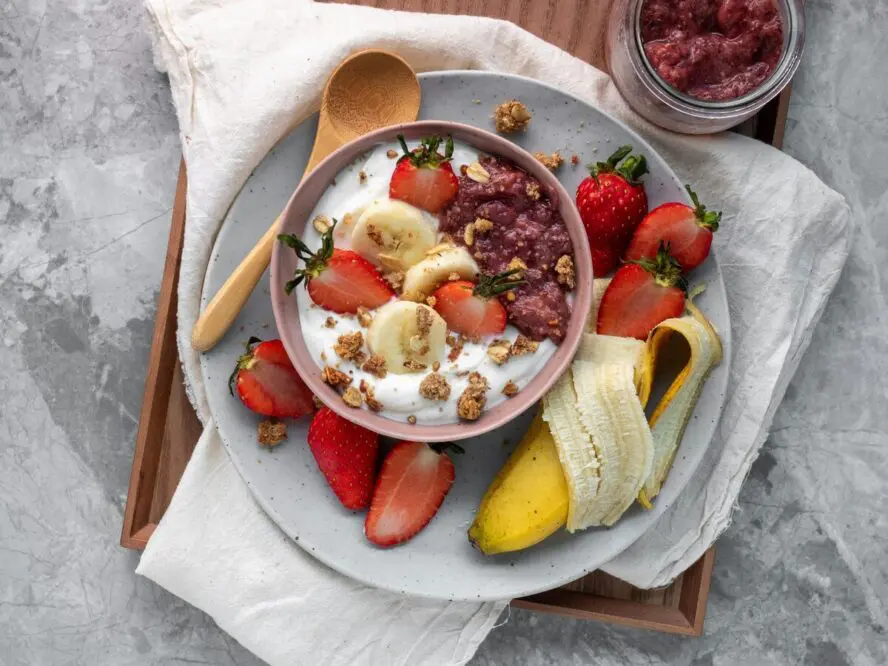
Yogurt was perhaps the first probiotic-rich food to go viral in the U.S., and according to Pratt, it’s definitely a good choice — as long as you’re shopping smart.
“Yogurt can be a great source of live and active cultures, but some products are also very high in added sugar,” she explains. According to Srivastava, yogurt brands around the world have been shown time16 and again17 to contain enough sugar to counteract their health benefits.
“When yogurt is also packed with 20 grams of refined sugar, it completely undermines the live cultures inside it,” she continues. “That sugar fuels the exact pro-inflammatory, opportunistic bacteria you are trying to crowd out of the gut microbiome.”
She recommends choosing plain, unsweetened Greek yogurt, kefir, or traditional labneh. Then you can feel free to sweeten it yourself slightly using fiber-rich berries or a touch of local honey.
Seek Out a Range of Naturally Fermented Foods — With Live Cultures
Pasteurization is crucial for food safety, but according to Pratt, “it can also reduce or eliminate the live microorganisms that may have been present in the food.”
“Not all fermented foods contain live microbes by the time they reach the consumer,” she cautions. “If a kombucha, sauerkraut, or fermented vegetable product has been pasteurized after fermentation, it may still be flavorful and nutritious, but it is not going to provide live microbes in the same way.”
Srivastava agrees. “I routinely see people buying shelf-stable kombuchas or commercial pickles sitting on warm grocery store shelves,” she says. “If fermented food is shelf-stable, it has been heat-treated or pasteurized, meaning the beneficial microbes are dead.”

It’s worth noting that some research shows that “postbiotics,” which are produced when prebiotics are pasteurized, could convey some of the same benefits of their live cousins. According to a 2025 study in Advances in Nutrition, for example, some clinical trials have shown that consumption of both pasteurized and unpasteurized sauerkraut conveyed the same beneficial effects for patients with IBS18.
But for Srivastava, it’s best to stick to the refrigerated aisle of the grocery store when sourcing these foods.
“When reading labels, look for the words ‘Contains Live and Active Cultures’ or ‘Traditionally Fermented, Unpasteurized,” she recommends. This will help you zero in on the most beneficial options — and keep you from spending your well-earned cash on a version that may be lacking some of the benefits you’re looking for.
Bearing these guidelines in mind, consuming microbe-rich fermented foods as a regular part of your diet is a great (and delicious) way to promote a wide range of health benefits.
Sources:
- https://pmc.ncbi.nlm.nih.gov/articles/PMC9003261/
- https://pmc.ncbi.nlm.nih.gov/articles/PMC8929173/
- https://onlinelibrary.wiley.com/doi/10.1111/nbu.70057
- https://pubmed.ncbi.nlm.nih.gov/35583208
- https://med.stanford.edu/news/all-news/2021/07/fermented-food-diet-increases-microbiome-diversity-lowers-inflammation.html
- https://www.sciencedirect.com/science/article/pii/S0022316623727818?getft_integrator=wiley&pes=vor&utm_source=wiley
- https://www.frontiersin.org/journals/nutrition/articles/10.3389/fnut.2025.1668889/full
- https://pmc.ncbi.nlm.nih.gov/articles/PMC9915096/
- https://www.sciencedirect.com/science/article/pii/S0149763424000307?pes=vor&utm_source=wiley&getft_integrator=wiley
- https://www.jstage.jst.go.jp/article/ehpm/29/0/29_24-00202/_article
- https://www.sciencedirect.com/science/article/pii/S0022316623126228?pes=vor&utm_source=wiley&getft_integrator=wiley
- https://www.ovid.com/jnls/md-journal/fulltext/10.1097/md.0000000000049532~association-between-the-dietary-index-for-gut-microbiota-and
- https://pmc.ncbi.nlm.nih.gov/articles/PMC9198641/#s3
- https://doi.org/10.1002/fbe2.12107
- https://doi.org/10.3390/microorganisms12020234
- https://www.sciencedirect.com/science/article/abs/pii/S0889157523007974
- https://bmjopen.bmj.com/content/8/8/e021387
- https://www.sciencedirect.com/science/article/pii/S2161831325000481