
Are Pecans Good for You? A Dietitian Breaks Down the Nutrition and Benefits
A registered dietitian breaks down pecan nutrition, from raw to honey roasted, and what the research says about their benefits.
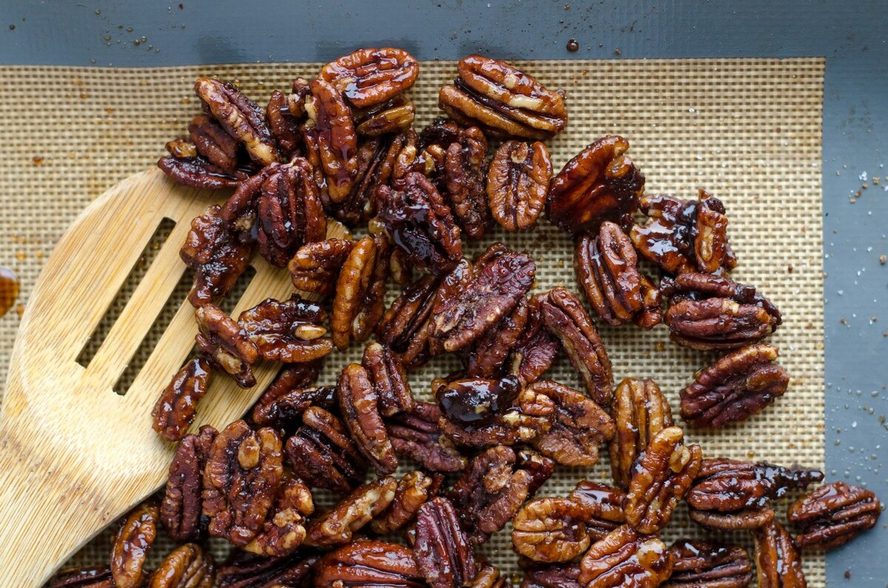
The sweet smell of roasted, sugared pecans brings memories of fall festivals and cozy Thanksgiving dinners. But pecans aren’t just a holiday treat. With or without that sugary coating, they’re a rich, buttery addition to salads, oatmeal, grain bowls, and charcuterie boards all year long.
So, are pecans good for you? In short, yes. Pecans are a good source of fiber, heart-healthy fats and antioxidants, and they offer a lot of nutrition in just a small handful. However, how you eat them does change the nutrition picture. Options like candied pecans and pecan pie add sugar and other variables to the mix, so plain or lightly roasted pecans are the best way to get the most pure nutrients from the nut itself. Either way, there’s room to enjoy pecans in various forms on your plate.
Below, we’ll break down pecan nutrition facts, then look at the health benefits these versatile nuts can offer.
Table of Contents
Pecan Nutrition Facts
To give you a sense of the baseline nutrition picture and how it changes depending on form, we’ll break down the nutrition facts for four common forms of pecans1,2,3,4.
| Nutrients per 1 oz | Raw pecans | Dry-roasted pecans with salt | Oil-roasted pecans with salt | Honey roasted pecans |
| Calories | 196 | 201 | 203 | 193 |
| Total fat (g) | 20.4 | 21.1 | 21.3 | 16.8 |
| Saturated fat (g) | 1.75 | 1.78 | 2.05 | 1.61 |
| Polyunsaturated fat (g) | 6.12 | 5.84 | 6.69 | 5.45 |
| Monounsaturated fat (g) | 11.6 | 12.5 | 11.6 | 8.69 |
| Total carbohydrate (g) | 3.94 | 3.86 | 3.69 | 8.58 |
| Dietary fiber (g) | 2.72 | 2.66 | 2.69 | 1.11 |
| Total sugars (g) | 1.1 | 1.15 | 1.12 | 6.92 |
| Sodium (mg) | 0 | 109 | 111 | 109 |
| Protein (g) | 2.6 | 2.69 | 2.61 | 1.9 |
| Manganese (mg) | 1.28 | 1.11 | 1.05 | Not available |
| Magnesium (mg) | 34.3 | 37.4 | 34.3 | 19.6 |
| Phosphorus (mg) | 78.5 | 83.1 | 74.6 | 48.2 |
| Copper (mg) | 0.34 | 0.332 | 0.34 | 0.174 |
| Thiamine (mg) | 0.187 | 0.128 | 0.134 | 0.105 |
| Zinc (mg) | 1.28 | 1.44 | 1.27 | 0.751 |
These pecan nutrition facts highlight that no matter what form of pecans you eat, they are a rich source of healthy poly- and mono-unsaturated fats, manganese, copper, thiamine, and zinc. The key difference between the common forms of pecans is that the salted and honey roasted pecans have a higher sodium content, while the honey roasted version also features added sugar.
Health Benefits of Pecans
Are pecans good for you? The health benefits of pecans come mainly from the healthy unsaturated fat content as well as their dense micronutrient value. Let’s dig a little deeper into the major evidence-based health benefits of pecans.
Heart Health
The Food and Drug Administration (FDA) made a health claim a few decades ago that “1.5 ounces per day of nuts, as part of a diet low in saturated fat and cholesterol and not resulting in increased intake of saturated fat or calories may reduce the risk of coronary heart disease (CHD).”5 Although this claim has not been updated since then, it still holds true when looking at the current research on the impact of nuts like pecans on heart health.
A 2026 review of randomized, controlled trials shows that pecan intake is linked with improvements in total cholesterol, LDL-cholesterol levels, as well as triglycerides6. Experts suggest these heart health benefits are likely linked to the rich monounsaturated fat content of pecans.
Another study, a 2026 single-blind, randomized controlled trial, looked at the effect of pecan intake on blood lipid levels in overweight adults. Results show that the individuals who consumed 13% and 20% of their total daily calories from pecans for four weeks improved fasting blood lipid profiles compared with the control7.
Gut Health and Fiber
At nearly three grams per ounce, pecans are a good source of dietary fiber, with experts suggesting that insoluble fiber intake is beneficial to gut health. However, the extent of gut health benefits, such as fiber’s contribution to gut microbiome diversity, is still in early studies and unclear8.
Blood Sugar and Diabetes
Due to their low carbohydrate content and relatively high dietary fiber content, pecans make a great addition to a heart-healthy and diabetes-friendly diet. A 12-week study conducted in 2025 looked at the effect of pecan intake on metabolic health. The study found that those who ate 57 g of pecans in place of their usual snacks had significant improvements in their Lipoprotein Insulin Resistance Index (LP-IR) as compared to those who stuck to usual snacking patterns9.
Studies on pecans show that their dietary fiber and monounsaturated fat content can help slow glucose absorption10. However, there is limited data to show that pecans can significantly reduce fasting blood glucose levels in the short term.
Antioxidants
Pecans are rich in a variety of antioxidants, including vitamin E and polyphenols like catechins and proanthocyanidins11. These compounds show potential to provide anti-inflammatory and cardioprotective benefits, such as reducing risk of heart disease and stroke12.
Brain Health
The polyphenol antioxidants in pecans show potential to reduce inflammation and oxidative stress in the body’s cells, including in the brain8. However, studies are too early to confirm any associations between brain health outcomes and pecan intake.
Weight Management
Are pecans good for weight loss? At nearly 3 grams each of dietary fiber and protein per ounce, pecans are a fairly effective snack to help keep you full in between meals. Therefore, even though pecans are considered a calorie-dense food, research shows that the pecan’s impact on satiety can actually support weight management efforts10.
Pecans vs. Walnuts: Which Are Healthier?
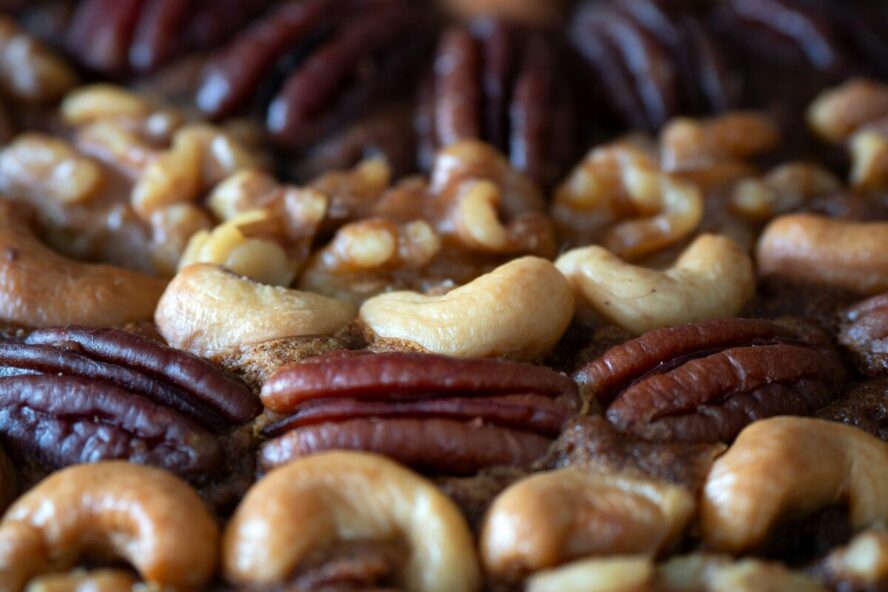
When it comes to pecans vs. walnuts, neither is an obvious winner in the search for the healthiest nut. Both nuts are healthy for their own unique reasons. Let’s compare the nutrition facts of pecans vs. walnuts to understand some of the differences1,13.
| Nutrients per 1 ounce serving | Raw pecans | Walnuts, raw |
| Calories | 196 | 185 |
| Total fat (g) | 20.4 | 18.5 |
| Saturated fat (g) | 1.75 | 1.74 |
| Monounsaturated fat (g) | 11.6 | 2.53 |
| Polyunsaturated fat (g) | 6.12 | 13.4 |
| Total carbohydrate (g) | 3.94 | 3.88 |
| Dietary fiber (g) | 2.72 | 1.9 |
| Protein (g) | 2.6 | 4.31 |
| Omega-3 (ALA) (g) | 0.28 | 2.57 |
| Vitamin E (mg) | 0.397 | 0.198 |
| Manganese (mg) | 1.28 | 0.967 |
| Magnesium (mg) | 34.3 | 44.8 |
| Copper (mg) | 0.34 | 0.451 |
| Iron (mg) | 0.72 | 0.825 |
| Phosphorus (mg) | 78.5 | 98.1 |
| Zinc (mg) | 1.28 | 0.876 |
Both pecans and walnuts are similar in saturated fat and calorie content, but there are several nutritional differences between the two. Walnuts contain significantly more protein and omega-3 fatty acid content than pecans, along with more magnesium, phosphorus, and copper. But pecans come out ahead on fiber, monounsaturated fat, and minerals like manganese and zinc.
When it comes to taste, pecans tend to be sweeter and milder in flavor, while walnuts have a bitter edge. Texture-wise, walnuts have a harder, crunchier texture as opposed to the softer, more buttery texture of pecans. The bottom line is to enjoy both by rotating them in your meal and snack routine.
How Many Pecans Should You Eat a Day?
With so many health benefits, you may wonder “How many pecans should I eat a day?” A one-ounce serving of pecans per day fits most healthy eating patterns, but you can adjust your intake based on your calorie needs. The FDA’s qualified health claim for most nuts references 1.5 ounces per day14.
If you’re keeping an eye on calories, pre-portioning pecans into a small bowl or container makes it easy to know how much you’re having.
What Are the Cons of Pecans?

Pecans are full of nutritional benefits, but no food is right for everyone. Of course, those with tree nut allergies will want to steer clear to avoid a risk of anaphylaxis. Pecans may also have a cross-reactivity with other tree nuts. It’s important to read the label of all food products carefully to avoid accidental exposure.
You may want to watch portion size if you have irritable bowel syndrome (IBS). Monash University recommends a portion of pecans of 20 to 30 g to stay within the safe “green light” serving size for those with IBS15.
If you’re following a heart-healthy or diabetes-friendly eating pattern, it helps to know that salted, honey roasted, and candied pecans, along with recipes like pecan pie, add sugar and sodium.
Are Roasted or Raw Pecans Healthier?
Dry-roasted, oil-roasted, and raw pecans are nutritionally similar. The main differences come from added salt and sugar. It’s when you start salting and adding sugar that the nutritional value of pecans starts to shift.
Easy Ways to Eat More Pecans
During Thanksgiving and beyond, pecans can provide a delicious, nutritious addition to your meals and snacks. Here are some creative ways to add pecans to your plate year-round.

- Salad and veggie topper: Chopped or diced pecans can add a crunchy texture to your sweet potato dish, green bean casserole, or fresh salads.
- Oatmeal and yogurt mix-in: For a crunchy texture boost that offers a bit of extra fiber, add chopped pecans to your oatmeal, yogurt, or chia pudding.
- Panko and breading alternative for proteins: Instead of nutrient-light panko and flour breading, finely dice pecans to create a uniquely nutty and subtly sweet pecan crust for proteins like fish and chicken.
- Trail mix ingredient: Combine pecan halves with dried cranberries and walnut halves for a nutrient-dense and satisfying trail mix.
- Flavor booster for flatbreads and sandwiches: Sprinkle finely chopped pecans over flatbreads or fold into mashed avocado for a nutrient-rich sandwich spread.
FAQs
Pecans’ balance of protein and dietary fiber can help keep you satisfied between meals, so they may indirectly support weight loss efforts.
Pecans can be a satisfying, low-sugar snack option as part of a diabetes-friendly eating pattern, and are a nutritious alternative to salty and sugary processed snacks.
Pecans contain mostly healthy unsaturated fats that show potential to help reduce total cholesterol, unhealthy LDL cholesterol, and blood lipids when consumed regularly.
Each nut carries its own unique nutritional benefits, but pecans can provide a good source of fiber, monounsaturated fats, and minerals like manganese and zinc.
Pecans are high in fat, but most of that is unsaturated fat that can support heart health.
Sources:
- https://fdc.nal.usda.gov/food-details/170182/nutrients
- https://fdc.nal.usda.gov/food-details/169424/nutrients
- https://fdc.nal.usda.gov/food-details/2707525/nutrients
- https://fdc.nal.usda.gov/food-details/169425/nutrients
- https://pmc.ncbi.nlm.nih.gov/articles/PMC9964942/
- https://pubmed.ncbi.nlm.nih.gov/42298717/
- https://pmc.ncbi.nlm.nih.gov/articles/PMC13084609/
- https://pmc.ncbi.nlm.nih.gov/articles/PMC12694537/
- https://pmc.ncbi.nlm.nih.gov/articles/PMC12121402/
- https://pmc.ncbi.nlm.nih.gov/articles/PMC13501812/
- https://pmc.ncbi.nlm.nih.gov/articles/PMC13029317/
- https://pubs.nmsu.edu/_e/E138/index.html
- https://tools.myfooddata.com/nutrition-facts/170187/wt6
- https://www.fda.gov/food/hfp-constituent-updates/fda-completes-review-qualified-health-claim-petition-macadamia-nuts-and-risk-coronary-heart-disease
- https://www.monashfodmap.com/about-fodmap-and-ibs/high-and-low-fodmap-foods/