
How Your Summer Diet Shows Up in Your Skin
Summer changes what your skin needs. A guide to the foods that support hydration, collagen, the skin barrier, and repair from the inside out.

Skin gets more attention in July than in any other month. You’re outside longer, sweating more, and reaching for more products to deal with the results. When your skin starts acting up, food is a factor that most people never consider. Summer is when that gap tends to show most clearly.
What Summer Actually Does to Your Skin
Three things shift when the temperature climbs. You lose more water and sodium through sweat. UV exposure increases, using up antioxidants stored in the skin faster than your body can replenish them.1 And appetite drops, so meals get lighter and often carry less protein and fat than they did in January. Lighter eating is not a problem in itself. But if you find yourself skipping protein for four days running, you might not have the needed amino acids in reserves to draw on.
None of what follows replaces sunscreen or a decent moisturizer. But it will give your skin a better starting point than most summer diets provide.
Hydration Starts on the Plate
A meaningful share of your daily fluid comes from food rather than from a glass, and summer produce happens to be some of the most water-dense foods available (nature’s incredible like that). Watermelon, cucumber, tomatoes, berries, oranges, and leafy greens all run high in water and bring potassium along with it.2 Eat enough of them, and you are drinking without thinking about it. We have a roundup of the season’s most hydrating produce here.
But sweat also takes more than water out. It also pulls sodium and potassium, and plain water alone only replaces one part of that equation.3 If you are outside all afternoon, salted food and potassium sources like cantaloupe, beans, yogurt, and potatoes do more for you than another glass of water on its own. Hydration is a food problem as much as it is a drinking problem, and summer is the season that makes it obvious.
The Nutrients Doing the Work
Vitamin C and collagen
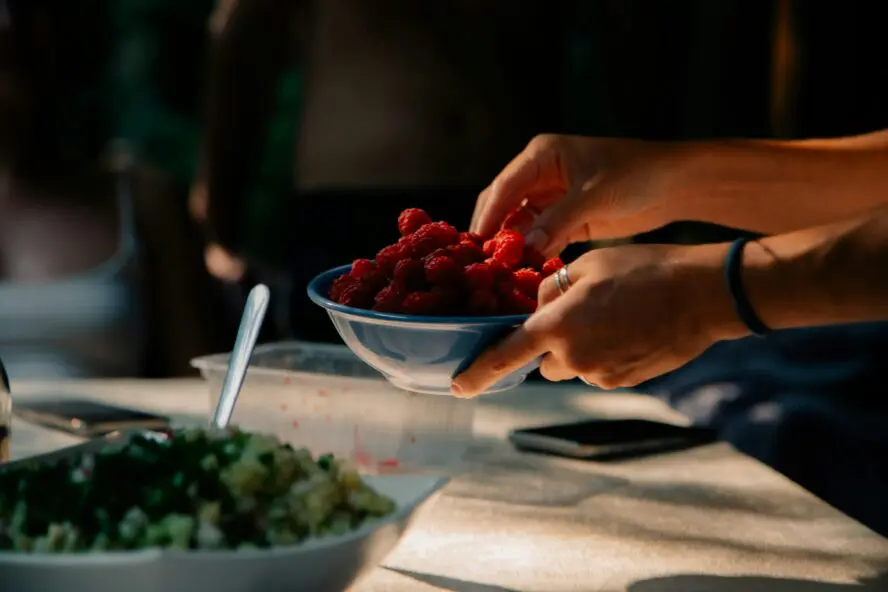
Your body cannot build collagen without vitamin C. It works as a cofactor in the process, so a shortfall shows up as slower repair rather than as anything dramatic or obvious.4 Bell peppers, strawberries, kiwi, citrus and broccoli are the reliable sources, and most of them happen to be summer staples.
One thing worth noting: vitamin C breaks down with heat, light and time.5 A pepper eaten raw this week delivers meaningfully more than one that sat in the produce drawer since last Thursday before going into a hot pan.
Carotenoids and cooked tomatoes
Lycopene and beta-carotene build up in skin tissue over weeks of consistent eating. Research suggests people who eat them consistently show a small measured increase in how long their skin resists UV redness.6 Small is the operative word. This is a background effect, not a reason to skip SPF.
Lycopene absorbs better from cooked tomatoes with a little olive oil than from raw ones, which makes a simple tomato sauce more useful than a salad for this particular purpose.7 Carrots, sweet potato, apricots and red peppers cover the beta-carotene side.
Omega-3 fats and the barrier
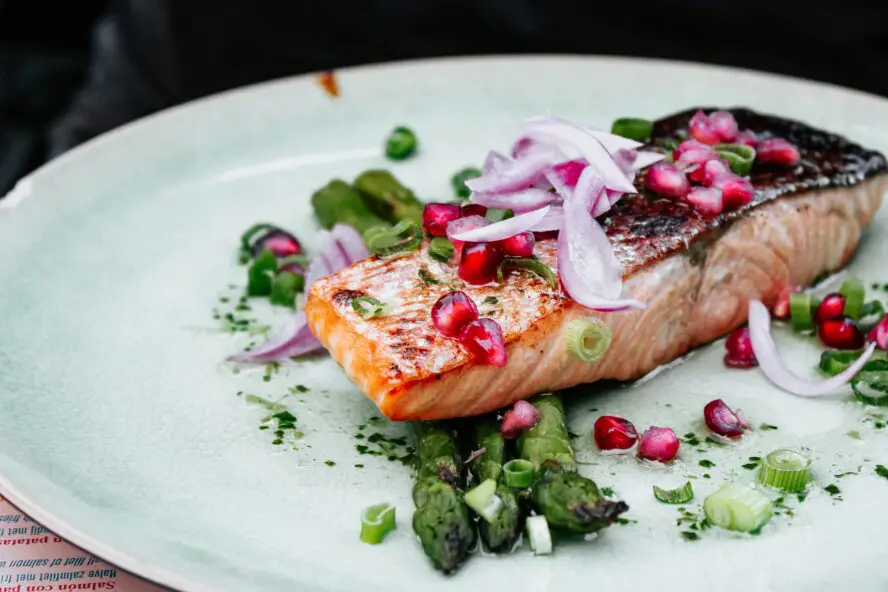
The outer layer of skin holds water in, and the fats in your diet feed directly into how well it does that job.8 Fatty fish twice a week is the standard recommendation. Walnuts, flaxseed, and chia are the plant-based route, though the conversion of plant omega-3s in the body is inefficient, so quantities need to be higher to achieve a similar effect.9
Protein and zinc for repair
Collagen is built from amino acids, glycine and proline in particular, and you get those from ordinary protein rather than from anything special.10 Zinc supports wound healing and skin cell turnover, and is found in shellfish, beef, lentils, chickpeas and pumpkin seeds.¹¹
On a practical note: spreading protein across the day instead of loading it into dinner. Skin repair does not wait for one meal.
The gut angle, with a caveat
Fermented foods come up constantly in conversations about skin health. Yogurt, kefir, sauerkraut and kimchi are the usual suspects, and the research linking gut bacteria to skin conditions is real, but it’s also early and most of it stops well short of saying that eating sauerkraut will clear your skin.12 The gut-skin connection is worth paying attention to as the science develops, but it isn’t worth overstating where it currently stands.
What food will not do
No diet blocks UV rays. No diet replaces a moisturizer on skin that is dry and tight after a beach day. And nothing you eat fixes a product that irritates you.
Food builds the material your skin is made of. Products handle the surface, and sunscreen handles the part your diet simply cannot touch. Both matter and they work best when you aren’t asking either one to do the other’s job.
If you are buying for someone who takes their routine seriously, a Sephora gift card is worth considering for exactly that reason. Sunscreen, moisturizer or vitamin C serum are deeply personal. What works in February often starts working in July, and formulas vary enough by skin type that guessing rarely lands. Letting them choose is a more useful gift.
A Week That Supports Your Skin
None of this requires a meal plan or a complete overhaul of how you eat. A handful of consistent habits covers most of the nutritional ground your skin needs during the summer months.
These five habits cover most of it:
- Put something water-heavy on every plate, whether that is tomatoes, cucumber or whatever fruit is in season.
- Eat one raw source of vitamin C a day (since heat degrades it more quickly than most realize).
- Cook tomatoes in olive oil once or twice a week to get the most out of their lycopene content, which research shows absorbs significantly better than raw.#
- Eat oily fish twice a week for omega-3 support, or eat plant-based sources like walnuts, flaxseed, and chia daily if you don’t eat fish.
- Salt your food properly when you have been sweating heavily to replace sweated out sodium.
The Short Version
Summer skin is easier to feed than it is to rescue. Water-rich produce, steady protein spread across the day, vitamin C you have not cooked to nothing, and fats that support the barrier will carry most of the load. What you put on topically is a separate job, and worth choosing carefully rather than guessing at.
Sources
- https://pmc.ncbi.nlm.nih.gov/articles/PMC2290997/
- https://fdc.nal.usda.gov/
- https://pubmed.ncbi.nlm.nih.gov/21923229/
- https://pmc.ncbi.nlm.nih.gov/articles/PMC5579659/
- https://pubmed.ncbi.nlm.nih.gov/10861993/
- https://pubmed.ncbi.nlm.nih.gov/17827615/
- https://pubmed.ncbi.nlm.nih.gov/16028246/
- https://pubmed.ncbi.nlm.nih.gov/29656276/
- https://ods.od.nih.gov/factsheets/Omega3FattyAcids-Consumer/
- https://pubmed.ncbi.nlm.nih.gov/29099763/
- https://ods.od.nih.gov/factsheets/Zinc-Consumer/
- https://pmc.ncbi.nlm.nih.gov/articles/PMC6048199/