
How to Make Brick Chicken, the Showy Grilling Method Worth Learning This Summer
The grilling technique that delivers crispier skin than a whole roasted bird, every time – brick chicken.

One whole chicken, flattened, weighted, and grilled over direct heat with a slather of garlic-thyme oil and a squeeze of charred lemon. Total time: about 50 minutes, with most of that hands-off on the grill. This is the technique that delivers crispier skin and more evenly cooked meat than a whole roasted bird, and it requires less equipment than you’d think.
Why Grilled Brick Chicken Works
The weight is doing real work here. Pressing a flattened bird against the grill grate with a brick (or the cast-iron equivalent) forces the skin into full, sustained contact with the heat. The result is skin that crisps and renders evenly across the whole surface, no flabby patches, no uneven browning, while the direct heat of the grill adds a smoky depth that oven-roasting simply can’t replicate.
Removing the backbone first is what makes the weight effective. A whole unflattened bird sits unevenly on a grill, with air pockets under the breast and thighs that break contact with the heat. Once the backbone is out and the bird is pressed flat, every part of the skin has contact with the grate at the same time. The backbone doesn’t go to waste — freeze it for stock.
Never miss a new recipe. Sign up for our newsletter for more sweets, sips, and eats ideas along with well-researched, non-toxic living guidance and smart wellness advice.
You don’t need actual bricks
Two foil-wrapped bricks are the traditional tool, but a cast-iron skillet pressed on top of the bird does exactly the same job, and I’ve tested both. If you don’t own a cast-iron pan, stack two heavy oven-safe pans and weight them down with a couple of full cans. The principle is the same: sustained, even pressure.
The garlic gets stewed in oil, not used raw, for a reason
Raw garlic burns fast over direct heat and turns bitter before the chicken is cooked through. Slow-stewing the cloves in olive oil takes about 20 minutes but produces something completely different — soft, sweet, almost spreadable garlic that infuses the oil and goes under the skin without scorching. It’s the detail that takes this from a technique into a recipe.
Can’t grill outside?
Btw, if you’re reading this and outdoor grilling is not an option for you, we recently tested a non-toxic indoor grill that would work really well here. We also adore Staub’s cast iron grill pan, which would make an ideal substitute for outdoor grilling.
Ingredient Notes for Chicken Under a Brick
Full amounts are in the recipe card below. Here’s what to know about each one.

Whole chicken (1 bird, 3 to 4 lbs)
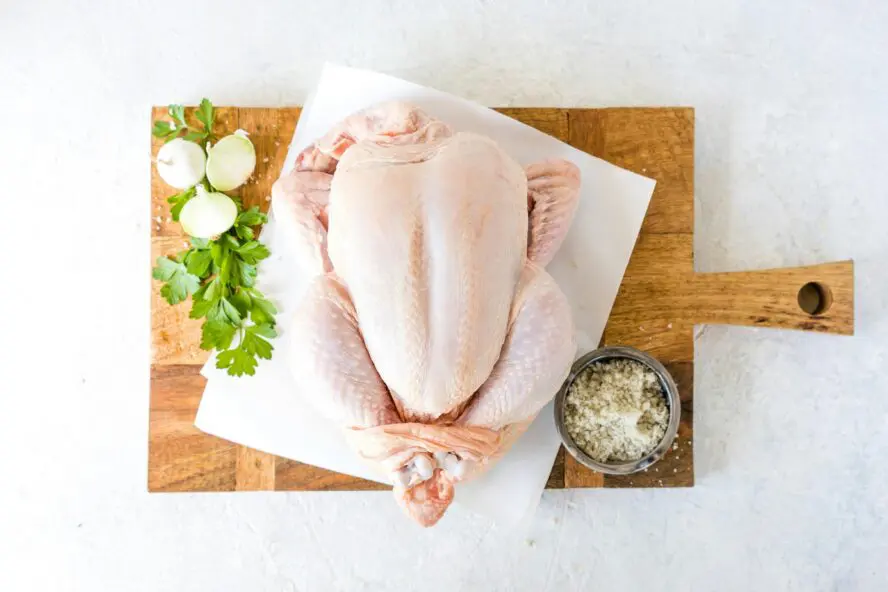
Look for a bird that’s been raised on pasture if possible. Organic certification on a chicken label guarantees that the bird was raised without antibiotics and fed organic feed, but it doesn’t always guarantee outdoor access or pasture time. Look for “pasture-raised” or “certified humane” alongside organic for the fullest picture on sourcing (same with eggs). Smaller birds (3 to 3.5 lbs) cook faster and are easier to manage on the grill; larger birds work but need more time.
Grey sea salt with Herbs de Provence
A coarse finishing salt with dried herbs already blended in. It seasons the exterior of the bird and adds a Provençal note that works well with the garlic-thyme oil. Regular coarse sea salt works if you don’t have the herbed variety. Love this flavor profile? Try our homemade honey whole wheat herb de Provence crackers or these butternut squash veggie chips recipe with herbes de provence.
How to Make Chicken Under a Brick
Ingredients
Method
- Heat the olive oil in a saucepan over medium-low heat. Add the thyme springs and garlic cloves. Bring slowly to a gentle simmer and stew for 20 to 25 minutes, until the garlic is completely soft. Remove the garlic cloves with a slotted spoon and let cool. Set the infused oil aside to cool.
- Rinse the chicken under cool running water and pat thoroughly dry with paper towels. Dry skin is the foundation of crisp skin. Don’t skip this step.
- Using kitchen shears, cut out the backbone by cutting along one side of the backbone and then along the other. (Do not confuse with the breastbone, which runs between the chicken breasts.) Save and freeze the backbone for stock.
- Wrap two bricks in aluminum foil, or prepare your cast-iron skillet alternative.
- Once the garlic has cooled, loosen the skin around the chicken breasts, legs, and wings with your fingers or a small paring knife. You will need to cut small slits in the thighs and wings to loosen the skin there. Tuck the stewed garlic cloves under the skin of the breast, legs, and wings.
- Brush the entire chicken with the infused garlic-thyme oil. Season generously with grey sea salt and fresh cracked pepper.
- Bring the grill to medium-high heat. Brush the grates with any remaining infused oil.
- Transfer the flattened chicken to the grill, skin-side down. Place the foil-wrapped bricks (or cast-iron skillet) on top of the bird to weight it down. Grill for 10 to 15 minutes per side.
- About halfway to three-quarters through the cooking time, brush the lemon halves with a little infused oil and place them on the grill, cut-side down. Grill for about 5 minutes until grill marks appear.
- Check the internal temperature of the thickest part of the thigh — the chicken is done at 165°F. Remove from the grill and let rest for 5 minutes before carving. Serve with the grilled lemons.
Chicken Under a Brick Temperature and Cook Time
Cook chicken under a brick to an internal temperature of 165°F in the thickest part of the thigh, measured with an instant-read thermometer.
At medium-high heat with the bird weighted flat, plan on 10 to 15 minutes per side, for a total of 20 to 30 minutes. Smaller birds (around 3 lbs) will be done closer to 20 minutes; larger birds (3.5 to 4 lbs) will need the full 30.
A note on the “juices run clear” test: This is no longer considered it a reliable indicator of doneness. The juices can run clear before the thickest part of the thigh reaches a safe internal temperature, especially on a grill where heat is uneven.¹ Use a thermometer. It takes three seconds and removes all guesswork.
Substitutions and Variations
Herbs: Rosemary, sage, or marjoram work in place of thyme — all hold up well to the low-and-slow garlic stew. A mix of all three is excellent. Fresh oregano is good but more assertive; use half the amount.
Citrus: Meyer lemons, blood oranges halved, or limes all grill beautifully in place of standard lemons. The blood orange version is particularly striking for a dinner party.
Oil: Avocado oil works well as a substitute and has a higher smoke point than olive oil, giving you a little more headroom over a hot grill.
Chicken parts instead of whole bird: Bone-in thighs or bone-in breasts work with this same technique, no backbone removal required. Just flatten slightly and weight with the cast iron. Cut the grill time roughly in half and check with a thermometer at 165°F.
Dietary notes: As written, this recipe is naturally gluten-free, dairy-free, and paleo and keto-friendly.
Tips for the Best Chicken Under a Brick
Dry the skin thoroughly before seasoning. Moisture on the skin steams rather than crisps under the brick. Pat the bird down completely after rinsing and let it air-dry on a rack for 15 to 30 minutes if you have time.
Don’t rush the garlic stew. Twenty minutes at a gentle simmer transforms sharp raw garlic into something sweet and spreadable. At 10 minutes it’s still pungent and will burn on the grill. This is worth the wait.
Get the grill properly hot before the bird goes on. A well-heated grate means the skin starts crisping immediately on contact rather than sitting in its own moisture. Medium-high heat is the target — hot enough for visible grill marks within 2 minutes, not so hot that the skin chars before the inside cooks through.
Use a thermometer, not the juice test. This is worth repeating: 165°F in the thickest part of the thigh is the reliable doneness target. The juices-run-clear test isn’t a safe substitute.
Let it rest before carving. Five minutes off the grill allows the juices to redistribute through the meat. Carve immediately and the juices run out onto the cutting board instead of staying in the chicken.
What to Serve with Chicken Under a Brick
The grilled lemons are already built into this recipe and do a lot of work, squeezed over the carved bird at the table, they brighten the rich garlic-thyme oil and add a smoky citrus note that ties the whole plate together. Lean into the grill for the sides too.
For a summer spread, sweet corn succotash with pecorino and fresh basil is a natural companion that comes together in 20 minutes while the chicken rests. Heirloom tomato and Red Ruffle basil salad adds color and acidity without requiring any heat at all. For dessert, grilled fruit recipes keep the grill going with no extra dishes.
For something more substantial, potato salad with artichokes, feta, and olive relish travels well and gets better as it sits. Make it ahead and pull it out when the chicken comes off.
Is Chicken Under a Brick Healthy?
A whole chicken prepared this way is a lean-protein-forward dinner with a meaningful olive oil component, and both earn their place on a health-conscious plate.
According to the USDA, a 3.5-ounce serving of roasted chicken (skin on, thigh) provides approximately 24 grams of protein along with B vitamins including niacin, B6, and B12, and minerals including phosphorus, selenium, and zinc.2 Chicken is also a meaningful source of complete protein, meaning it contains all nine essential amino acids.
The olive oil in the garlic infusion isn’t just a cooking medium. The American Heart Association identifies extra-virgin olive oil as a primary source of monounsaturated fat, which supports healthy cholesterol levels and is associated with cardiovascular health benefits.3 The garlic adds allicin and sulfur compounds that have been studied for their antioxidant and anti-inflammatory properties.4
Storing and Reheating Leftover Chicken Under a Brick
Refrigerator: Store leftover chicken in an airtight container for up to 4 days. Keep any remaining garlic-thyme oil separately in a small jar — it’s excellent for roasting vegetables or dressing a salad.
Best reheating method: A 350°F oven for 10 to 15 minutes on a wire rack over a baking sheet is the most reliable way to bring leftover chicken back without drying it out. Avoid the microwave if you care about the skin — it goes soft and steams the meat rather than warming it through evenly.
Freezer: Cooked chicken freezes well for up to 3 months. Slice or shred it before freezing for easier use — thawed shredded chicken goes directly into soups, grain bowls, tacos, or pasta.
The backbone: If you saved and froze it, you have the start of a genuinely good chicken stock. Combine it with aromatics, cold water, and a couple of hours of gentle simmering and you’ll have stock that bears no resemblance to the carton.
FAQs
Do I need real bricks to make this recipe? No. Two foil-wrapped bricks are the traditional approach, but a cast-iron skillet pressed on top of the bird does exactly the same job, I’ve tested both. If you don’t own a cast-iron pan, stack two heavy oven-safe pans and weight them down with a couple of full cans. The principle is sustained, even pressure, which any of these options provides.
Why do you remove the backbone? Removing the backbone lets the bird lie completely flat against the grill grate. A whole unflattened bird sits unevenly, with air pockets under the breast and thighs that interrupt contact with the heat. Flat bird plus brick means the skin crisps evenly across the whole surface and the bird cooks faster than a whole roasted chicken.
Can I make this without a grill? Yes. A cast-iron grill pan or a large regular skillet on the stovetop works the same way. You won’t get the same smoke, but the technique, flattened bird, weighted with cast iron, cooked over steady medium-high heat, translates directly. Finish in a 400°F oven if the thigh needs more time to reach 165°F without the breast overcooking.
What’s the safe internal temperature for chicken? 165°F in the thickest part of the thigh, measured with an instant-read thermometer, per FoodSafety.gov. The “juices run clear” test is no longer considered reliable, I recommend using a thermometer every time.
Can I use chicken parts instead of a whole bird? Yes. Bone-in thighs or bone-in breasts work well. No backbone removal needed, just flatten slightly and weight with the cast iron. Cut the grill time roughly in half and check with a thermometer at 165°F. Thighs are more forgiving than breasts over direct heat; if you’re using breasts, watch the temperature closely.
What’s the difference between this and spatchcock chicken? They’re closely related. Both techniques remove the backbone to flatten the bird for faster, more even cooking. The difference is the weight. Spatchcocked chicken is flattened and cooked without anything pressing on it. Chicken under a brick adds the weighted cast iron, which forces the skin into sustained contact with the grate and produces a crispier, more evenly rendered exterior. Same prep, meaningfully different result.
More Easy Recipes to Try
If this earned a permanent spot in your grill rotation, these are worth keeping close. For another take on grilled chicken, barbecue chicken with legs of fire uses a different cut and a from-scratch sauce that puts any bottled version to shame.
And if you want to put any leftovers to work, this easy homemade chicken pot pie would do the trick nicely. As for the reserved chicken backbone? Our chicken tortilla soup is one of the best uses for a good homemade stock.
Sources:
- https://www.foodsafety.gov/food-safety-charts/safe-minimum-internal-temperatures
- https://fdc.nal.usda.gov/food-details/171477/nutrients
- https://www.heart.org/en/healthy-living/healthy-eating/eat-smart/fats/healthy-cooking-oils
- https://www.nccih.nih.gov/health/garlic