
This Focaccia Bread Recipe with Herby Garlic Butter Is a Must Try
Try this focaccia bread recipe for all the sandwiches, toasts, and simple sides you could ask for.
There are a lot of reasons to love this focaccia bread recipe. It’s delicious, for one. It’s also so versatile (it can be adapted into a rosemary potato focaccia, or a tomato mozzarella focaccia, or even a blue cheese and fig focaccia — the possibilities are endless!). But one of our favorite reasons to love focaccia is how simple it is to make.
We’ve made and shared a lot of different types of bread recipes on Organic Authority, from this rustic vegan spelt bread recipe to a more classic rye and whole-wheat sourdough bread recipe, and even this more hearty goat cheese pull-apart bread recipe. We’ve even tested more cake-like loafs like this paleo pumpkin bread and this irresistible gluten-free banana bread. But arguably, none are as simple as this delicious recipe for focaccia bread.
The next time you’re craving a quick focaccia bread hit, try making it at home instead of running to the store. This focaccia recipe is seriously straightforward, from the number of ingredients to the actual steps involved. So what’s the key to that classic pillow-y texture? Well, when you’re dealing with a recipe with as few ingredients as this one, every little difference matters.
Never miss a new recipe. Sign up for our newsletter for more sweets, sips, and eats, along with well-researched, non-toxic living guidance and smart wellness advice.
What Flour Should I Use?
In my experience, I’ve found that different types of flours you use in your focaccia bread recipe affect the texture and density of the results. Some flours create a dense bread, while others create a light and fluffy texture that doesn’t make you feel overly full. For me, the best focaccia recipe is one that results in an airy, sponge-y bread you can’t get enough of.
All-Purpose Flour vs. Bread Flour
All-purpose flour and bread flour differ primarily in their protein content. All-purpose flour contains about 10–12% protein, while bread flour has a higher protein content of around 12–14%. This protein content will influence the structure of your bread, ultimately affecting its texture — which is a difference you can use to your advantage depending on your preferences.
If you prefer light and fluffy bread over dense bread like I do, I recommend opting for bread flour. But even within the broader category of bread flour, you’ll get varied results with different brands. I’ve tried a number of different bread flours, and my personal favorite is King Arthur’s Bread Flour (they even have an organic version).
Their bread flour has a 12.7% protein content, which is a full point higher than the average for national brands. This creates a stronger gluten network that results in a loftier rise and a spongier spring with an open crumb structure, giving you those classic irregular focaccia holes. And with King Arthur’s Bread Flour, you get consistent results — a light and airy bread that’s not too dense, with a texture typical of true Italian focaccia bread.
Pro Tip: I also recommend weighing your flour ingredients with a kitchen scale for more accurate results. If you don’t have one, I’ve given you the measurements in cups as well. (Or if you’re ready to invest in a kitchen scale, this is the one I use — I’ve been using it for 5 years and I love it!)
And if you’re looking to up your at-home bread baking skills, we recently tested some cast iron bread ovens. They’re not necessary for this focaccia recipe, but will completely transform your sourdough boules or whole grain loaves.
I’ve also included a delicious herby garlic sauce in this quick focaccia recipe that you can brush on at the last minute to level up that irresistible, garlic-y flavor.
Tools Used in this Easy Focaccia Recipe
- Glass Mixing Bowls 10-Piece Set
- GreenPan Platinum Silicone Flat Whisk
- GreenPan Platinum Silicone Spatula
- Digital Kitchen Scale
- GreenPan Reserve Bakeware 7-Piece Set
- Staub Cast Iron Mini Cheese Fondue Pot
- Bee’s Wrap, Beeswax Wraps for Food
My Favorite Focaccia Recipe
Focaccia Bread Ingredients
Pro Tip: Check the expiration date on your yeast packet to make sure it’s still good and hasn’t expired — this will ensure your bread rises.
How to Make Focaccia Bread: Instructions
STEP 1:
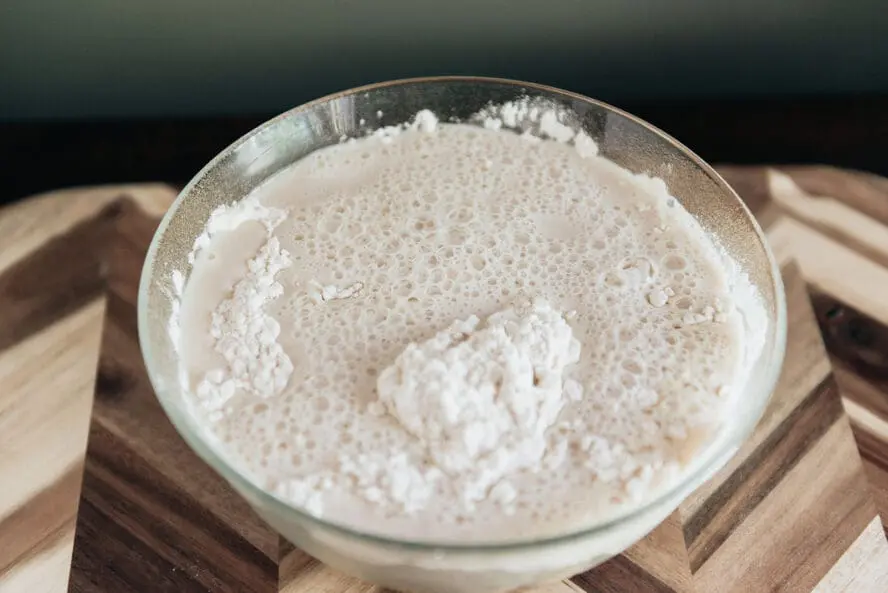
Wake Up the Yeast: In a medium bowl or measuring cup, whisk yeast, warm water, and honey until foamy or creamy. Let sit for about 5 minutes so the yeast can activate.
STEP 2:
Make the Dough: In a large bowl, whisk together bread flour and salt. Pour in the yeast mixture and stir with a wooden spoon or silicone spatula. Mix until the dough is sticky, shaggy, and no dry flour remains.
STEP 3:
First Rise: Add 3–4 tbsp of olive oil to a large bowl (glass is great!), coating the sides at least ¾ of the way up — the dough will rise high. Transfer dough into the oiled bowl, cover with a tea towel (I used this towel, or you can try my favorite reusable Bee’s Wrap, Beeswax Wraps for Food), and let it rise in a warm spot for 3–4 hours, until bubbly and doubled in size.
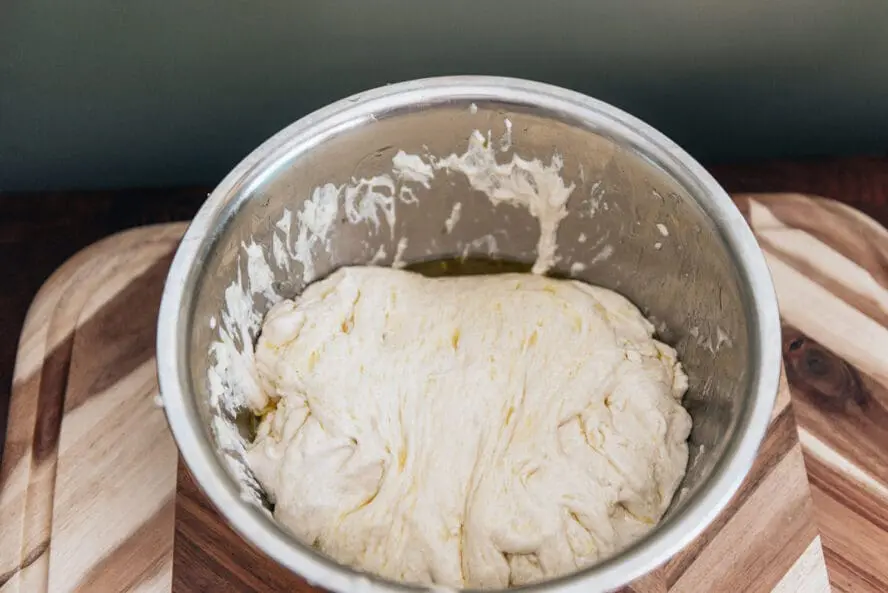
Pro Tip: A warm oven (turned to 200°F then turned off) or the top of your fridge works well.
STEP 4:
(OPTIONAL) Make-Ahead Step: If you want to make your bread the next day, put it in the fridge overnight and let it rise until it’s doubled in size.
STEP 5:
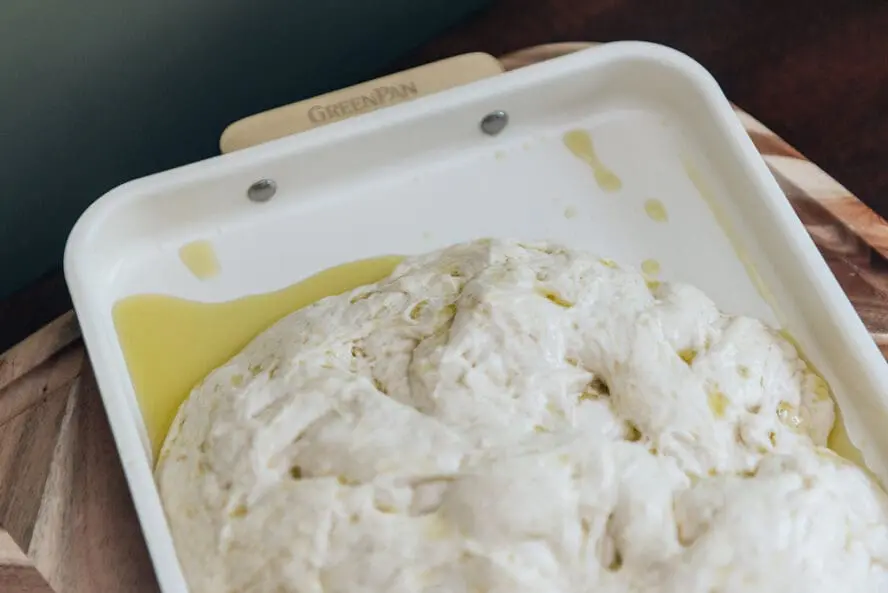
Prepare the Pan: Coat a baking pan with 2 tbsp olive oil. Use a 13×9” pan for thick, sandwich-ready focaccia, or 18×13” for something thinner and crispier. Rub the oil all over the bottom and up the sides of the pan.
STEP 6:
Fold the Dough: With oiled fingers, fold the dough over onto itself, turning the bowl 90° each time. Do this twice around (about 8 folds total) until the dough is deflated and bouncy.
STEP 7:
Second Rise: Use a rubber spatula to gently transfer the dough to your prepared pan. Pour any extra oil from the bowl over the top of the dough. Let it rise again in a warm spot for 1.5–3 hours, or until it’s puffy and doubled.
STEP 8:
Pre-Bake Check: Poke the dough with your finger — if it springs back slowly and leaves an indentation, it’s ready. If it snaps back quickly, give it more time to rise.
STEP 9:
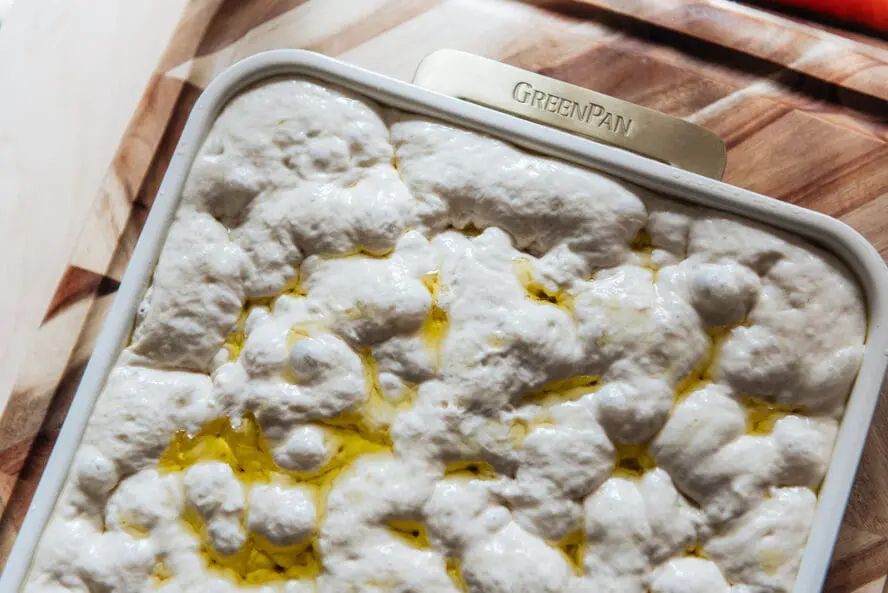
Stretch & Dimple: Preheat the oven to 450°F. If the dough hasn’t fully reached the edges of the pan, gently stretch it out with oiled fingers (let it rest if it resists). Then, dimple the surface deeply with your fingertips — all over! This technique helps prevent the dough from rising excessively and also allows olive oil and other toppings to pool in the dimples, creating a flavorful exterior.
STEP 10:
Final Touches: Drizzle with 1 more tbsp olive oil and finish with a generous sprinkle of flaky sea salt.
STEP 11:
Bake: Bake for 20–30 minutes, until golden brown and bubbly. Start checking around the 20-minute mark.
Herby Garlic Sauce Ingredients
Herby Garlic Sauce Instructions
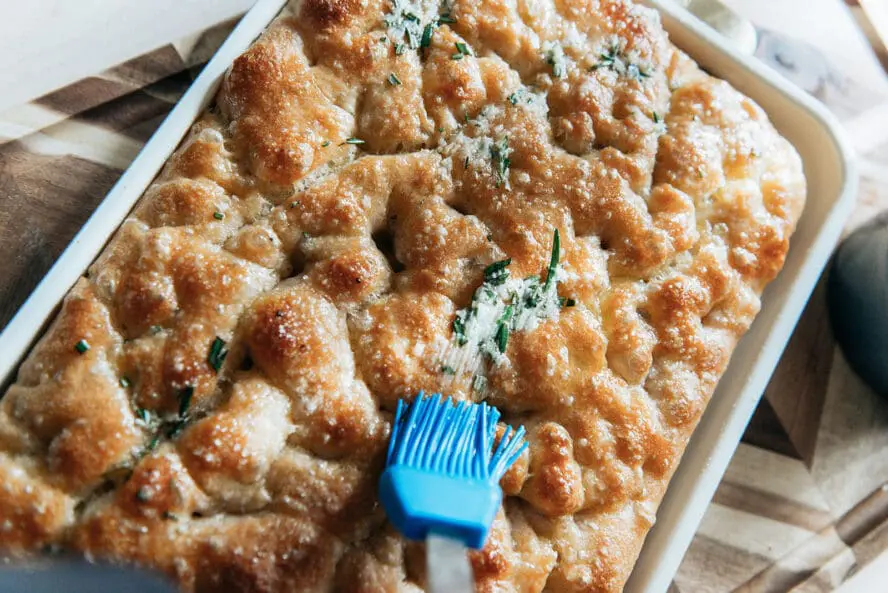
In a small pot (I love using this mini cast iron fondue pot for this!), melt 3–4 tablespoons of ghee or butter, or use extra virgin olive oil. Depending on how much you like garlic, peel 2–4 garlic cloves and grate the garlic into the fat with a microplane grater (grating it gives it a mellower, softer flavor, rather than chopping it).
Add the fresh chopped rosemary and heat through until you can smell the garlic and fresh rosemary for about one minute.
When You’re Ready to Serve
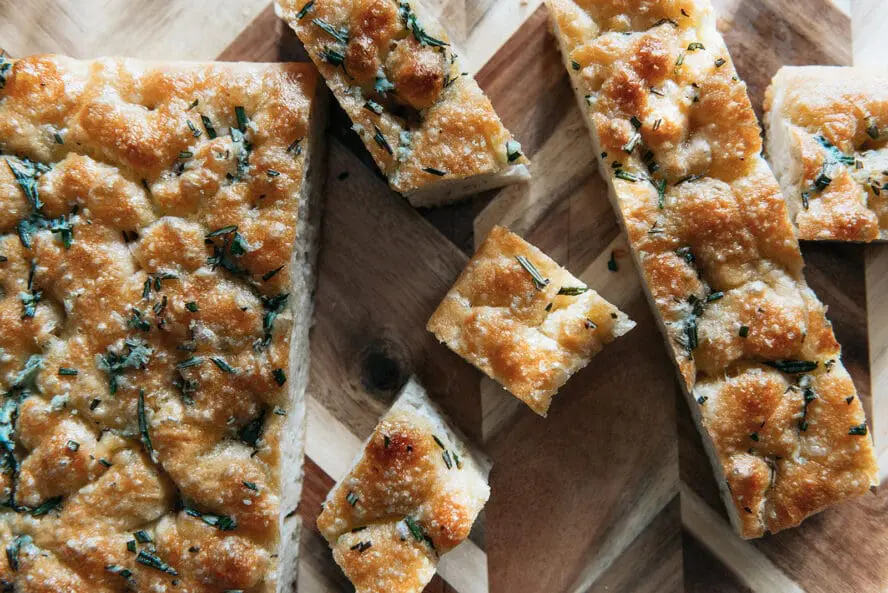
When the bread is done and out of the oven, brush with the garlic butter mixture you made. Let cool in the pan for 10 minutes. Using a spatula, gently remove bread from the pan, place it on a cutting board, and cut into squares once cool enough to handle.
Serve with your favorite extra virgin olive oil and balsamic vinegar on a plate for dipping, or try whipping up delicious sandwiches or toasts with your favorite toppings. Enjoy while warm!
Pro Tip: Focaccia is best eaten and served the day of.