
Turkey Recipe, Best Ever Herb-Roasted, Apple Cider Vinegar-Brined Heritage Bird
Stop dry turkey! This unique apple cider vinegar brine delivers the turkey recipe best results for a tender, herb-roasted heritage bird.

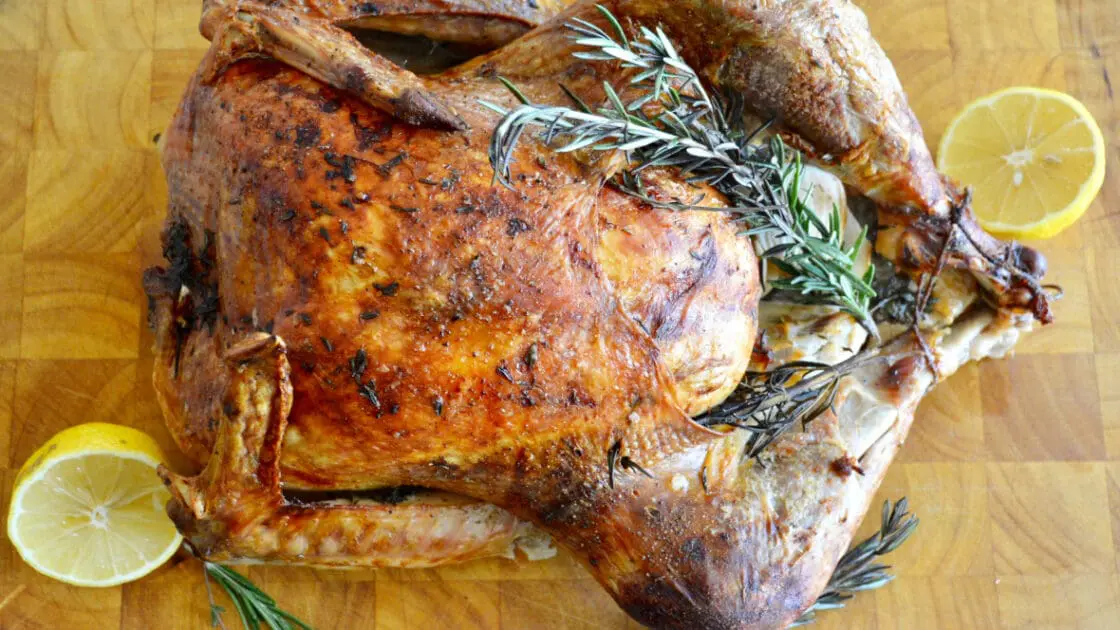
If you want the tenderest turkey out there, a brine is your secret ingredient (if you want to know more about brining, read The Pros and Cons of Brining a Turkey). With a bit of planning, this savory roast will tickle the taste buds of everyone at your family gathering.
Never miss a new recipe. Sign up for our newsletter for more sweets, sips, and eats ideas along with well-researched, non-toxic living guidance and smart wellness advice.
Brined Turkey: How a Heritage Bird Differs from a Conventional
First thing’s first: secure a heritage turkey (here are 5 Reasons to Choose a Heritage Turkey). Sometimes found under the names ‘Narragansett’ or ‘Bourbon Red,’ these turkeys are firmer in texture than a regular supermarket bird. Often raised free-range with a diverse diet and extended lifespan, heritage turkeys grow slowly and develop deeper flavor than conventional birds.
Heritage turkeys are usually smaller than the hybrid breeds readily available at the local grocery store, taking anywhere from 24 to 30 weeks to reach market weight, as compared to about 18 weeks for a conventional turkey. Smaller heritage turkeys are a great fit for smaller gatherings and the perfect size for one of our favorite roasting pans, Made In’s Blue Carbon Steel Roasting Pan, which holds a twelve-pound bird. The angled stainless steel handles are ideal for tenting with aluminum foil – a crucial step in turkey roasting. For more non-toxic bakeware picks, see our chef-reviewed guide.
Heritage Turkey Recipe: Best Brine
The key to a moist, tender heritage turkey is an acidic brine. Brining poultry adds terrific depth and flavor to a typically bland meat. Ideally, you’d brine your turkey overnight or for a full day before roasting. For heritage turkeys specifically, the brine will help soften the flesh, resulting in a succulent, crisp turkey for your holiday table. And if you’re not using a heritage turkey this year, this recipe also works very well for a regular turkey.
Need more recipes to round out your holiday meal? You’ve got to try our insanely delicious sweet potato casserole, and our plant-based green bean casserole. For dessert, you’ll want our homemade pumpkin pie (it’s paleo-friendly). You can even make your own pumpkin puree for that pie and more!
Choosing Your Apple Cider Vinegar for the Turkey Brine
One of our favorite vinegars is Mother Earth, Organic Apple Cider Vinegar. When choosing the absolute best apple cider vinegar (ACV), look beyond standard supermarket bottles. The highest quality ACV should be certified organic, which ensures the product begins with a premium blend of pressed, organic apples free from harmful pesticides. Crucially, seek out vinegar that is raw, unpasteurized, and unfiltered. This guarantees the presence of “The Mother,” the cloudy substance composed of beneficial microorganisms and probiotics that most producers filter out. Mother Earth is a favorite in salad dressings, marinades or even a morning wellness shot.
Brined Turkey Recipe
Ingredients: Brine
Ingredients: Roast
Brined Turkey Preparation
Day 1
- A day before roasting, remove the giblets and neck from turkey; reserve. Next, place the turkey in a brining vessel large enough to submerge the bird and small enough to fit your refrigerator. (If you don’t have such a vessel, you can also place your turkey in two or three clean, unscented plastic garbage bags nested inside one another. Secure and place in a cooler with ice.) Mix the apple cider vinegar, 3 quarts of water, salt, lemons, and bay leaves, and pour the liquid over turkey evenly.
- An hour before you’re ready to roast your turkey, remove the butter from the refrigerator to soften, and preheat the oven to 350 degrees Fahrenheit. Prepare the herbed butter by combining the thyme and softened butter, reserving some thyme for the stuffing. Set aside.
- Quarter two onions and peel the garlic cloves. Set one quartered onion aside with the garlic cloves; these will be used to stuff the turkey. Arrange the other onion in the roasting pan, evenly distributing rosemary sprigs on top of the onions. Reserve some rosemary for the stuffing. Set aside.
Day 2
- Remove the turkey from the refrigerator or cooler. Dispose of the brine in the sink, and rinse the turkey thoroughly under cool water. Pat dry with paper towels and place directly on top of the onions and rosemary in the roasting pan. Season the turkey cavity with salt and pepper, then stuff with the onion, garlic, and remaining herbs.
- Slather the bird generously with the herb butter, both on and under the skin, particularly on the breast. Sprinkle liberally with salt and pepper.
- Add the turkey neck and giblets to the bottom of the roasting pan. The turkey drippings, onions, herbs, neck, and giblets, once roasted, will make an easy onion gravy.
- Take two pieces of aluminum foil, cut to the length of the roasting pan. Fold each piece along the roasting pan’s side to tent the bird. Transfer the turkey to the oven; roast 3 hours for a 14-pound turkey. (Add 13 minutes per pound for larger turkeys.)
- Thirty minutes before the roasting time is complete, insert a digital probe thermometer into the thigh. Once the thigh registers at 160 degrees Fahrenheit, the turkey is ready to come out of the oven and transfer to your desired serving platter.
Related on Organic Authority
Heritage Turkey: Thanksgiving Dinner Throwback
Where (And Why) to Buy Your Heritage Turkey
6 Lessons I Learned Raising Narragansett Heritage Turkeys