July 4th, 2009 - Barbara Feiner

When Pinkberry and Red Mango started dishing out tart frozen yogurt, a new dessert trend was born.
Now, frozen yogurt shops across the country are offering their takes on this tangy treat, including natural and organic eateries like Culture in Palo Alto, Calif.; Sweetgreen in Washington, DC; and Harmony Frozen Yogurt in San Mateo and San Carlos, Calif.
If shops specializing in tart yogurt haven’t found their way to your neighborhood, the ice cream aisle at your local natural and organic food store will soon satisfy your cravings. Companies like Häagen-Dazs and Trader Joe’s are introducing tart, natural frozen yogurt pints for your take-home pleasure.
Here’s a tangy Fourth of July bonus recipe that’s easy, delicious and guaranteed to be a crowd pleaser at summer gatherings. Enjoy!
Tart Lime Breeze
Makes 4 servings
1/2 cup cold seltzer water
3 large scoops tart frozen yogurt
2 tablespoons frozen limeade concentrate
Fresh lime, pineapple and a maraschino cherry for stir-stick garnish
Combine seltzer, yogurt and limeade in a blender. Blend until smooth and frothy.
Divide between four small glasses. Thread slices of fruit on a stir stick and place in glass. Serve immediately.
Optional additions:
2 tablespoons light rum
1/4 cup pineapple chunks
Recipe and photo courtesy of Häagen-Dazs
Tags: Organic Food, recipes Posted in Organic Food, Organic Food Recipes | No Comments »
July 2nd, 2009 - Barbara Feiner

Watermelons are a classic summer favorite. Sweet and refreshing, they perk up picnics and bring the cool to any cookout.
While some people like to thump a watermelon and listen for a certain sound, here’s the best way to choose the perfect fruit:
- Look for a round, oval or oblong-shaped watermelon that feels heavy for its size; this indicates it’s juicy and fresh.
- Inspect the watermelon’s exterior. Look for a firm, symmetrical watermelon that’s free of bruises, cuts or dents.
- Turn it over. The underside of a watermelon should have a creamy yellow spot from where it sat on the ground and ripened in the sun.
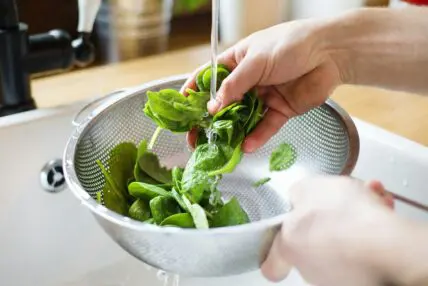
Don’t forget to wash all fruits and vegetables, including watermelon, in fresh running water. Dry with a clean paper towel before slicing and serving.
FYI: On average, a 5-pound watermelon will yield 11 cups of edible fruit.
Tune in tomorrow for our Fourth of July recipe: a party-ready Americana Basket.
Photo courtesy of the National Watermelon Promotion Board
Tags: fruits, Organic Food, watermelon Posted in Organic Food | 2 Comments »
July 2nd, 2009 - Gerald "Gerry" Pugliese
I love soybeans! I eat a couple bags a week. You’ve probably eaten them too. Most sushi restaurants offer salted edamame beans as an appetizer.
Now, normally you’ll find them frozen in the natural foods section of any supermarket. So you’d assume you’re buying a natural, earthy-friendly food, right?
Not always. A new report claims many natural soybeans and soy foods are actually processed with a toxic chemical, but still labeled as natural.
Beyond the Bean: The Heroes and Charlatans of the Natural and Organic Soy Foods Industry, released by the The Cornucopia Institute, found a chemical solvent called hexane is almost always used in conventional soy protein ingredients and oils. Hexane separates soy oil from soy protein and fiber.
Hexane is a neurotoxin and poses serious risk to workers, the environment and anyone consuming foods contaminated with it. Luckily, hexane is not allowed during the processing of organic foods.
Via SustainableBusiness.com.
Posted in Organic, Organic Food | 4 Comments »
July 1st, 2009 - Barbara Feiner

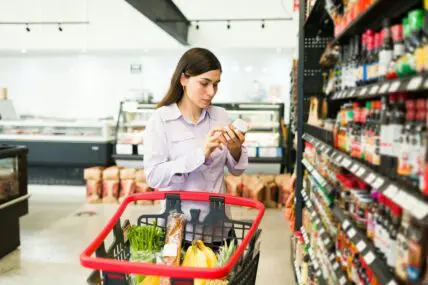
Sixty-three percent of consumers who responded to an IBM survey say they’ve consciously changed the way they shop at grocery stores over the last 2 years.
In recessionary times, they want better value for their hard-earned cash. Moreover, they’re willing to buy fresher foods (45%) and/or higher-quality foods (43%)—a great opportunity for natural and organic food producers to capture a new consumer base.
“Especially in today’s economy, if consumers are going to pay a little extra for a branded or organic product, they want to be assured that they’re paying for something different and better quality,” says Guy Blissett, consumer products leader for the IBM Institute for Business Value.
“Across the board, consumers are demanding transparency and more information about the food they purchase to ensure their safety and that of their families,” he adds. “As the government, industry associations, retailers and manufacturers work through the operational issues associated with ensuring food safety, we can each become more aware and take greater responsibility for the food we purchase.”
Photo courtesy of Whole Foods Market
Tags: food safety, Organic Food, shopping Posted in Organic Food | 3 Comments »
June 29th, 2009 - Leslie Billera
I’m about to become a first-time mom at age 40. Literally, at any moment.
I don’t know how I will feel when I first see my baby (my guess is a post mortem cocktail of thrill and terror), but one thing I definitely do know: my time – and sleep – will be limited. That’s what everyone has been telling me for the last 10 months (yes, it’s actually 10 months, not 9…but that’s another blog subject!).
Soon, my husband and I will have less time to make buying decisions – but more pressure than ever to make the greenest and healthiest choices for baby. The hours I formerly spent clicking around eco product sites, languorously reading ‘about us’ and ‘press’ sections to try to discern a given product’s ‘true green value’ will be but a hazy memory.
To prepare, I’ve saved these green washing sites – green washing is misleading marketing about the environmental benefits of a product – that I now share with other busy moms, dads, or just busy people in general…
Green America’s Responsible Shopper
I’m a Green America Business Network member, so this one is close to my heart (as a copywriter, I’m Green America-Approved and have the seal to prove it!). This site ranks companies in 27 industry categories from best to worst based on research focusing on such key issues as human rights, social justice, environmental sustainability and more. Check out the user-friendly “Act” section in which you can join campaigns to battle corporate abuse, or sign up for instant emails to get actions delivered to your inbox.
Skin Deep Database from the Campaign for Safe Cosmetics
This searchable database matches the ingredients in more than 25,000 shampoos, makeup, deodorants, sunscreens and other personal care products with 50 toxicity and regulatory databases. It provides the most safety information anywhere about the products you put on your body – and on the body of baby too!
The Greenwashing Index
Enviromedia Social Marketing’s website asks consumers to send examples of both good and bad green marketing campaigns, which visitors then rank using a five point index that includes 1 for Authentic, 3 for Suspect and 5 for Bogus. Also includes “ripped from the headlines” exposes on worst offenders, i.e. the recent charge from the FTC that Kmart Corp., Tender Corp., and Dyna-E International are making false and unsubstantiated claims that their paper products were “biodegradable.”
Terrachoice
Check out the free report entitled the Six Sins of Green Washing and get tips on the top suspect terminology – i.e. the use of ‘chlorofluorocarbon-free’ even though these chemicals have been banned, by law, for years.
Laura Klein’s Green Club
Shameless plug here (I am the chief copywriter for Laura Klein’s green lifestyle membership site), but there’s no doubt that in addition to lots of good, green info and action-oriented tips, membership in Laura Klein’s Green Club gives you one-on-one consultation from Laura herself on any question relating to going green. It’s like having a personal eco consultant at your finger tips, so it makes for a truly great value.
Babies away!
Tags: babies, children, grocery shopping, healthy eating, healthy living, motherhood, newborns, Organic Food, parenthood Posted in Green Living, Health, Organic, Organic Food, Organic Food Recipes, Organic Living, Parenting | 1 Comment »
June 29th, 2009 - Barbara Feiner

A spate of food recalls has left a large percentage of Americans wary about the nation’s food supply.
According to a recent IBM survey of 1,000 consumers in the 10 largest U.S. cities, more shoppers are worried about the safety of the food they buy at grocery stores—and their trust of food retailers, manufacturers and grocers has diminished.
Survey results reveal:
- 83% of respondents could name a food product that was recalled in the last 2 years because of contamination or other safety concerns.
- 46% named peanut butter as the most recognizable recall. Spinach came in a distant second, with 15% awareness nearly 2 years after an E. coli outbreak.
- 49% of respondents said they’re less likely to purchase a food product after a contamination-related recall; 63% confirmed they would not buy the food until the source of contamination had been identified and addressed.
- 8% said they would never purchase a recalled food again, even after the source of contamination was found and addressed.
These data should serve as a wakeup call for food growers and producers. A betrayal of the public trust has consequences that impact the bottom line. As IBM notes:
These findings underscore how the rise in recalls and contamination has significantly eroded consumer confidence in food and product safety, as well as with the companies that manufacture and distribute these products.
Tune in tomorrow for more eye-opening survey stats.
For Your Organic Bookshelf: Food Alert! The Ultimate Sourcebook for Food Safety
Photo courtesy of IBM
Tags: food safety, Health, Organic Food, recalls Posted in Health, Organic Food | 1 Comment »
June 28th, 2009 - Barbara Feiner

The Western Pistachio Association (WPA), a Fresno, Calif.-based trade group that represents growers in California, Arizona and New Mexico, is trying to restore its product’s good name.
Upon learning that Anaheim, Calif.-based Orca Distribution West repackaged and sold potentially contaminated nuts (see yesterday’s story), the WPA issued a press release to help allay consumers’ fears. It states:
Pistachio products subject to the recall should have already been removed from the market by each distributor and/or entity that had potentially contaminated product. The WPA does not condone any entity that knowingly shipped recalled product or withheld information related to the product recalls.
The association has also launched a website that provides a list of safe, regionally grown, organic and nonorganic brands. This is helpful, as I’ve avoided buying pistachios since the FDA initiated the recall in March.
If you’re worried about our nation’s food supply, you’re not alone. According to a recent survey, 60% of consumers polled have qualms about the food they buy. Tune in tomorrow for more staggering stats from the study.
Tags: FDA, food safety, Organic Food, pistachios, recalls Posted in Health, Organic Food | 1 Comment »
June 27th, 2009 - Barbara Feiner

It’s been a bad year for the food industry, with recalls for peanuts, pistachios, ground beef and the latest entry: Nestle Toll House Cookie Dough.
The ongoing pistachio recall includes more than 660 organic and nonorganic products that may pose a salmonella risk. And even after companies were warned to stop selling pistachios sourced from Setton Farms (ground zero for the outbreak), the FDA recently found that Anaheim, Calif.-based Orca Distribution West had repacked and distributed potentially contaminated nuts under the California Prime Produce and Orange County Orchards brands, most of which were sold at airports and hotels.
According to the FDA, Orca has “not made a public announcement regarding these products.”

As for Nestle, the FDA and CDC have warned consumers to avoid eating any varieties of Nestle Toll House Cookie Dough because of possible E. coli contamination. Since March, there have been 66 reports of illness across 28 states, with 25 hospitalizations. Seven of the hospitalized patients developed hemolytic uremic syndrome, a potentially fatal condition that can seriously damage the kidneys. No one has died.
If you happen to have any Nestle cookie dough in your fridge, throw it away. Don’t bake the dough, as your hands and cooking surfaces can be contaminated by the bacterium. Nestle has updated information on its website, as well as a toll-free phone number to handle questions: (800) 559-5025.
“If there was anyone left in America who didn’t realize we need to reform the food safety functions at the Food and Drug Administration, this latest recall of Nestle Toll House Cookie Dough provides a sobering wakeup call,” says Sarah Klein, attorney for the Center for Science in the Public Interest in Washington, DC.
“For too long, the agency has lacked the authority and the resources it needs to inspect food processing facilities, issue mandatory recalls and punish violators,” she adds. “Once again, the agency is forced to react after illnesses are already occurring, when the focus should be on preventing contamination in the first place. We urge the House to pass the Food Safety Enhancement Act now.”
Photos courtesy of Orca Distribution (top), Nestle
Tags: CDC, FDA, food safety, Health, Organic Food, recalls Posted in Health, Organic Food | 2 Comments »
June 24th, 2009 - Barbara Feiner

Brooklyn’s Isa Chandra Moskowitz hosts the online Post Punk Kitchen video series, which offers great vegetarian cooking lessons. She’s also the author of the highly acclaimed Vegan with a Vengeance: Over 150 Delicious, Cheap, Animal-Free Recipes That Rock.
The cookbook is divided into nine sections:
- Brunch (Sweet Potato Hash with Five-Spice and Watercress, Ginger-Pear Waffles)
- Muffins and Scones (The Best Pumpkin Muffins, Glazed Orange Scones)
- Soups (White Bean and Roasted Garlic Soup, Roasted Butternut Squash Soup)
- Little Meals, Sammiches and Finger Food (Parsnip-Scallion Pancakes, Fresh Corn Fritters)
- Sides (Balsamic-Glazed Portobello Mushrooms, Coconut Rice with Toasted Coconut)
- Pizzas and Pastas (Homemade Gnocchi, Orecchiette with Cherry Tomatoes and Kalamata Tapenade)
- Entrees (Pumpkin Seed-Crusted Tofu with Baked Pumpkin and Cranberry Relish, Moroccan Tagine with Spring Vegetables)
- Cookies and Bars (Pumpkin Oatmeal Cookies, Macadamia Blondies with Caramel-Maple Topping)
- Desserts (Coconut Heaven Cupcakes, Gingerbread Apple Pie)
Rocker Joan Jett added her review to the book’s back cover: “This fun and creative book is delicious for people like me, who don’t eat pets!”
Vegan with a Vengeance retails for $17.95, but the current price on Amazon is $14. Use the recipes to jump-start your organic Meat-Free Monday meals.
Tags: books, Meatless Monday, Organic Food, recipes, vegan, vegetarian Posted in Organic Food, Organic Food Recipes | No Comments »
June 23rd, 2009 - Gerald "Gerry" Pugliese
I have to admit. I never heard of Marion Nestle before. Turns out, she’s a foodie and a professor of nutrition, food studies and public health at New York University, as well as an author of many books, such as Food Politics: How the Food Industry Influences Nutrition and Health.
Marion also writes a column for The San Francisco Chronicle and in her latest article, she answers some questions about organic food. Here are a couple good ones:
Q: What is the difference between “100% organic” and “organic”?
A: Organic has a precise meaning under the USDA’s organic program. Certified 100% Organic means that all the ingredients in a product have been grown or raised according to the USDA’s organic standards, which are the rules for producing foods labeled organic. Certified Organic requires that 95 to 99 percent of the ingredients follow the rules.
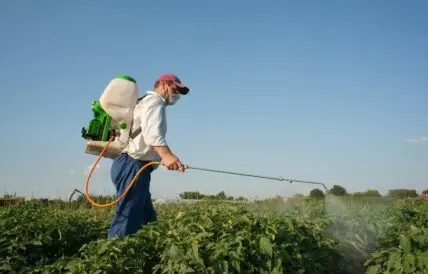
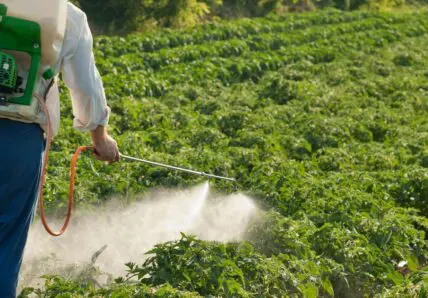
What, exactly, are those rules? Summarizing what’s in hundreds of pages in the Federal Register: plants cannot be grown with synthetic pesticides, herbicides, fertilizers, genetic modification, irradiation or sewage sludge.
Q: Which is worse: eating nonorganic produce full of pesticides or not eating produce at all?
A: Research demonstrates substantial health benefits from eating fruits and vegetables. Although I wish we had more definitive research, these benefits appear to greatly outweigh any risks of pesticides.
If you want to compromise, you can save your organic dollars for the foods most likely to be high in pesticides. These, according to the Environmental Working Group (ewg.org), are peaches, nectarines, apples, bell peppers, strawberries, cherries, pears, raspberries, imported grapes, celery, potatoes and spinach.
In contrast, foods that you peel – onions, peas, bananas, sweet corn and tropical fruits, for example – tend to be low in pesticides.
Tags: fertilizer, fruits, pesticides, vegetables Posted in Organic, Organic Food | No Comments »
|
|
please Share the Love